
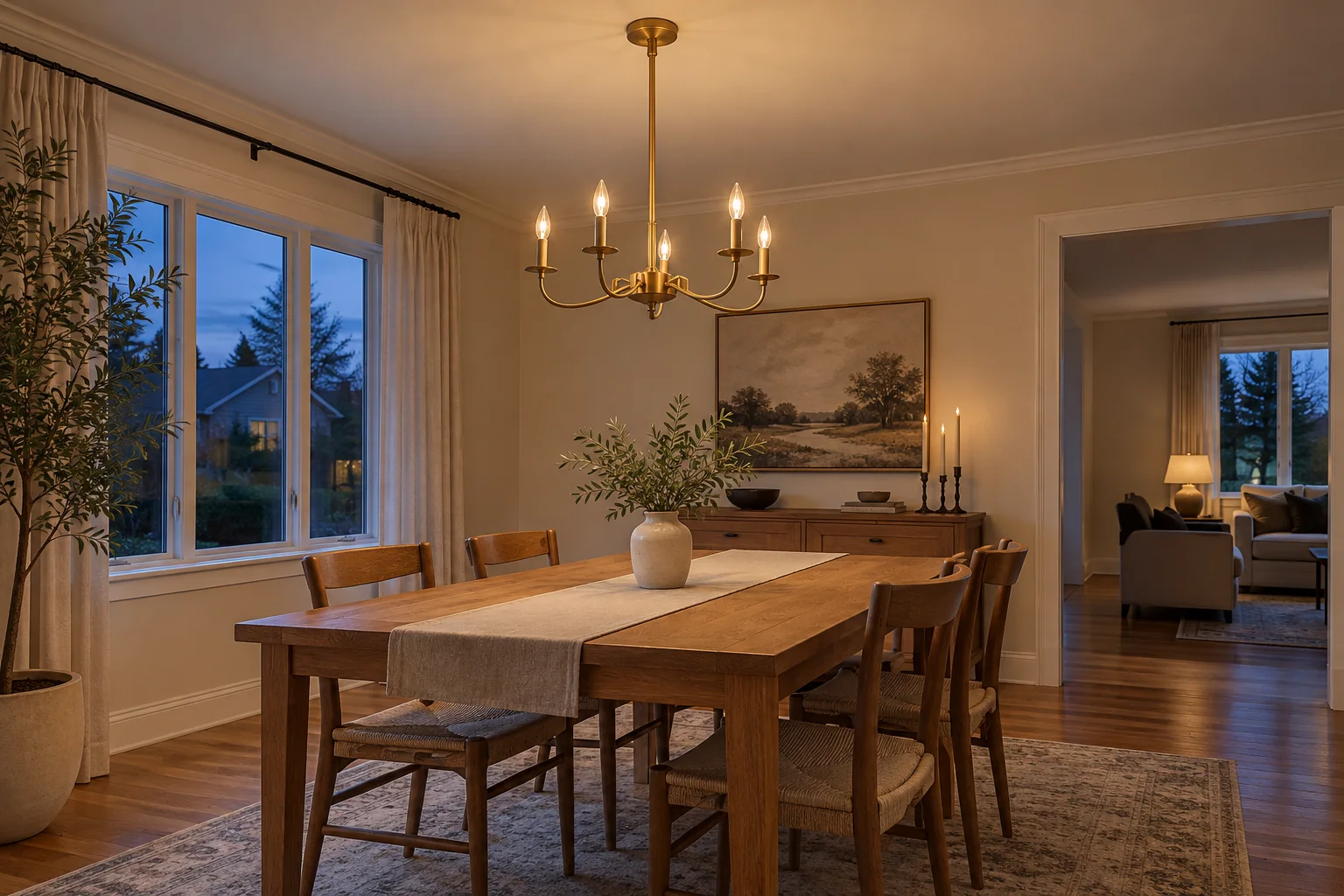
Plan the chandelier and its mounting
A chandelier can centre a dining room or give a foyer a clear visual feature. Installing it involves more than choosing a finish that suits the furniture. The product’s size, weight, assembly, mounting system and access all matter, together with the room and the controls that will operate it. Those details should be discussed before the fitting arrives or a date is arranged.
Chandelier installation in a Burlington home may involve replacing a smaller light, fitting a new decorative product at an existing location or moving the lighting to suit a table. A fitting above stairs presents different access conditions from one above a dining table. The request should describe the actual location, not only call it a ceiling-light replacement.
The fixtures and task lighting hub compares related services. For an ordinary flush or semi-flush fitting without a chandelier’s particular support or assembly requirements, start with light fixture installation.
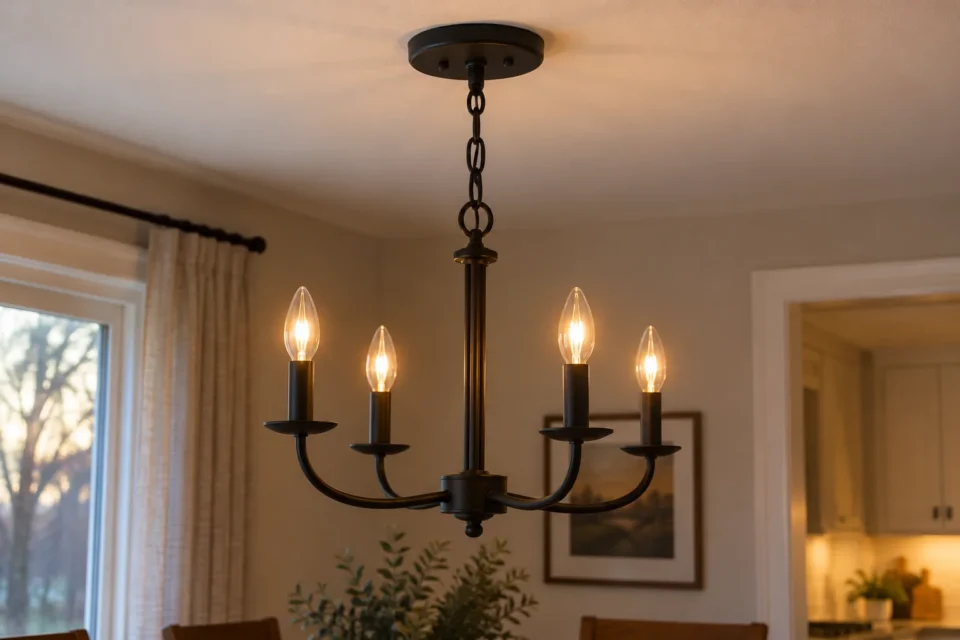
Confirm the product and its support requirements
The visible canopy covers the mounting point, but it does not establish what support is present behind the ceiling. An existing decorative light also does not prove that the location suits a heavier replacement. The proposed product information and the existing conditions need to be assessed together.
Provide the manufacturer’s model, stated weight, overall dimensions and installation instructions. Include whether the fixture uses chain, rods or a particular suspension arrangement. The complete product instructions govern how it is supported and assembled; a generic photograph cannot replace that information.
Do not uncover the mounting box or detach the old fixture to prepare an inquiry. Safe room photographs and product documents are enough to begin the discussion. If additional support or access is required, that work belongs in the assessed scope rather than being assumed from the appearance of the ceiling.
Match scale to the room and furniture
A chandelier should relate to the room without overwhelming the places people use. In a dining room, the table shape, width and position are useful starting points. A long rectangular table can suggest a different fixture form from a compact round table. Include the final furniture arrangement before selecting a mounting position.
The fixture is also seen from nearby doors and connected rooms. A chandelier centred on the floor area may feel misplaced when the dining table sits to one side. Look at the room from the main entry and the living area, and describe the intended relationship to those views.
Clearance and usable height depend on the location and product. A fixture above a table and one above an open route should not be given one universal hanging rule. The plan should consider the fixture’s full depth, the ceiling height and how the space will be used.
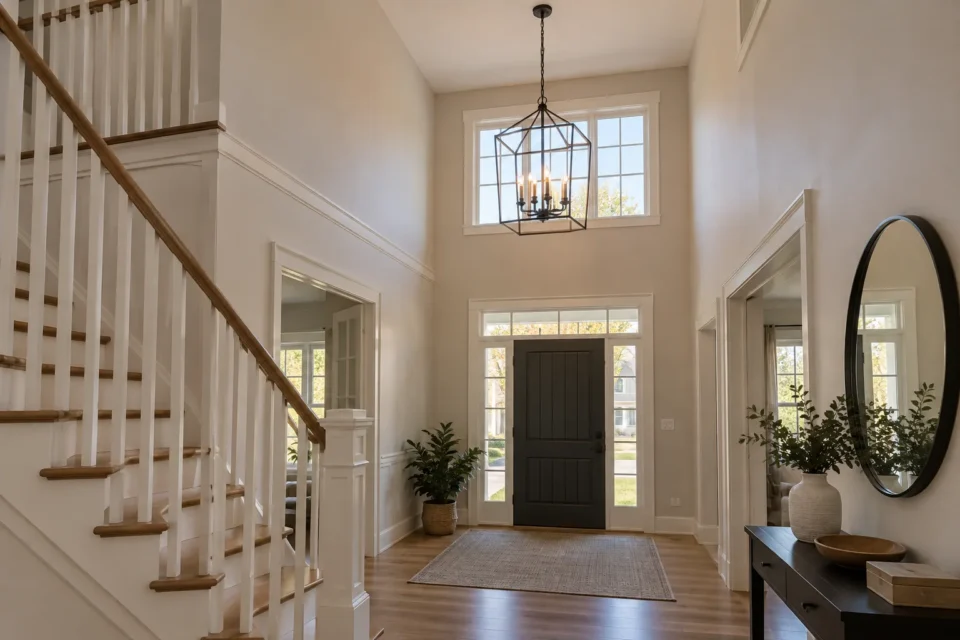
A tall foyer changes the access discussion
A high mounting point affects how installation, adjustment and later service can be carried out. A tall foyer may include stairs, railings, a narrow floor area or furniture that limits access. Show the entire location from a safe position at floor level, including the route into the space and the area beneath the fitting.
Ceiling height alone does not describe those constraints. A fixture above an open landing can be more difficult to reach than one at the same height over a clear floor. The assessment should address an appropriate working approach before scheduling the installation.
If the project also includes recessed lights in a tall or vaulted space, high-ceiling pot lights is the related service. Keep that ceiling layer separate from the chandelier’s support and assembly requirements so both parts of the project receive attention.
Plan assembly and delivery before the visit
Chandeliers vary in how much assembly is needed. A simple frame with several shades differs from a fitting with many individual decorative pieces. Confirm whether the product has arrived, whether all supplied parts are present and whether the instructions can be reviewed before the installation visit.
Leave the electrical and mounting assembly to the responsible installer. There is no need to suspend parts temporarily or remove the existing fitting to make the request. If the chandelier is second-hand, mention missing components, previous alterations or uncertainty about the model. Those conditions can affect whether the product is suitable.
Discuss product handling and the space available for assembly. A large table, delicate flooring or narrow room may influence how the work is organized. The agreed scope should explain which assembly tasks are included and how the room needs to be accessible.
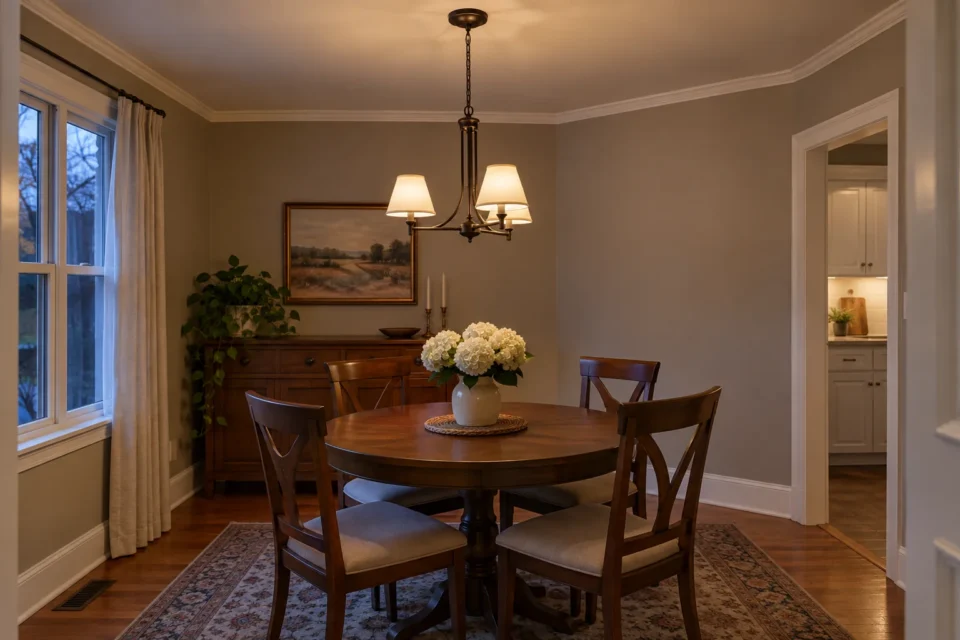
Keep a dining fixture useful at different settings
The chandelier’s appearance when switched off is only part of the decision. Shades, visible lamps and the direction of light affect how it illuminates the table and the surrounding room. A fitting can be decorative and still need a ceiling or wall layer to make other areas useful.
Consider the view from a seated position. Exposed sources can be more noticeable than they seem in a showroom photograph, while a shade or diffuser changes how light spreads. The intended dinner setting and the brighter setting used for clearing the table are both worth discussing.
If pendants over a separate island or breakfast surface are also changing, pendant and island lighting addresses that relationship. A chandelier should fit the larger room plan rather than be selected without considering the neighbouring lights.
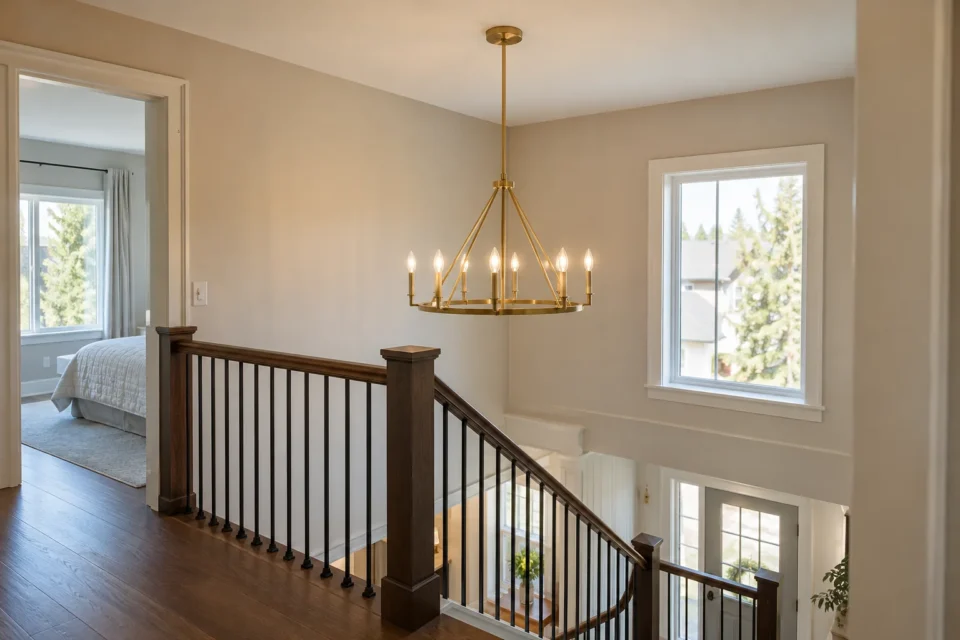
Assess slopes and stair locations carefully
A sloped ceiling requires a mounting arrangement that suits both the product and the ceiling surface. Do not assume a fixture with a straight rod can be used at any angle. Keep the manufacturer’s slope or suspension information available and explain the shape of the ceiling in the request.
A fixture over stairs or an open void also needs a clear access plan. Photograph the landing, railings and floor area from a safe standing position. The image should show more than the existing light, because the surrounding space determines how the location can be approached.
Include later maintenance in the conversation. A decorative fitting still needs a realistic way to clean it or change serviceable components. The installation plan should not rely on an unsupported assumption that a tall fixture will never need attention again.
Coordinate lamps, dimming and product approval
A chandelier may use replaceable lamps or integrated LED components. The permitted lamp type and limits come from the actual manufacturer’s instructions. For an integrated fitting, ask what service information is available and whether relevant components can be replaced. A decorative appearance does not establish a product’s expected lifetime.
Dimming suitability is specific to the light source and control combination. An existing dimmer that worked with the old fitting may not suit the new one. Describe the lower setting you want and provide model information where available. Smart lighting and dimmers is the service route for a dedicated control change.
Recognized approval needs to apply to the complete electrical product. Imported or unusual fittings should be checked before their installation is assumed. Approved LED Lighting Products in Ontario explains why a component marking or decorative finish is not the complete selection test.
Make relocation and finishing explicit
Replacing a chandelier at a suitable existing location differs from moving it to follow a new table position. A new location can introduce wiring routes, switching changes, access openings and ceiling finishing. State whether the current mounting point will stay and whether the ceiling is due to be repainted.
Ask the proposal to identify electrical installation, any assessed support work, assembly and finishing responsibilities. A canopy may not cover the mark left by the old fitting, and a moved location may require separate repair or painting. These visible results should be discussed alongside the electrical work.
Verify the responsible Licensed Electrical Contractor through ESA and clarify the notification requirements for the actual scope. Conditional replacement exemptions do not cover every change. ESA Requirements for Residential Lighting Work provides the relevant educational questions.
Prepare your chandelier installation inquiry
Prepare three parts of the chandelier request:
- Product details: Use the project inquiry to share the product listing or model, dimensions, weight information and installation instructions if available.
- Room and furniture position: Add wide room photographs, approximate ceiling height and the final table or furniture position.
- Access conditions: Mention stairs, slopes, fragile finishes and any access restrictions.
If you are still choosing the fixture, describe the intended size and purpose rather than presenting a purchase as already suitable. The conversation can then address product requirements, the mounting location and the work needed for a clear installation scope. Keep any other lighting changes visible so the chandelier can be planned with the room.
The existing support and connection need assessment against the actual product’s weight and mounting instructions. A light already at the location does not establish suitability for every replacement. Send the product information without opening the ceiling mounting. The appropriate position depends on the product, ceiling, furniture and whether the area is a table zone or a circulation route. It should be assessed for the real room rather than chosen from one universal hanging rule. The location can be assessed for support and an appropriate access approach. Send wide photographs showing the landing and surrounding floor area, taken from a safe position. Tall access conditions should be discussed before scheduling. Compatibility depends on the selected light source and control. Include their model information and the intended lower setting. Smart lighting and dimmers is the relevant service for a control change. Yes. Relocation may add wiring, access and finish-repair questions. The applicable notification responsibilities also need assessment; see ESA Requirements for Residential Lighting Work. Check complete-product recognized approval, installation instructions, dimensions, weight and suitable mounting information. Approved LED Lighting Products in Ontario explains the approval distinction. Discuss the proposed product through the project inquiry.Chandelier Installation Gallery
Chandelier installation questions
Can a heavier chandelier use the existing mounting point?
How high should a chandelier hang?
Can a chandelier be fitted above a stair opening?
Will my existing dimmer work with the new fitting?
Does moving a chandelier change the installation scope?
What should I check before buying an imported chandelier?