
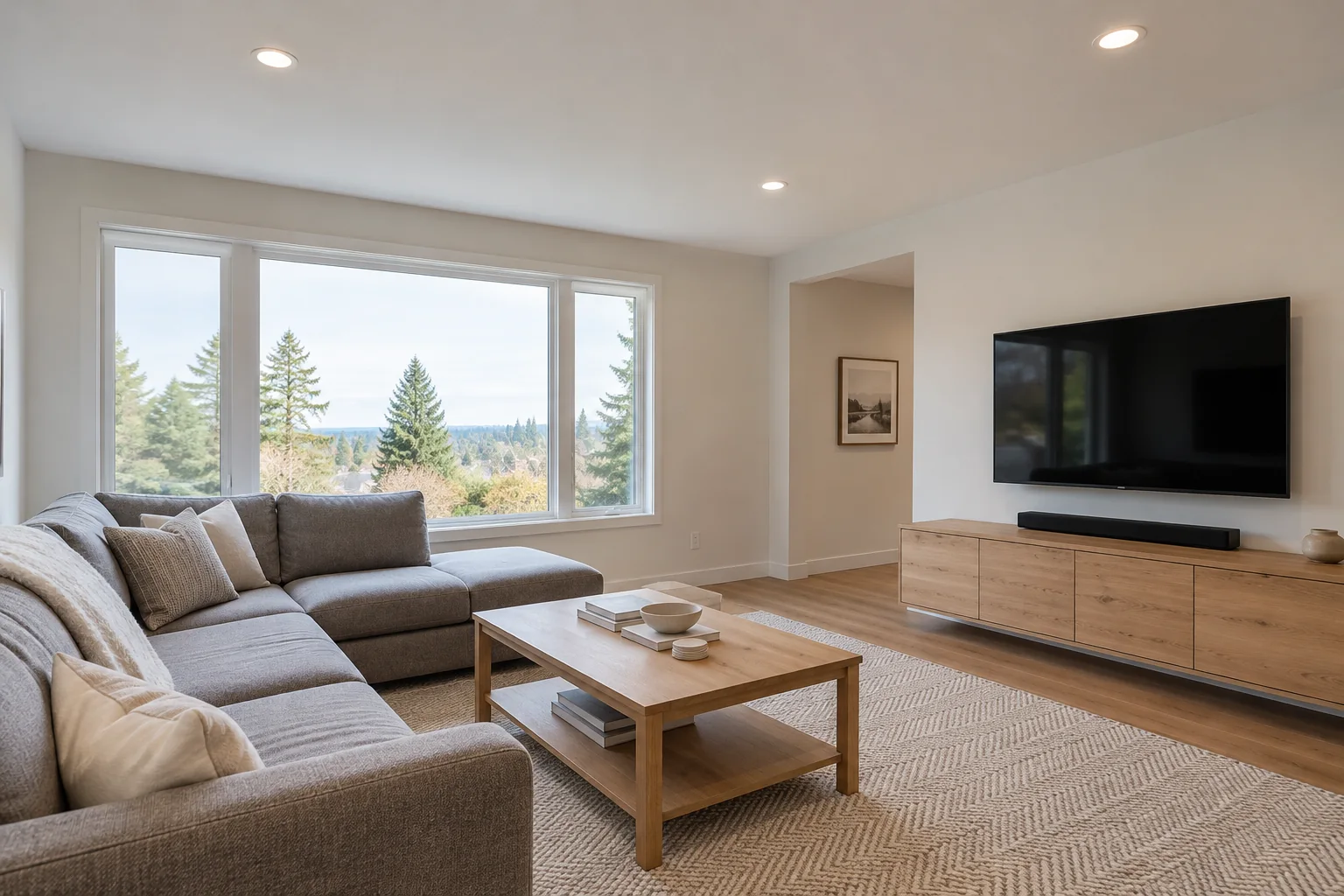
Modernize an existing system
Assess the recessed lights you already have
LED pot-light upgrades focus on an existing recessed-light system: its housings, trims, lamps or modules, controls and replacement options. The project starts with the installed equipment and the result you want to improve. In a Burlington home, that may be more consistent light, a different trim appearance, a better match between rooms or a clearer plan for future replacement.
This is a different scope from adding new ceiling positions and wiring. Some existing systems may accept suitable replacement components; others need a different approach after assessment. A similar diameter or a product labelled LED does not establish that it is interchangeable with the equipment above your ceiling.
The Pot Lights overview helps compare project paths. If the main need is additional positions or light in a new area, Pot Light Installation is the appropriate starting point. For an upgrade, describe the current fittings and behaviour before committing to replacements.
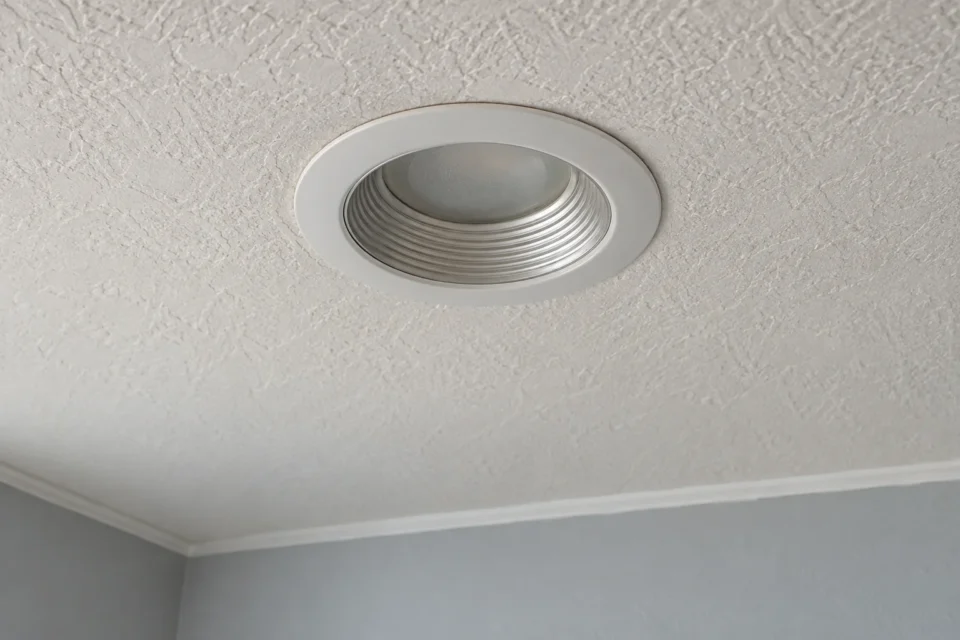
Identify the existing recessed system
The visible trim gives useful clues about appearance, but it does not reveal every component or installation condition. Existing recessed lights can differ in housing type, lamp arrangement, depth and product requirements. A replacement needs assessment of the actual installed system rather than a guess based on the ceiling opening.
Tell the contractor what information you already have, including model details from previous paperwork or a product package. Describe whether the fittings look the same across the room and whether earlier replacements have introduced a different colour or appearance. Keep unknown details as unknowns until the system is assessed.
Safe photographs taken from the room are suitable for an initial inquiry. Do not pull a trim, disconnect a module or open a fitting to identify concealed parts. The assessment can establish the relevant equipment and determine which replacement options are intended for that application.
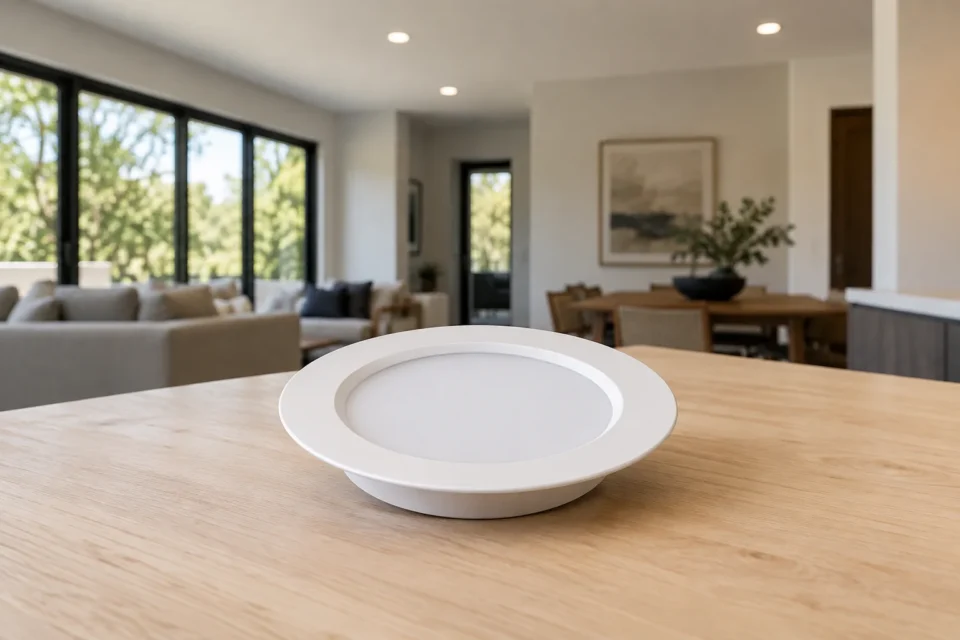
Compare replacement approaches before buying
An existing system might involve a replaceable lamp, a purpose-designed retrofit trim or replacement of the complete fitting. Those approaches are not interchangeable by appearance alone. Ask which option suits the installed housing, the ceiling conditions and the manufacturer’s instructions, and what work each option includes.
The complete product needs appropriate approval and suitability for its use. ESA’s recognized approval marks guidance explains product approval in Ontario. Approval does not, by itself, mean that a fitting matches a particular housing, environment or dimmer. Those are separate assessment questions.
Bring any owner-selected product to the discussion before ordering a roomful of replacements. Ask for the actual model and compatibility information rather than relying on a generic product photograph. The lighting product approval guide expands the questions to ask without recommending an unverified model for your ceiling.
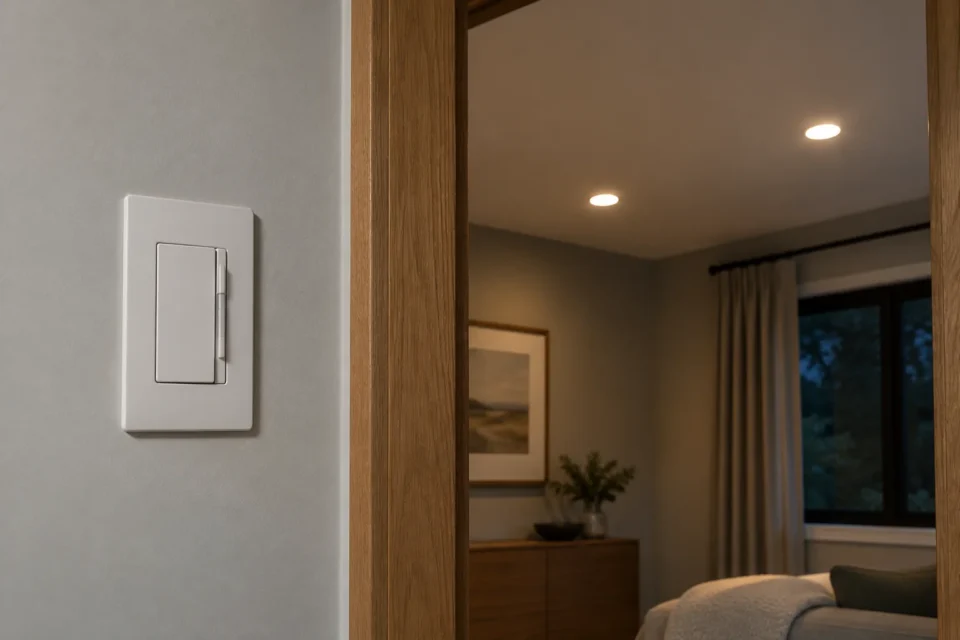
Check control compatibility and evening behaviour
A control that worked with the previous lamps may need assessment when the light source changes. Suitable dimming depends on the selected LED product and control working together, including the number and type of lights on the zone. The word dimmable on a package is not evidence that every installed dimmer is suitable.
Explain the low-level setting you would like to use and any current behaviour, such as flicker, a sudden change in brightness or a limited usable range. Record when it happens and which zone is affected without repeatedly testing equipment that appears damaged or behaves unusually. Symptoms can have more than one cause and should not be diagnosed solely from an upgrade enquiry.
Smart Lighting & Dimmers addresses controls when they are the main scope. The LED dimmer compatibility guide provides focused reading about the product relationship. An upgrade quotation should explain whether changing controls is included or remains a separate option.
Choose a consistent result across the room
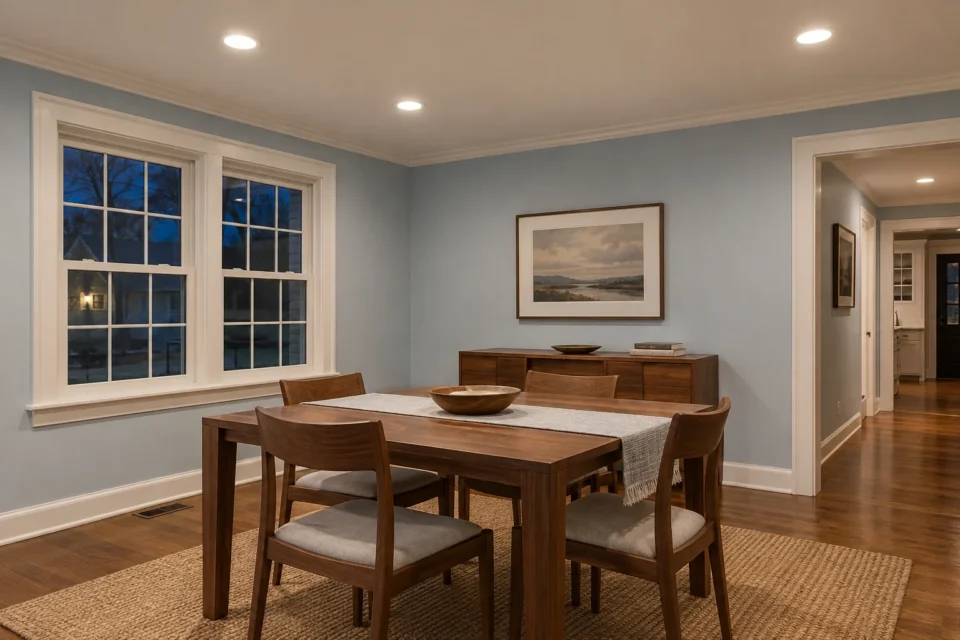
A system assembled from replacements made at different times can look uneven even when every light turns on. Colour appearance, light output, beam distribution and trim depth can differ. Describe whether the concern is the light in the room, the fittings visible in the ceiling or both.
Keeping existing positions may be appropriate, but new products will not automatically correct an unhelpful layout. If the counter or seating area still needs better coverage, assess that purpose alongside the replacement choice. Pot Light Layout & Design is relevant when locations and zones need reconsideration rather than only a product refresh.
For several connected rooms, Interior Pot Lights considers coordination with retained fixtures and everyday use. A consistent specification can help the rooms feel related without forcing every area to share the same brightness or control arrangement. The Mismatched Light Colour page focuses on that particular symptom.
Understand the size and construction choices
The nominal trim size is only one part of a replacement specification. A product’s outer ring, required opening, depth and intended housing relationship need to match the application. Do not assume that two products described with the same size will fit the same existing system or cover a ceiling mark in the same way.
The 4-Inch vs 6-Inch Pot Lights guide explains the selection questions, while Slim LED vs Traditional Recessed Lighting compares the different system approaches. Neither comparison can confirm the concealed condition of a particular ceiling.
For older recessed lighting, ask which existing components can be retained and which should be assessed further. If replacing a fitting changes the opening or trim footprint, include the finishing implications in the proposal. The preferred appearance should remain connected to suitable installation and service requirements.
Separate an upgrade from a repair concern
A cosmetic or performance refresh should not obscure an existing fault. A light that stops working, an unusual sound or a zone that behaves inconsistently needs assessment of the cause. Replacing a visible component may not address the underlying condition, and a new LED product should not be treated as a universal cure.
Describe the behaviour in plain terms: which fitting or group is affected, whether it is intermittent and whether it changes with a control setting. Keep the report to safe observations. Do not remove covers, handle wiring or repeatedly operate a fitting that shows signs of damage.
Lighting Repairs is the appropriate path when assessment of a fault is the main need. An assessment may still lead to an upgrade option, but the repair question and the desired lighting improvement should be documented separately so the scope is clear.
Clarify replacement scope and electrical requirements
LED upgrade work can range from a suitable replacement component to a broader change involving fittings, controls or wiring. Ask the Licensed Electrical Contractor to identify the actual scope and the applicable ESA notification requirements. Do not assume that every job described as a replacement is exempt, or that every replacement has identical requirements.
ESA Bulletin 2-3-19 describes conditional notification exceptions. The equipment, premises, person doing the work and any wiring alterations matter. A general service page cannot determine whether a particular upgrade falls within those conditions.
The written proposal should identify what is retained, what is replaced and what additional assessment or work is assumed. It should describe access and finishing responsibilities if complete fitting replacement affects the ceiling. Keep the product and control specifications with the agreed scope so later service has a useful reference.
Compare upgrade options by the complete outcome
Compare proposals for the same rooms and intended result. Note whether they retain housings, replace trims or complete fittings, include controls and address any existing fault. Access, product selection, ceiling restoration and the condition of the installed system can all change the work included.
If you want to stage the work, identify the first room and the remaining areas. Ask how product consistency and future replacement availability will be approached, without expecting a promise that one model will remain available indefinitely.
| Scope item | What to confirm |
|---|---|
| Existing system | Which housings, positions and components will be retained? |
| Replacement products | Which exact models are proposed, and what establishes their suitability? |
| Controls | Are the installed dimmers retained, assessed or replaced? |
| Faults and finishing | Are repair concerns, access openings or restoration included? |
| Future service | Which component and model information should be kept? |
Prepare an LED upgrade request
Include these details in your LED upgrade request:
- Rooms, fittings and goals: Include the rooms, approximate number of existing fittings and what you want to improve.
- Existing system: Describe the trims, ceiling condition, installed controls and any product information already available.
- Retained fixtures and renovation plans: Explain whether other fixtures will stay and whether the work is part of a broader renovation.
Safe wide photographs can show the room and existing ceiling positions; a photograph of an accessible closed control plate can show its appearance. Do not dismantle anything to make the enquiry. If a symptom is present, describe when it happens and which lights are affected so that a repair concern is assessed alongside the upgrade request.
You can request an LED pot-light upgrade estimate with those details. A useful assessment starts with the existing system, then compares suitable ways to improve it. Keeping that order helps avoid buying products that do not address the room or match the equipment already installed.
LED Pot Light Upgrades Gallery
LED pot-light upgrade questions
Can any LED trim fit my existing recessed light?
Appearance or a similar diameter does not establish compatibility. The installed housing and the complete replacement product need assessment. Slim LED vs Traditional Recessed Lighting explains the system differences.
Will my existing dimmer work with new LED lights?
It needs to be assessed with the exact LED products and zone. Dimmable does not mean compatible with every control. LED Dimmer Compatibility provides the focused reading path.
Is an LED upgrade the same as adding more pot lights?
This service assesses an existing system and suitable replacements. New ceiling positions and wiring belong to Pot Light Installation; layout changes may also need a planning assessment.
Do all replacement jobs have the same ESA requirements?
No. Actual equipment, premises, worker and wiring scope affect conditional notification exceptions. Ask the Licensed Electrical Contractor to determine the requirements. The Ontario electrical process guide provides general context.
Can an upgrade solve a failed or flickering light?
The cause needs assessment first; a replacement is not a universal repair. Lighting Repairs is the correct path when an existing fault is the main concern.
What should I send for an upgrade inquiry?
Include rooms, existing fitting count if known, control information already available, safe photographs and the improvement you want. Do not dismantle equipment. Add those details when you request an LED upgrade assessment.