
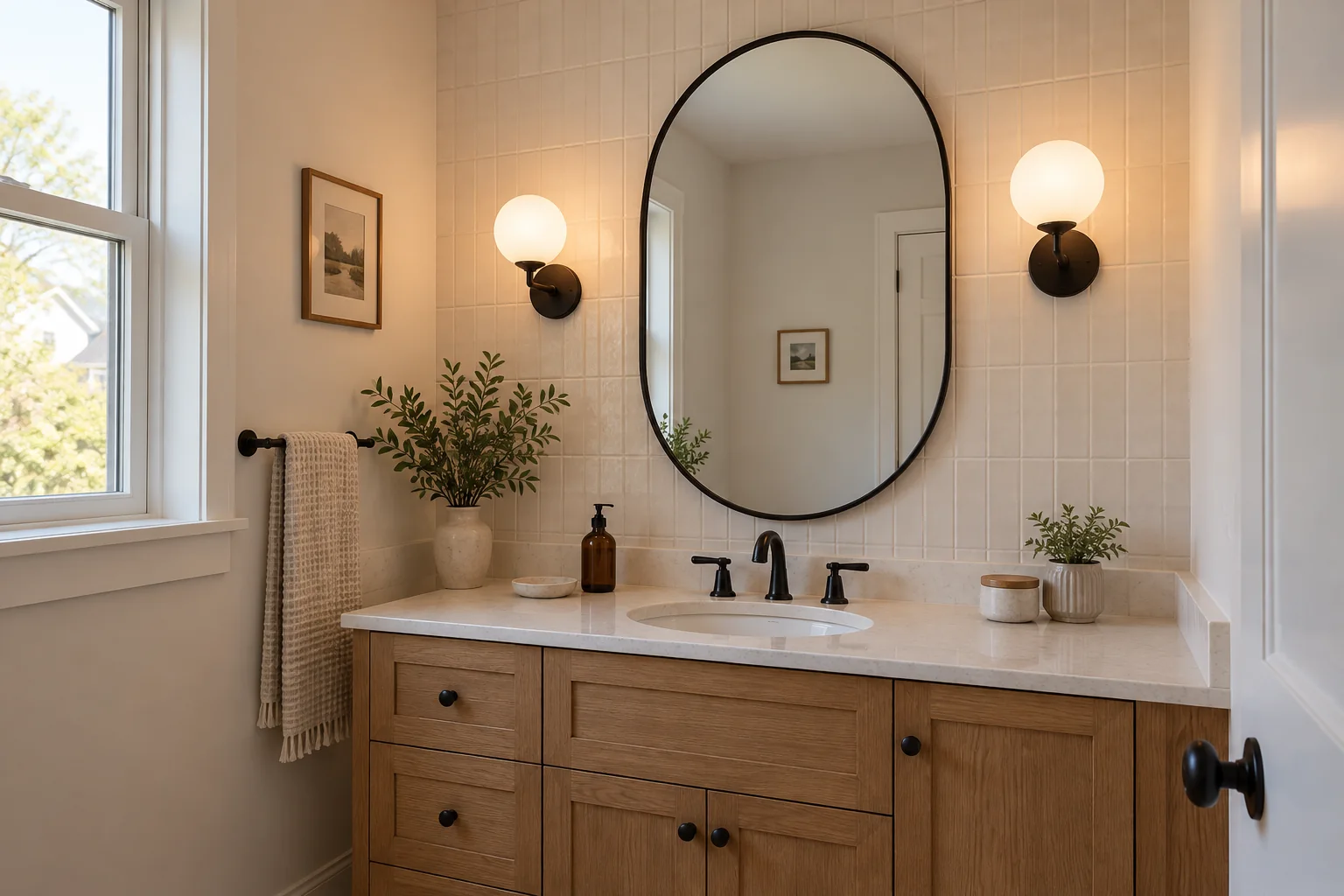
Define the wall fixture’s purpose
Wall sconce and vanity lighting installation in Burlington focuses on fixtures mounted to the wall: decorative sconces, lights beside a mirror and fittings above a vanity. Position, projection, mounting conditions and the way light reaches the intended area are central to the request. This service can cover a replacement at an existing location or a proposed new position that needs its own assessment.
A sconce may add a local layer beside a chair, define a hallway or support a mirror area. Those purposes do not call for the same fitting or position. Start by explaining what the light needs to do and what is already on the wall. Include the surrounding furniture, trim and doorways so the fixture is considered in context.
The fixtures hub places this service alongside other fixture options. For a bathroom project that includes ceiling light, shower exposure and the whole room, bathroom lighting is the broader scope. A vanity fixture is one layer within that room, not a substitute for planning all of it.
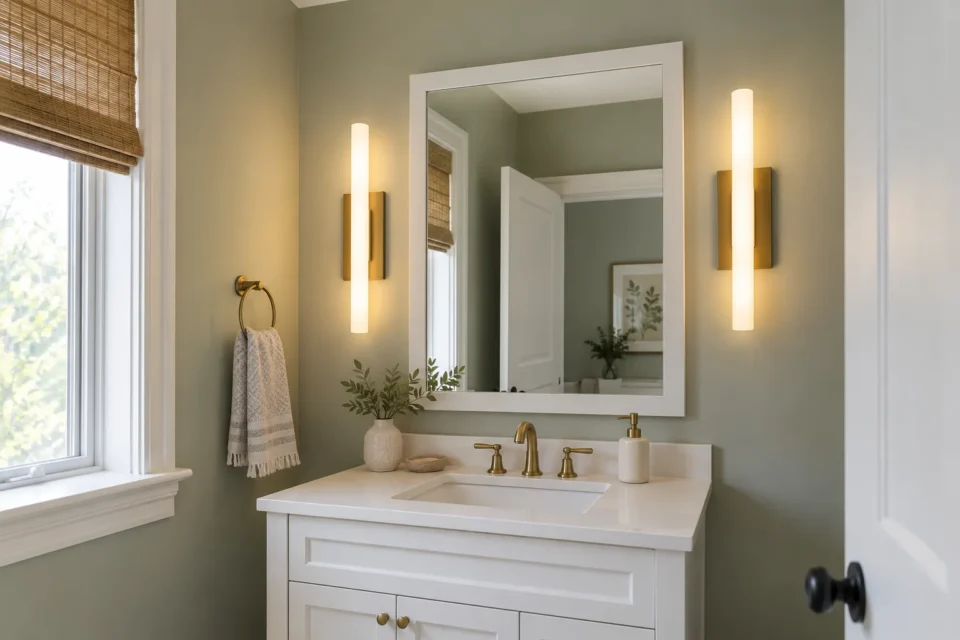
Plan the mirror and fixtures together
The mirror dimensions and position influence where vanity lights can be placed. A fitting selected without that information may compete with a cabinet door, overlap the mirror edge or sit awkwardly beside adjacent trim. Photograph the mirror area with the surrounding wall visible, and mention whether the mirror or vanity is being replaced as part of the project.
For paired lights, consider the relationship between the fixtures, mirror and vanity rather than choosing a height from an unrelated room photograph. The chosen light source, shade and projection affect visual comfort. A fitting that looks balanced from the doorway may feel different when someone stands close to the mirror and looks toward it.
An above-mirror fitting also needs room for the actual product and its mounting plate. A decorative mirror frame or nearby cupboard can limit the available space. Share product dimensions before purchase if the wall area is tight. The assessment can then address a workable position instead of trying to force a preferred fixture into a location that does not suit it.
Check fixture projection and clearance
Wall lights occupy physical space beyond the wall surface. In a narrow passage, near a door or beside a bed, that projection can matter as much as the appearance of the fitting. Check the complete dimensions in the product information, including the shade and arm, and show nearby door swings or furniture in your request.
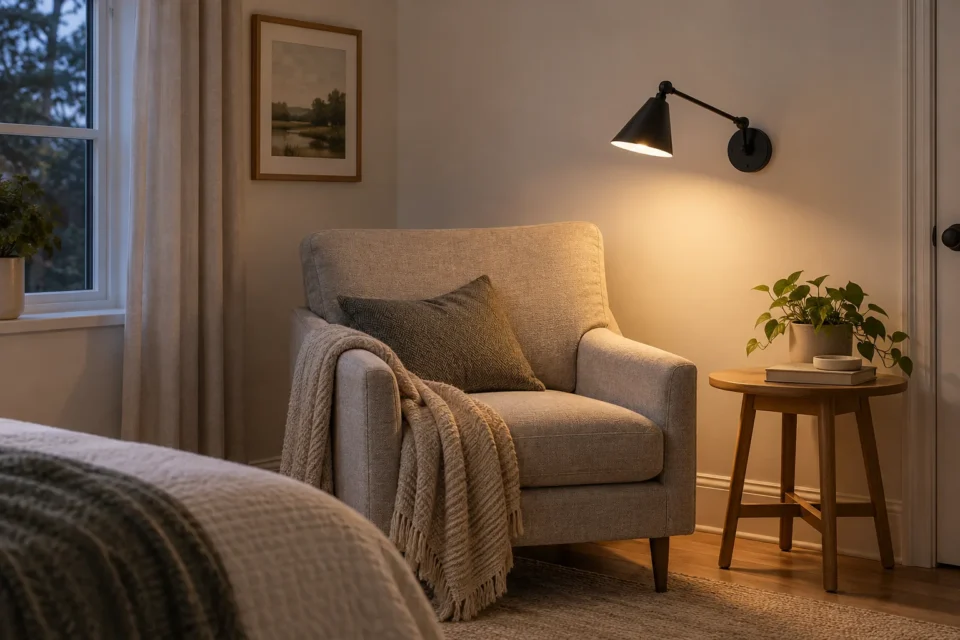
A reading-wall fixture may direct its light toward a chair or book, while a decorative sconce may illuminate the surrounding wall more broadly. Both can be useful, but their roles are different. Explain whether you want a task-oriented light, a softer background layer or a replacement that keeps the existing character of the room.
Consider normal viewpoints at seated and standing height. A visible source can be uncomfortable even when the fixture looks attractive switched off. The shade, orientation and selected lamp or integrated light source should be considered together. There is no single fitting shape that solves every wall-light application.
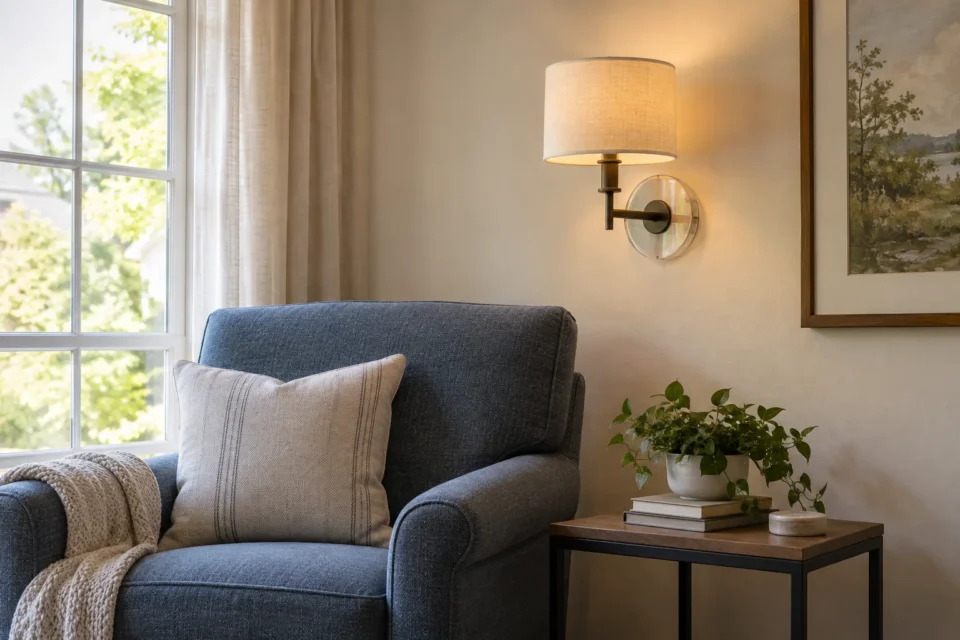
Assess the existing wall box
Replacing a wall fixture in the same position may be possible, but the mounting, support, connection conditions and product still need assessment. The new backplate may have a different size or shape from the old one. Include a photograph of the existing fitting and any visible wall finish around it so the expected appearance can be discussed.
Moving or adding a wall light changes the scope. It can involve routes inside the wall, access and decisions about switching. A new mirror layout or a furniture move can create a good reason to relocate a fitting, but that should be stated clearly rather than treated as a simple decorative replacement.
Ask how any necessary wall openings, patching and painting will be handled. Those finish tasks need an explicit arrangement and may be separate from the electrical installation. You do not need to remove the old fixture or expose the wall box to prepare an inquiry; ordinary photographs and the intended position are useful starting information.
Choose fixtures for their exposure
A bathroom or other moisture-prone location requires attention to the product suitability for its specific position. The location relative to water and the conditions of use matter. A decorative fitting chosen for a dry hallway is not automatically suitable beside every bathroom mirror. Provide the product details and a wider room view so the position can be assessed.
The fixture instructions and approval information should be available for review. If a product has been purchased online, keep its model, listing and supplied documentation. Appearance alone cannot establish suitability. Electrical product approval questions introduces the information to look for before committing to a fixture.
Where the bathroom itself is being remodelled, coordinate the lighting with the final mirror, wall finish and vanity plan. Moving those elements after the electrical positions are agreed can change the result. Describe the renovation stage and identify decisions still open, especially when tile or a finished wall will make later changes more involved.
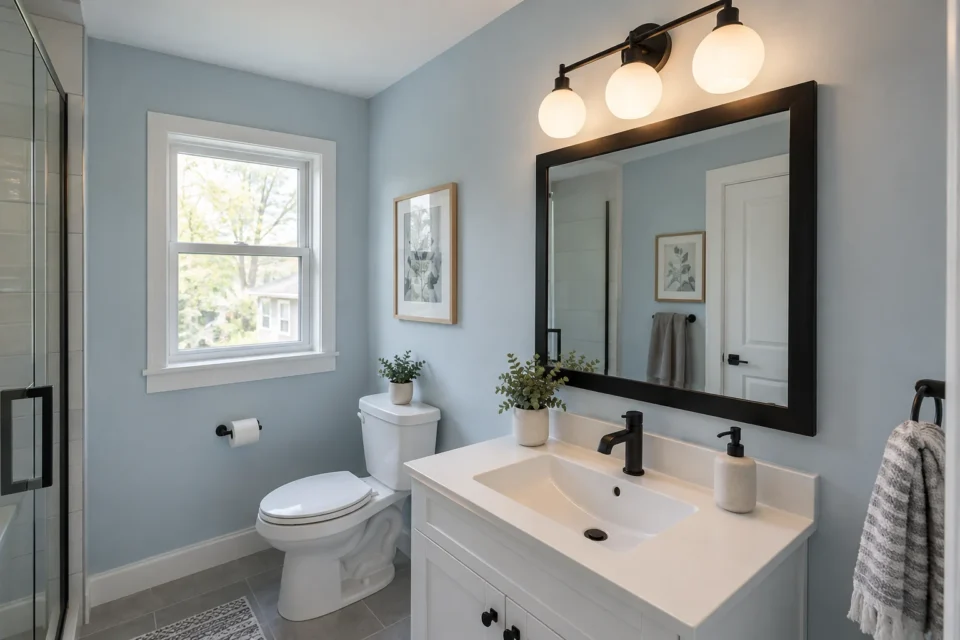
Make wall-light controls useful
A pair of bedside sconces may need a different control discussion from an entrance light or vanity bar. Think about the people using the room and confirm:
- Control locations: Explain which wall locations currently operate the fixtures and whether that arrangement works.
- Grouping: Whether the lights should operate together or independently.
- Evening use: Whether a lower setting is desired.
Dimming depends on the selected lamp or fixture and the compatible control arrangement. If an existing dimmer is staying, provide any available model information from packaging or records. Mention flickering, buzzing or inconsistent behaviour, so the issue can be assessed rather than hidden within a fixture replacement request.
For a wider control upgrade, smart lighting and dimmers is the related service. The objective here is a usable wall-fixture installation with a clear operating arrangement. A new decorative light should not make everyday switching more confusing or depend on an assumed compatibility that has not been checked.
Prepare your wall-light installation inquiry
The number of fixtures is only part of the request. Existing versus new locations, wall construction, wiring routes, product assembly and control changes all affect the work. A pair of replacements beside an existing mirror differs from adding sconces to a finished tiled wall with no previous fitting in those positions.
Include the details relevant to each wall-light position:
- Fixture and wall: Send wide photographs, the fixture model or listing and its dimensions.
- Mirror and vanity: For a vanity request, include the mirror and vanity dimensions and say whether either is changing.
- Room and furnishings: For other sconces, show the surrounding room and intended furniture arrangement.
- Access and finishes: Mention any inaccessible area, delicate finish or renovation dependency that may affect access.
The proposal should identify the fixture locations, controls and installation scope, plus any separate finish arrangements. Applicable electrical notification or inspection requirements should be clarified for the actual work. A clear request helps keep the assessment focused on the wall-mounted fixtures rather than implying that every other lighting concern in the room is included.
Coordinate the wall layer with the rest of the room
Wall fixtures often work best as part of a layered room. A vanity light may complement suitable ceiling lighting, while a sconce near a sofa can provide an evening layer alongside a general room light. Explain which fittings will remain so the new wall lights can be considered in relation to them.
If the request is mainly an ordinary ceiling fixture replacement, use light fixture installation. If it concerns the whole bathroom, use the bathroom service. Keeping those scopes clear makes it easier to discuss the correct products, positions and access without turning one fixture decision into an assumed whole-room renovation.
Share the wall-fixture details through the project inquiry. Include what feels unsatisfactory now and what should improve: a more comfortable mirror area, a usable reading position or a fitting that better suits a narrow passage. The intended result is as useful as the product you have in mind.
Plan mirror pairs and reading lights
A symmetrical pair beside a mirror is a different arrangement from a directional light beside one chair. The first is considered as a composition with the mirror; the second follows a local activity and viewing position. Explain whether the fixtures are intended to appear balanced as a pair or serve separate places. That avoids choosing identical products simply because two mounting points exist.
For a reading area, include the normal chair position and any side table. For a mirror, include where people stand and whether a mirrored cabinet opens into the available space. These observations can be shared without selecting an exact mounting height in advance. The fixture and location assessment should establish the workable arrangement for the actual furnishings.
A new location needs assessment of routes, wall construction, switching and access. Identify the intended position in a wide photograph and clarify any finish work. It is a different scope from replacing an existing suitable fitting. The mirror, vanity and available wall space should be considered together. Fixture size, backplate and projection can affect workable positions. For the wider room, see bathroom lighting. Suitability depends on the specific product and actual location, including exposure. Supply its model and documentation for review. Electrical product approval questions is the related guide. It may be possible, but mounting, connection conditions and the new fitting need assessment. Also consider whether the new backplate covers the same wall area and whether the intended light pattern still works. That depends on the fixture or lamps and control compatibility. Identify the products and any existing symptoms. LED dimmer compatibility provides related reading. Send the product details, wide wall photographs, nearby furniture or mirror dimensions, and whether positions or controls are changing. Mention wall finishes and renovation stage through the project inquiry.Wall Sconce & Vanity Lighting Gallery
Wall Sconce & Vanity Lighting questions
Can sconces be added where there is no existing fixture?
Do vanity lights need to match the mirror dimensions?
Can a hallway sconce be used beside a bathroom mirror?
Can the existing wall location stay?
Can new wall lights use the old dimmer?
What should I include in a sconce request?