
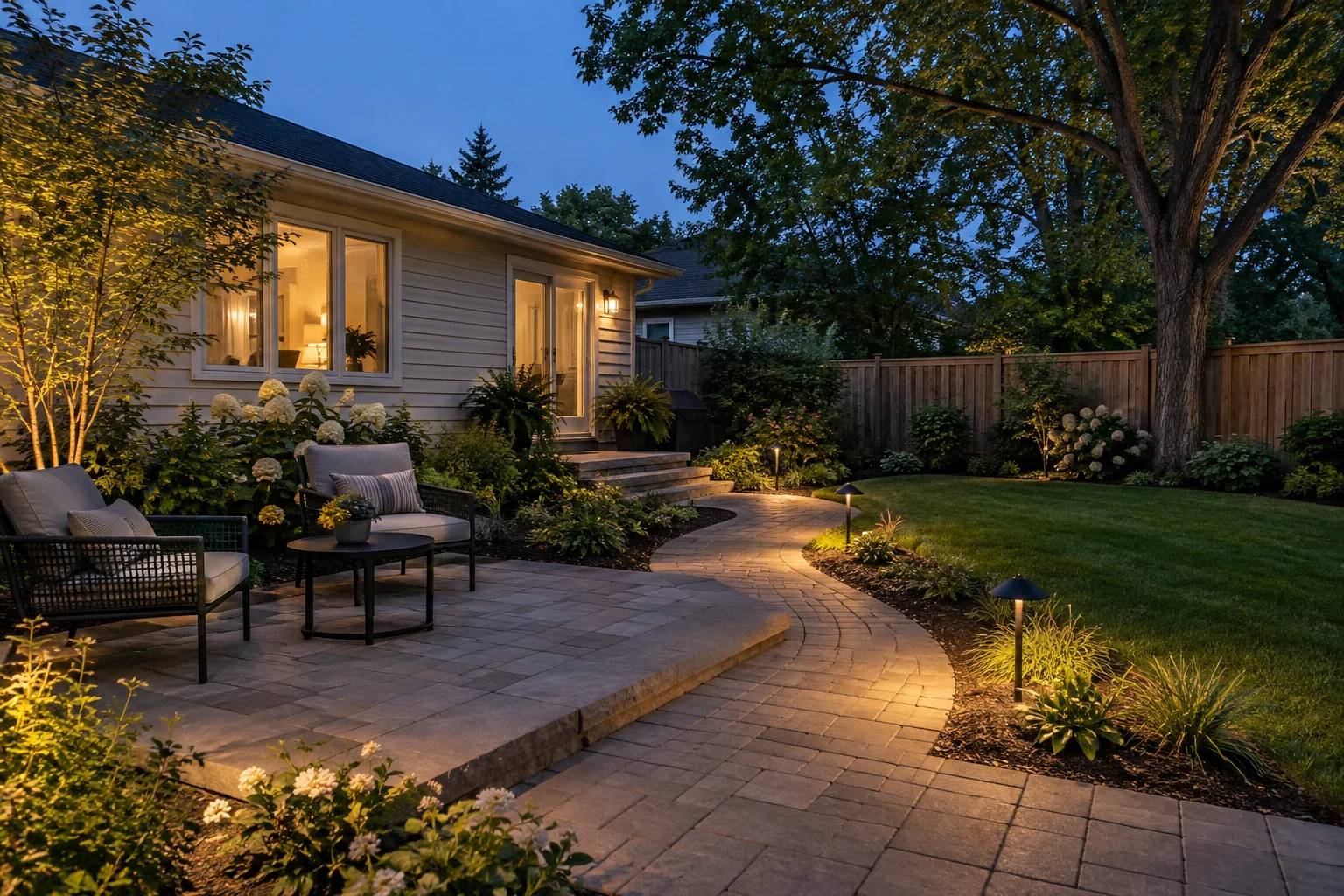
Light the routes and spaces you actually use
Outdoor and landscape lighting serves the parts of a Burlington property beyond an overhead ceiling: the path to the door, a change in garden level, a patio seating area or the route to a shed. The appropriate fixture depends on where useful light is needed and how people move through the space. A practical plan establishes those tasks before choosing decorative effects or filling the garden with fittings.
This service covers residential path, garden and patio fixtures, their suitable installation arrangements and controls. Recessed lights beneath eaves belong to Exterior & Soffit Pot Lights. Light triggered at an entrance or driveway belongs to Motion & Security Lighting. These layers can work together, with each doing a clear job and operating at an appropriate time.
Begin with what you want to use after dark. A short front walk, a side gate and an outdoor table do not necessarily need the same output, fitting height or operating schedule. A restrained result can feel comfortable while preserving darker parts of the garden. The aim is a considered residential setting, rather than a uniformly illuminated yard.
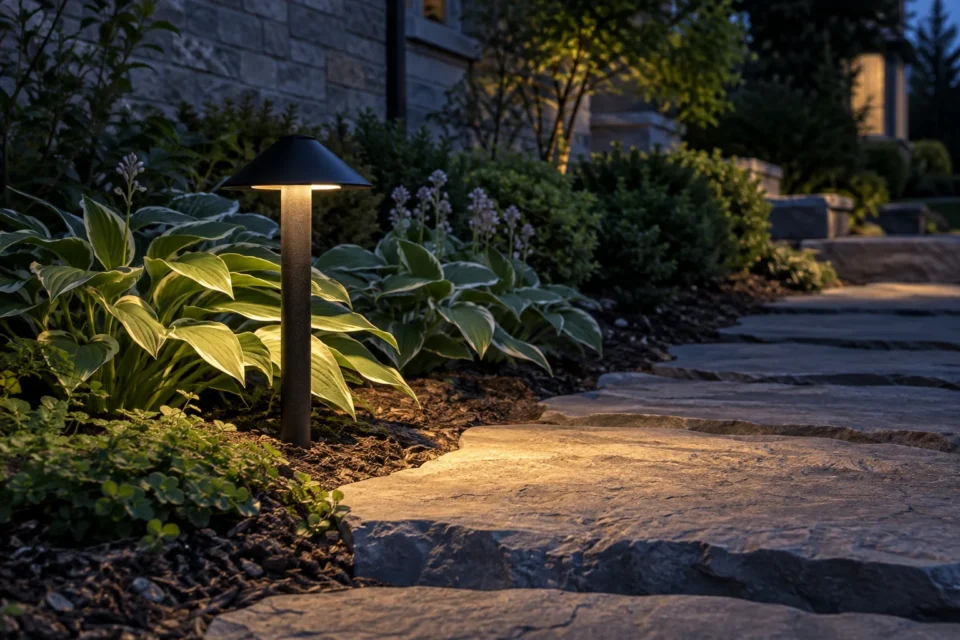
Make paths and level changes legible
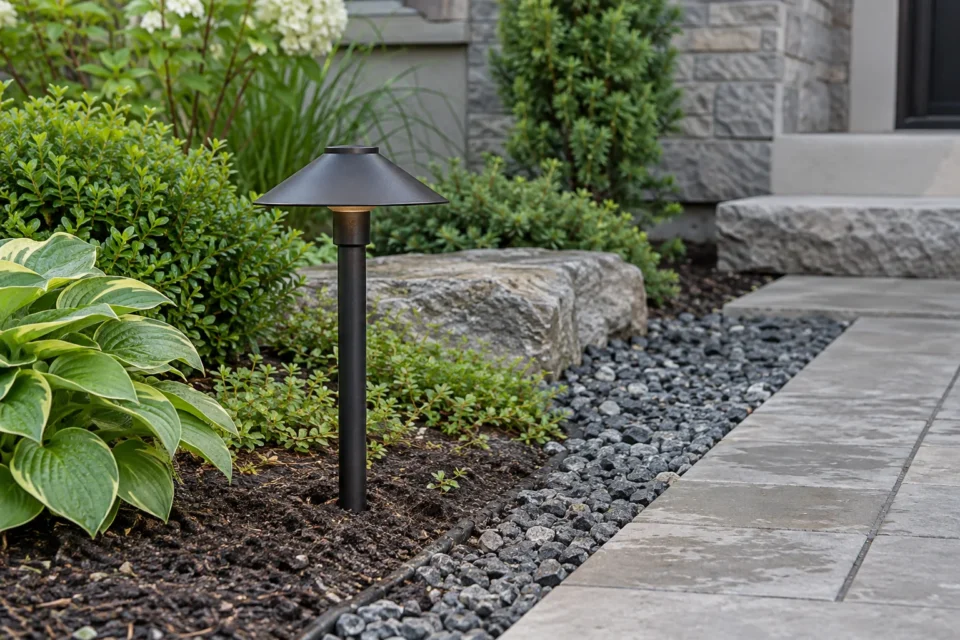
A path-light plan should consider the walking surface and its edges, not just the appearance of the fixtures in the planting. Corners, steps and intersections can need attention even when the straight sections feel adequately lit. Include the actual routes used by visitors and residents, including the journey from parked vehicles to the entrance.
Positioning needs to account for the surrounding garden. A fixture tucked behind a shrub may cast a bright patch on leaves while providing little help on the paving. A fitting at the lawn edge can interfere with mowing or become vulnerable to equipment. Discuss where plants will mature and how the area is maintained so the useful coverage can remain practical.
The luminous face should also be considered from ordinary viewing positions. Low fixtures can still create glare when seen from a patio chair or through a ground-floor window. Shielding, output and placement need to work together. A sequence of small controlled pools may be more comfortable than a few bright sources that make the intervening areas appear darker.
Photograph the path in daylight and mark changes in level on a simple sketch. You do not need to take risky night-time photos or decide exact fixture spacing yourself. The property’s dimensions, selected products and intended task should guide the final arrangement.
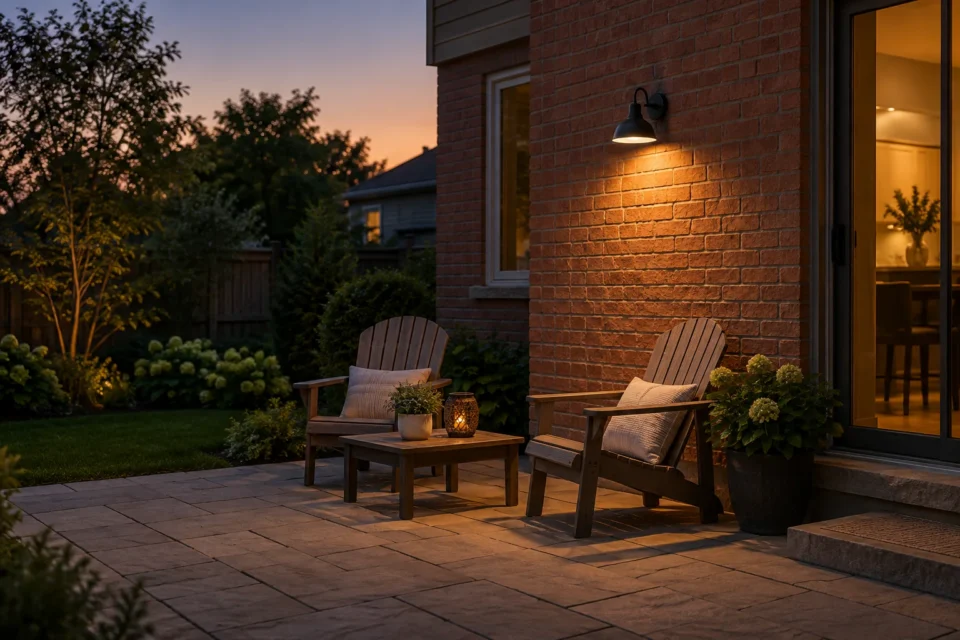
Give the patio its own lighting purpose
A patio used for conversation needs a different atmosphere from a route used briefly to reach the back door. The positions of chairs, tables and doors help establish where light should fall and which sources will be visible to seated people. Avoid specifying a bright wall fixture simply because it covers a large area on paper.
A suitable wall light can help at the threshold, while a separate low layer can define the patio edge. A table or dining area may need a different arrangement again. The plan should identify those roles without assuming that every available surface needs a fixture. Existing porch or soffit lights should be included in the discussion because their output can overlap with the new work.
Tell us whether the patio furniture has a settled layout or changes through the season. Explain how the area is used on a typical evening and whether a manual setting is preferred to scheduled operation. A control near the point of access can make the lights easier to use; the specific electrical arrangement needs assessment.
If the project includes a new patio, retaining wall or other building work, coordinate lighting before finished surfaces are completed. The agreed scope should identify any openings, routes and making-good responsibilities, so the lighting is considered with the wider construction instead of being added as an afterthought.
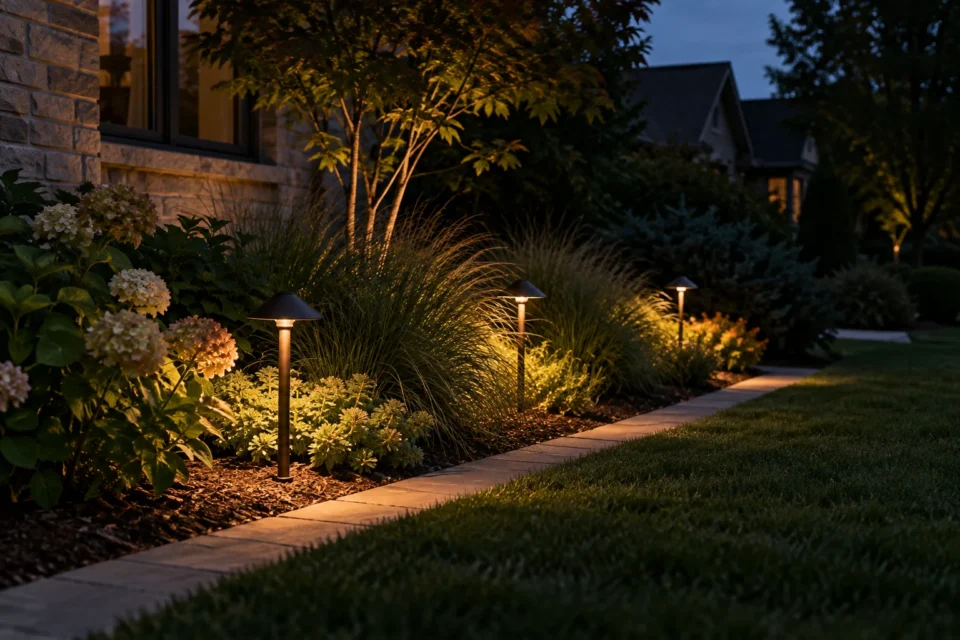
Use garden accents with restraint
Garden illumination can define a planted edge or reveal a selected feature while leaving the rest of the yard quiet. Start with the feature you want to see from the house or seating area. The fixture itself should not become the brightest visual element unless that is an intentional and suitable choice.
Planting changes over time. A light that works beside a newly planted bed may be obscured as foliage grows, and leaf colour or seasonal cover can change the effect. Discuss access for routine care and whether a fitting can be maintained without disturbing established planting. A plan based only on a photograph of an empty garden may miss these practical details.
Neighbouring windows and property boundaries remain part of the design. Consider the source and reflected light from those viewpoints, especially in narrow side yards. The City of Burlington’s Guidelines for Outdoor Lighting, revised 28 October 2008, address glare and spill, including residential uses; the applicable requirements depend on the property and proposal. Do not assume a development-application submission process applies to every small residential retrofit.
The outdoor lighting and neighbour considerations guide helps frame those questions. Where another property’s outlook could be affected, review output, shielding and operating hours before committing to the layout. More brightness should not be the default answer to a feature that is hard to see.
Select a complete outdoor installation
Outdoor fixtures must suit their actual location and exposure. Rain, damp ground, irrigation, temperature changes and the way a fitting is supported all belong in the assessment. A sheltered wall position and a fixture within a garden bed are different conditions, even when both are described as outdoor lighting.
The complete electrical product needs recognized Canadian approval, as applicable, and the manufacturer instructions must suit the intended use. An IP rating or a weather-resistant description does not replace every approval and installation requirement. Power supplies, connections and controls should be considered as a complete system rather than a collection of unrelated parts purchased separately.
Low-voltage equipment is not permission to improvise an installation. The power supply, wiring route and all connected components still need a suitable arrangement. Explain any existing landscape equipment that you want retained and share its product information where available. The assessment can establish what is reusable and what would require a different scope.
Access for future care matters as well. Identify where garden work, snow clearing or storage could affect fittings. The intended installation should avoid placing ordinary maintenance tasks in conflict with equipment, and the quotation should explain what is included rather than relying on a product label alone.
Plan controls and installation scope
Decide which parts should operate together and when. The front path may need a different schedule from a patio used occasionally, while decorative garden accents may be unnecessary late at night. Manual switches, timers, photocontrols and selected smart options have different capabilities. The chosen controls must be compatible with the actual lighting equipment.
For wider control changes, compare Smart Lighting & Dimmers. If existing outdoor fittings fail repeatedly, describe that symptom before requesting an expansion. Lighting Repairs can address assessment of unreliable equipment; adding new lights should not conceal an unresolved problem.
A quotation can be affected by the fixture types, route lengths, available supply, finished paving, planting, access and number of control zones. Establish whether the request is a new system, an addition or modernization of existing equipment. Clarify responsibility for opening and restoring surfaces, landscape disturbance and any work outside the agreed lighting scope.
When hiring for electrical installation in Ontario, verify the Licensed Electrical Contractor through ESA. New installations and wiring changes generally require an ESA Notification of Work; specific replacement exceptions exist. Confirm the actual requirements with the contractor or ESA, and identify any separate approvals associated with construction or shared property.
Prepare an outdoor lighting request
Show how the outdoor space is used:
- Property and route plan: Share the Burlington property location, a simple sketch of paths and seating areas, safe daytime photographs and the outcomes you want.
- Boundaries and level changes: Mark boundaries, neighbouring windows and any change in level.
- Existing lights and landscape work: Explain the existing lights and controls, what should remain, and any planned paving, garden or patio work.
You can begin without knowing the final fixture count. The Lighting Services directory helps distinguish connected scopes, and the contact form is the place to describe them together. A clear account of how you use the outdoor space is the most useful starting point.
Plan for everyday ownership
Consider the garden in more than one season. A route that is easy to reach in summer may be affected by stored furniture, snow clearing or a different planting outline later in the year. Tell the assessor where equipment is normally moved and which beds or paths change through the season. The lighting should remain understandable and accessible without relying on a particular temporary arrangement.
If the garden is being redesigned, share the proposed finished levels and boundaries rather than only the current appearance. Changes to paving and retaining features can affect locations and access. Keep fixture selection flexible until those details are agreed, and clarify what lighting work belongs to the electrical scope and what belongs to the landscape contractor.
Retain product and control information with your project records. Future questions about settings, replacements or added fittings are easier to address when the installed equipment is known. Discuss that information as part of the proposal without assuming a particular maintenance plan or warranty.
Outdoor & Landscape Lighting Gallery
Outdoor & Landscape Lighting Questions
Is landscape lighting the same as soffit lighting?
No. Landscape and outdoor fixtures serve paths, gardens and patios beyond overhead ceilings. Exterior & Soffit Pot Lights addresses recessed eave lighting. A plan can include both with distinct purposes.
How many path lights should I install?
The walking route, level changes, selected optics, planting and viewing positions determine useful coverage. Start with the task rather than copying another garden's spacing. The layout needs to be assessed for the actual property.
Can low-voltage lights be installed without further assessment?
Low voltage does not remove the need for a suitable complete system. The power supply, components, location and wiring arrangement still need consideration. Confirm the actual electrical requirements with the Licensed Electrical Contractor or ESA.
Can garden lights run on a schedule?
Depending on the selected equipment, manual controls, timers, photocontrols or selected smart options may be suitable. Discuss separate path and patio needs; Smart Lighting & Dimmers covers connected control work.
How should neighbouring windows be considered?
Review the source and reflected light from boundary sightlines, then consider shielding, output and operating times. Outdoor lighting and neighbour considerations provides background for those decisions.
What information helps with an initial quotation?
Share safe daytime photos, the property location, routes and seating areas, existing lights and planned landscape work. Use the contact form to explain how you want to use the space after dark.