

Light for what customers see and staff do
A small shop or studio uses lighting for more than general brightness. Customers need to find their way through the space and see the items or service area clearly. Staff may need useful light at a counter, work table or mirror. The room can feel uneven when only the ceiling centre is bright, while the surfaces that carry the business remain poorly lit.
Retail & Studio Lighting focuses on practical fixture and control upgrades in selected smaller Burlington shops and studios. The brief begins with displays, customer circulation and service tasks rather than a universal fixture package. Commercial Pot Lights is the related route for a defined new recessed installation, and Office Lighting addresses business desks and meetings. Compare them through Lighting Services, then describe the space and the activities that need attention.

Map the customer route through the room
Start at the entrance and note the places where someone pauses, looks at a display, approaches the counter or moves to a service area. A small unit may have only a few steps between these zones, yet each one has a different lighting role. Identify the shelves, table displays and furniture that will remain. If the layout changes seasonally, explain which positions are flexible and which are fixed.
Useful general light should support the route without overwhelming the items or tasks along it. A brighter fitting at the entrance is not automatically the answer to a dim display deeper inside the room. Wide photographs help show how the ceiling and walls relate to the customer path. Include the opening and closing view if daylight changes the balance substantially. The intended arrangement should be understood before fixture positions are confirmed.

Give displays light where it is useful
Shelves, hanging items, table displays and wall features do not receive light in the same way. Describe what is being displayed and how it is usually arranged. A ceiling source over the aisle may leave a vertical shelf face in shadow, while a fitting directed too aggressively can create uncomfortable brightness or a reflection in glossy packaging. The proposal should connect the source to the surface, not only to the ceiling plan.
Discuss whether the request calls for general coverage, focused display light or a combination. Selected recessed, surface, track or other suitable fittings can have different roles; the actual product and installation conditions need assessment. If displays move, consider how any proposed arrangement can remain useful without assuming every source is freely adjustable. Keep product placement and fixture selection in the same conversation so the final scope reflects the business layout.
Consider colour and reflective finishes
White-light appearance and the way colours look under the proposed source can matter when people compare products or materials. Bring representative samples if appropriate and explain the room finishes. A nominal colour-temperature figure is useful information, but it does not by itself describe every aspect of how a product looks in the space. Avoid selecting a whole room’s equipment based only on a catalogue photograph.
Mirrors, glass, polished counters and glossy merchandise can make bright sources more noticeable. View those surfaces from the customer and staff positions that matter. A proposal can then consider distribution, fixture placement and the selected light appearance together. If some existing fixtures will stay, identify them so the discussion includes the transition between old and new areas. No lighting photograph or product label alone establishes the appearance of the completed room.
Make service tasks a separate lighting question
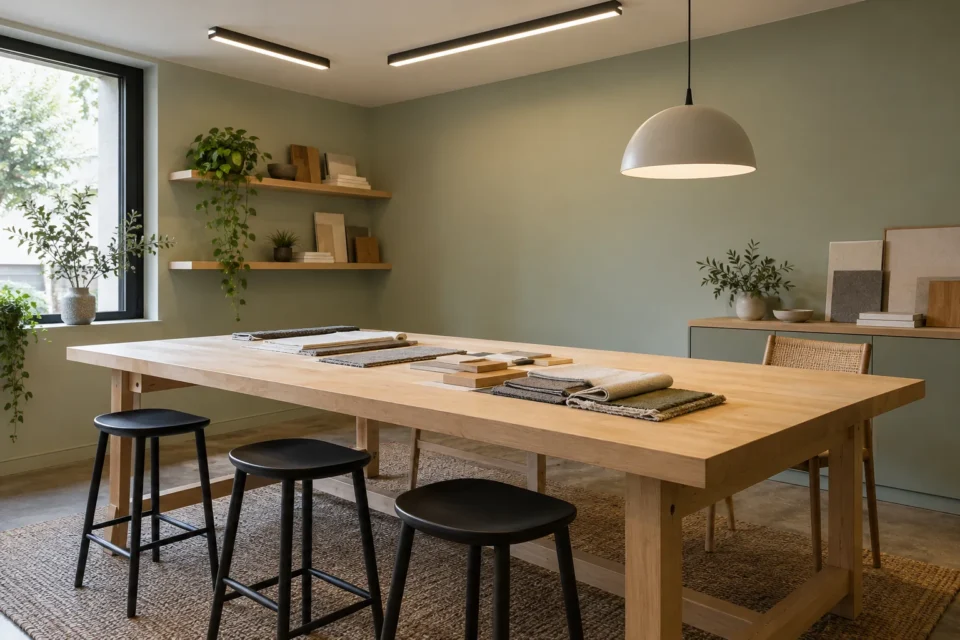
A studio may include a table for detailed work, a mirror-based service position or a consultation counter. These are practical tasks, not simply decorative scenes. Explain what must be visible at the working surface, where the person performing the task stands and where the customer sits. A general ceiling layer may need support from a source closer to the activity.
For mirror areas, consider the face and the view in the mirror rather than selecting a fitting solely because it matches the décor. For a craft or design table, note whether materials are spread out and whether the work is viewed from several sides. The precise service use and selected products need assessment; this page does not prescribe a universal brightness level. Describe any existing glare or shadow from a normal viewpoint without opening or altering electrical equipment.
Balance task, display and room lighting
A shop can feel inconsistent when the entrance, counter and display wall each use unrelated light. A studio can feel harsh when every fitting is selected for its highest setting without considering the quieter service or consultation use. Define the important zones and the preferred operating settings. The useful result is not necessarily the maximum possible output across the whole unit.
General, display, task and decorative layers can work together when each has a clear purpose. A pendant may establish a counter or consultation point while another source reaches a shelf or work surface. Keep the final fixture dimensions and support requirements in the discussion, especially where a decorative fitting is proposed over furniture. Light Fixture Installation is the related service for a particular fitting, while this page keeps the customer and service-use brief together.
Allow for changing displays and practical controls
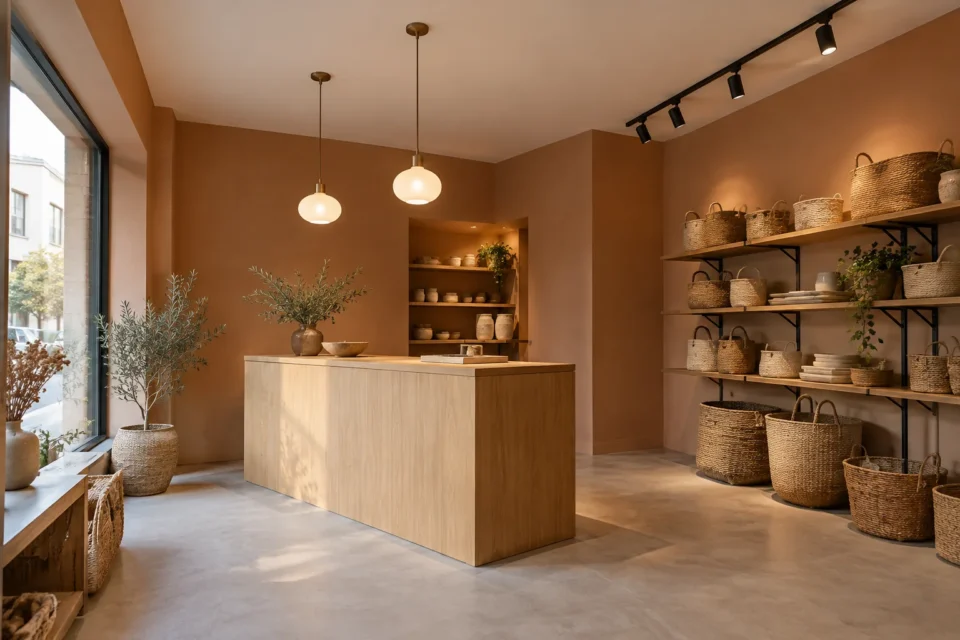
Retail arrangements and studio appointments can change over the day or season. State which areas need independent operation and whether a particular display or service zone should use dimming. Think about the wall interface used by the first person opening and the last person closing. A useful control arrangement is one that people can understand without guessing which switch operates which area.
The selected light, driver and dimmer combination matters when dimming is proposed. Ask about the actual products and their compatibility rather than assuming a generic LED label answers the question. Smart Lighting & Dimmers covers those control choices. Describe any desired smart functions and known building restrictions early. The agreed scope should identify intended operation without promising unverified integration with equipment or systems already in the unit.
Assess the ceiling and existing equipment
Provide the ceiling height and construction if known, along with visible bulkheads, beams, ventilation and existing fittings. A finished drywall ceiling may involve different access and restoration from a suspended system. New positions, changed fixture formats and heavier fittings can introduce their own installation questions. The complete selected product must suit the actual location and manufacturer requirements.
If an existing light flickers, buzzes or fails, describe that separately for Lighting Repairs. A customer-facing refresh should not hide an unresolved symptom behind a new appearance choice. Product approval is another distinct check; Approved LED Lighting Products in Ontario explains the recognized approval question. Keep any records already available, but do not remove fittings or open enclosures to collect model information for the initial request.
Coordinate access with customers and merchandise
Opening hours, bookings and the ability to clear the work area can affect the arrangements. Explain which displays or equipment are fixed and what can be moved. Ask who will protect or relocate merchandise and who will provide access to the building. A compact shop with tall shelving can be harder to work in than its floor area suggests, so photographs should show those constraints.
Discuss likely interruption and whether proposed staging is feasible before accepting a schedule. Do not assume that the space can remain open throughout electrical or ceiling work. If a shop fit-out also includes painting, shelving or signage, identify the sequence and the final layout. The landlord or property manager’s known requirements should be included in the brief. Confirm who can authorize decisions if an existing condition changes the proposal.
Compare the complete customer-facing scope
A proposal should identify the areas, intended fixture roles, selected equipment, controls and access assumptions. Ask what is included in supply and installation, what restoration is expected and how related trades are arranged. A lower total may describe fewer zones or retain equipment that another proposal replaces. Compare the same intended result rather than treating every fitting as an interchangeable unit.
Verify the Licensed Electrical Contractor through ESA when hiring electrical work in Ontario and confirm the notification and review requirements for the particular commercial scope. The building’s size or the decorative purpose of a fixture does not settle those requirements. Keep the written proposal and product information together so future display changes or replacement discussions start with the actual equipment and agreed installation rather than a generic description.
Prepare your retail or studio inquiry
Prepare the shop or studio request with:
- Property and room conditions: Include the Burlington area or postal code, shop or studio type, approximate size and ceiling conditions.
- Customer and service priorities: Describe the customer route, key displays, service tasks and the areas that currently feel difficult to see or uncomfortable.
- Room and detail photographs: Add wide photographs and a normal-view image of the particular shelf, mirror or work surface involved.
Keep customer information and unrelated personal details out of submitted images.
Mention lease or ownership context, who can authorize the work, access windows and any planned layout change. If you have selected fixtures, include their dimensions and model information. Request an Estimate to discuss whether the particular smaller shop or studio and fixture/control scope can be accommodated. You can begin with one priority area; the next conversation can clarify which sources, conditions and responsibilities need review.
Retail & Studio Lighting Gallery
Retail & Studio Lighting Questions
Can a small shop use several lighting layers?
Yes, the request can distinguish general, display, task and decorative roles. The actual fixtures, positions, controls and installation conditions still need assessment for the unit. Compare Commercial Pot Lights if a new recessed layer is the main installation request.
Will more ceiling brightness improve every display?
Not necessarily. The direction of light, shelf faces, product position and reflective surfaces can matter. Describe the particular surface or item that needs useful light.
What is different about a mirror-based service area?
The person’s face, working position and reflected view are useful parts of the brief. A fitting chosen only for appearance may not serve that task well; the actual use and products need review.
Can fixtures support changing displays?
Describe which displays move and which remain fixed. A suitable arrangement can be discussed, but do not assume every product or existing installation can be repositioned without further work. For related operating choices, explore Smart Lighting & Dimmers.
Can the work be staged around opening hours?
Provide access windows, bookings and building restrictions. Any staging and interruption arrangements must be agreed for the actual scope; continuous operation should not be assumed.
What photographs help with the first discussion?
Wide views of the ceiling and room, the customer route and the particular display, mirror or task surface are useful. Take them safely without opening equipment, and exclude customer or sensitive information.