
Lighting guide
Slim LED or traditional recessed lighting: choose a system
Slim LED fixtures and traditional recessed housings solve different ceiling and lighting problems. Compare the complete assembly, optical choices, available depth, driver access and future replacement approach.
On this page
Slim LED lighting is often considered when a recessed appearance is wanted in a constrained ceiling. Traditional recessed systems use a housing or other deeper assembly and can offer different lamp, module and optical arrangements. Both categories include a wide range of products. Choosing between them requires a comparison of complete systems, rather than treating every shallow light as the same product or every housing as outdated.
The question is what the room needs, what the ceiling can accommodate and how the selected system will be maintained. A low-profile diffuser may suit broad ambient lighting. A deeper optical assembly may offer a preferred appearance or direction of light. Neither description establishes approval, exposure suitability, dimming compatibility or the amount of useful light reaching a task.
Define the systems being compared
“Slim LED” commonly describes a low-profile integrated light, often paired with a separate driver or connection enclosure. The visible light can be thin while the full system still needs space and suitable access above the ceiling. Product drawings and instructions should show each part. A thin face does not mean that the complete installation requires no cavity.
“Traditional recessed” can describe a housing with a separate lamp and trim, a housing accepting a retrofit LED module or a recessed system designed around an integrated LED assembly. These are different replacement arrangements. Ask which version is actually proposed so the discussion of parts, optics and future service relates to the product you would receive.
A quote saying only “LED pot lights” leaves these choices unresolved. For new pot light installation, request the model, visible trim, associated components and control approach. For an existing room, provide any saved fixture information and describe which parts you hope to retain.
Ceiling depth is a constraint, not a complete selection rule
A shallow cavity can make a low-profile system worth considering, but available depth varies across a room. Joists, ducts, pipes and other services can occupy the preferred location. Even where the light body fits, its associated enclosure and permitted arrangement need assessment. Do not translate a product’s headline thickness into a promise that every ceiling position is feasible.
A deeper housing requires suitable space for the exact assembly. Some locations may accommodate it and others may not. The proposed mounting, surrounding construction and instructions determine the installation requirements. An optical preference for a deeper fitting should therefore be reviewed alongside the ceiling conditions before a layout is treated as final.
Compare the full installation envelope rather than only the visible disc or reflector. Ask what can be confirmed from available information, what needs a site assessment and whether alternative positions or systems may be required. That makes the ceiling constraint explicit without assuming that the thinnest product can bypass every obstacle.
Compare optics independently from construction depth
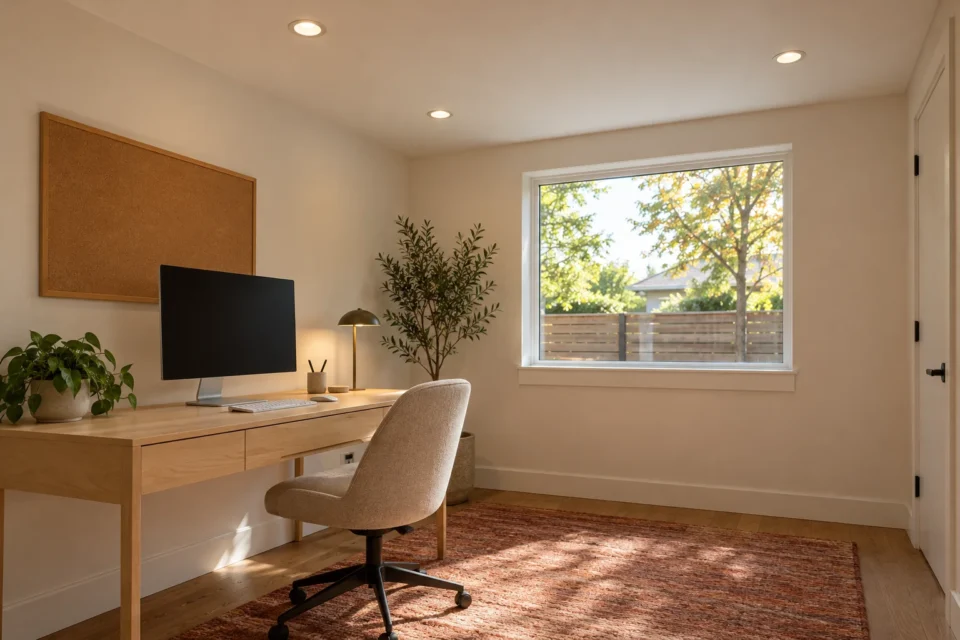
A shallow fixture often has a broad luminous face, but the category also contains other optical arrangements. A housing-based system can use different trims and reflectors, yet it too varies considerably by model. Compare beam distribution, shielding and delivered output directly. Depth alone does not establish how comfortable or useful the light will be.
In a family room, the normal seated view of the source matters. In a kitchen, the relationship between the fixture and work surfaces matters. In a corridor, vertical surfaces and changes of direction affect the impression of coverage. Describe these needs first, then compare products capable of serving them.
A recessed source, baffle or adjustable optic can change the ceiling appearance and the way light reaches a feature. If those qualities are important, include them in the comparison from the beginning. Choosing a generic slim fixture first and asking it later to behave like a deeply shielded accent fitting can produce a poor match between product and purpose.
Look closely at the replacement approach
An integrated LED light does not necessarily have a separately replaceable lamp. Depending on the system, service may involve an approved component or the complete fixture. A lamp-based housing may allow lamp replacement, while its trim or housing presents another service question. Obtain the selected manufacturer’s instructions and parts information instead of assuming a category guarantees one replacement method.
Consider what would happen if one fitting needed attention after several years. Would the exact module or fixture be identifiable? Is the visible finish part of the replaceable assembly? Could a replacement have a noticeably different lens or white-light appearance? These questions help compare future matching without inventing a product lifespan or parts-availability guarantee.
Keep the model numbers and the final settings with the project records. A room photograph records appearance; it cannot reliably identify the internal system. If long-term matching matters in a connected space, discuss that priority before purchase and ask which practical records or spare-product decisions make sense for the selected system.
Driver access deserves its own question
An LED driver is part of the system that enables the light to operate. It may be incorporated into the fixture or associated with a separate enclosure. Its location and service requirements should be understood before the ceiling arrangement is settled. A small visible fitting can conceal a larger assembly and a different access requirement.
Ask how the selected product’s service access will be maintained in the completed ceiling. The answer depends on the product, construction and permitted installation. Do not assume every separate driver can be retrieved through any aperture, or that every integrated driver means the entire ceiling must be opened. Those are model-specific questions.
A homeowner does not need to remove a light or open an enclosure to investigate this. Share saved product documents and the accessible view from below, then let the responsible contractor assess the installed arrangement. Serviceability should be a deliberate system choice rather than a guess based on how thin the trim looks.
Retaining a housing can be useful when compatibility is established
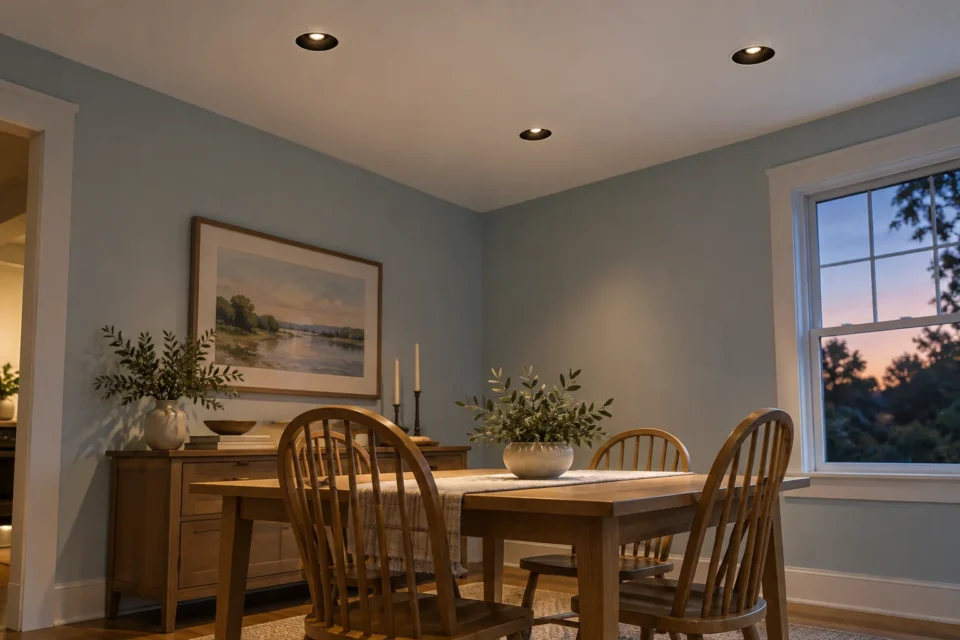
An existing housing can sometimes form part of an LED update, but the intended replacement needs to match the actual system. An online retrofit description or a similar outer diameter does not establish that match. The housing identification, condition and manufacturer compatibility information are the starting points.
If you are unsure what is installed, the guide to recognizing older recessed lighting helps organize visible observations. It does not ask you to expose electrical parts. An assessment can determine whether retaining the system, replacing selected components or changing the complete fixture is a reasonable scope.
The LED pot light upgrade service addresses that property-specific decision. Retention can preserve existing openings, while a system change can involve different mounting or finishing needs. Compare the resulting performance and work scope rather than treating reuse as automatically preferable or full replacement as automatically necessary.
Approval and ceiling conditions remain separate checks
Recognized complete-product approval is required where applicable, regardless of how thin or familiar the fixture appears. That approval question is separate from suitability beside insulation, in a damp or wet location, or with a proposed dimmer. Review the exact product and its instructions for each condition. A system category cannot stand in for those checks.
Natural Resources Canada’s roof and attic guidance identifies recessed lighting as a consideration for insulation and air sealing. Where a ceiling is part of the building envelope, discuss the assembly and compatible installation details. Choosing an LED source does not make insulation or barrier conditions irrelevant.
A bathroom or exterior application can add exposure and operating-condition questions. Give the assessor the actual location rather than asking whether a general category is “outdoor safe.” A selected model’s documented suitability and the installation conditions govern the decision. The same visible trim family may include products intended for different applications.

Make the comparison practical
| Decision | Ask about the proposed system |
|---|---|
| Ceiling fit | Complete assembly dimensions, obstructions and mounting |
| Useful light | Output, distribution, shielding and intended surfaces |
| Future service | Replaceable parts, model records and access |
| Existing installation | Compatibility of retained housing and new components |
| Suitability | Approval, exposure, insulation conditions and controls |
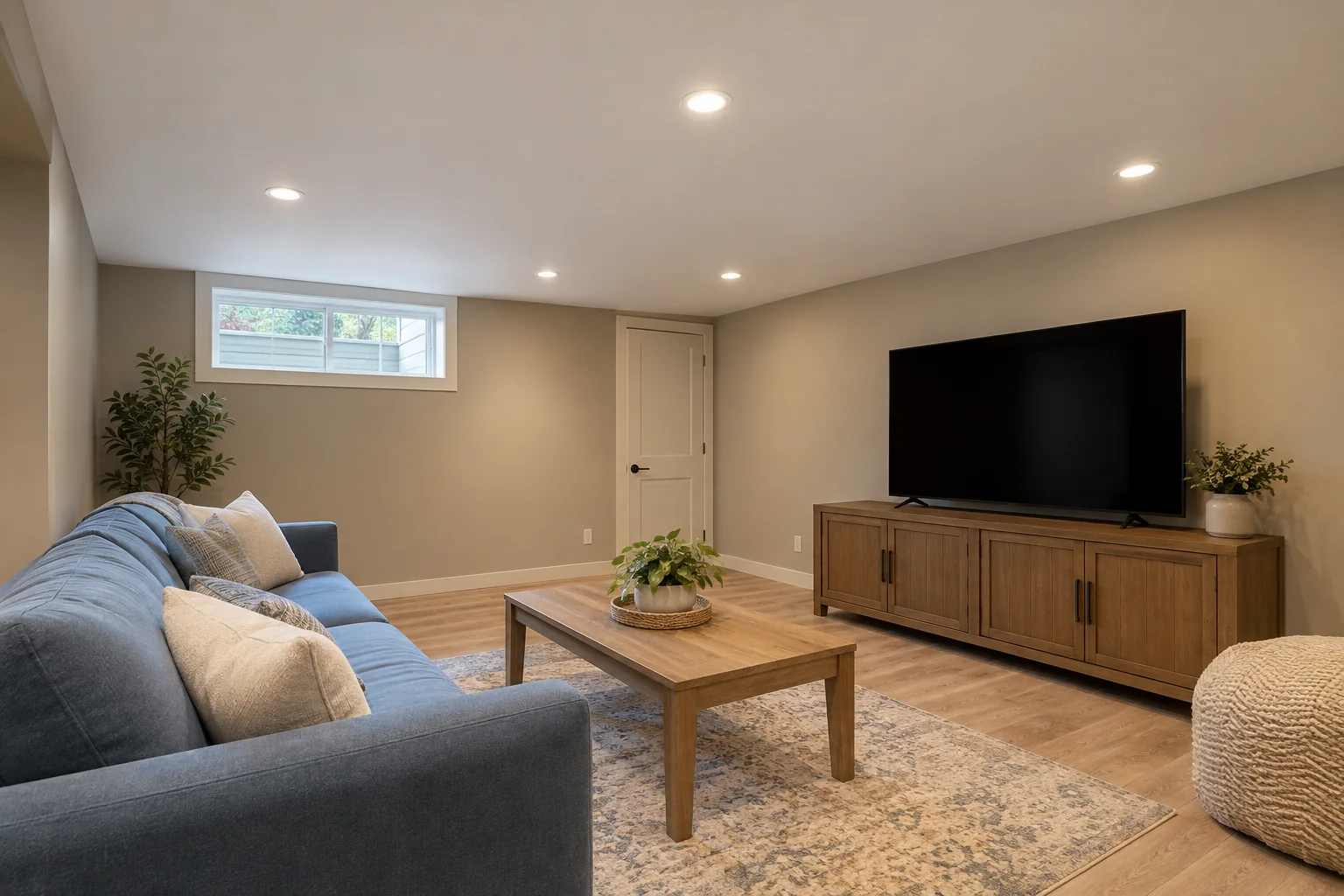
For a modest-height basement, a low-profile option may enter the discussion because depth and visual presence matter. For a feature wall or a room with direct views of the ceiling, optical control may lead the comparison. For a retrofit, the existing system may shape the options. Each starting point is legitimate; the final choice needs to satisfy the other conditions too.
Use the lighting guides for related planning questions. When you share the project for an estimate, include the room use, ceiling height, wide photographs and saved product details. State whether your priority is a quieter ceiling, better useful coverage, a particular optical effect or retaining existing openings. That information makes a system comparison much more useful than requesting the newest fixture type.
Frequently asked questions
Are slim LED lights always the best option?
No. Compare the complete system’s fit, optics, approval, suitability and service approach for the actual application.
Does a thin light require no space above the ceiling?
No. The associated driver or connection enclosure and the permitted installation arrangement also require assessment.
Can an existing housing be retained for an LED upgrade?
It may be possible when the existing system and proposed replacement are compatible. An LED upgrade assessment can establish the appropriate scope.
Do traditional recessed lights always use replaceable bulbs?
No. Housing-based systems can use lamps or integrated modules. Check the selected product’s instructions and replacement arrangement.