
Audible lighting symptoms
Buzzing Lights or Dimmers: Describe the Sound Before Choosing a Fix
A hum, buzz or other unexpected sound near lighting needs context: where you hear it, when it began and whether visible changes or damage accompany it.

On this page
A buzzing light or dimmer is an audible symptom, not a diagnosis. It may be noticeable near a wall control, above a seating area or in a quiet room after other background sounds stop. Describe what you hear and where you hear it from normal use. Do not put your ear against a fitting, open a control or reach into a ceiling to track the sound.
For Burlington households, an unexpected new or persistent sound belongs in a lighting repair assessment. A quiet-looking fixture is not evidence about the equipment concealed behind it. Equally, a sound that appears near a dimmer does not prove the dimmer alone is responsible. The actual products and installation need to be considered before a replacement is recommended.
Make the sound description specific
“Buzzing” can describe a low hum, a higher pitched whine, a vibration or an irregular sound. Use whichever word fits your experience and say whether it is continuous or occasional. Mention whether it can be heard from the usual chair or only when you pass the control. You do not need a measured sound level or a technical name to explain what has changed.
Also distinguish one sound from several events. A single click during normal control operation and a sustained buzz while lighting remains on are different descriptions. If you are uncertain, report the uncertainty. The purpose is to give the assessor a useful account rather than classify a component as defective from sound alone.
Rooms differ in how obvious a sound becomes. A home office during a quiet evening may reveal something that kitchen activity masks. A new rug or furniture arrangement might change what you notice without establishing when the sound started. Keep the room context in the request, particularly if the disturbance affects reading, working or sleeping.
Identify the apparent location safely
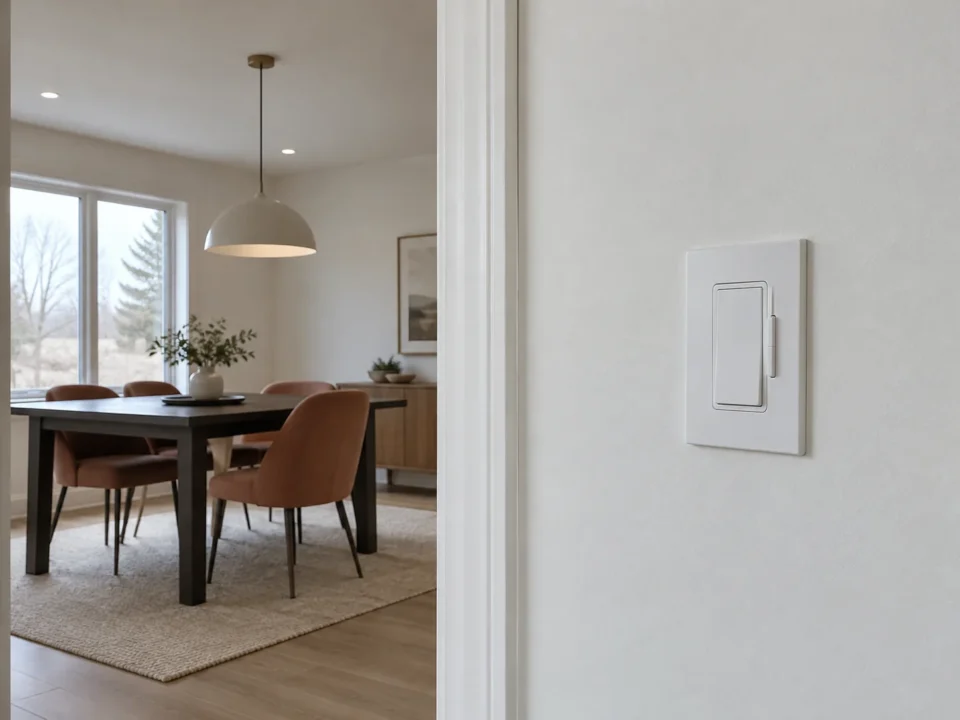
Describe the location from your normal position: beside the doorway, above the table, around the cabinet lighting or near the ceiling group. Sound can be difficult to locate in a furnished room. “It seems louder beside the wall control” is useful; “the control is definitely failing” claims more than the observation supports.
If a room contains several lighting types, name the ones normally in use when you heard the sound. A ceiling group, pendant and cabinet light may have different controls and products. Existing knowledge about which control serves which lights helps organize the request. Do not operate unfamiliar equipment or disconnect individual fixtures to isolate a suspected source.
A recording taken safely from an ordinary room position can supplement your description if it captures the sound during normal use. Phone microphones may omit quiet sounds or emphasize background noise. A recording that sounds different from your direct experience does not invalidate that experience. Tell the assessor both what you hear and what the recording conveys.
Possible product and control categories
An LED system includes light-producing components and control equipment that need to work together. Manufacturer guidance for the actual products is relevant. Lutron identifies buzzing or humming at the low end and different behaviour across LED products in its dimmer troubleshooting guidance. Those observations support checking the combination; they do not establish that all buzzing is harmless or that one adjustment solves every installation.
If a light or control was replaced recently, the previous and new product information matters. A dimming-compatible description on a box is only a starting point. The assessor needs the specific combination and its intended application. A product that looks similar to the rest of the room’s fixtures may still differ in its requirements.
Equipment condition and the electrical installation also remain assessment categories. Sound cannot establish the state of concealed connections or determine that a component is suitable for its location. Avoid buying an assortment of dimmers to see which becomes quieter. A repair proposal should explain the findings and the selected remedy rather than rely on trial replacements directed by a visitor.
Describe settings already associated with the sound
Say whether you have already noticed the sound with dimmed lighting, at an ordinary brighter level or whenever a particular lighting group is in use. Keep the distinction between remembered behaviour and unknown behaviour. “I heard it twice while the dining lights were low” is enough to start the conversation; it does not require a sweep through every control position.
Do not leave the affected lighting operating to judge whether the sound becomes louder or the equipment gets hot. Repeated operation is not necessary to make a credible request. If a setting change occurred before the sound began, include that history. If no settings were deliberately changed, include that too.
The LED dimmer compatibility guide covers information needed when choosing products. Here the question is an existing audible symptom. A professional review can consider both the sound and the everyday operation you want, while keeping a possible compatibility issue separate from any concern about equipment condition.

Recent changes provide context, not proof
Useful history includes a new dimmer, a partial LED replacement, added lighting, renovation work or a recent change in the control arrangement. An invoice or existing instruction sheet can identify what was supplied. There is no need to locate a model label hidden inside a wall or ceiling. Give whatever documents are already available and let the assessor identify installed equipment safely.
If the sound began after work, describe the sequence without assuming responsibility or cause. “The control was changed last month; the sound became noticeable this week” is clearer than “the new control caused it.” If the equipment has been present for years, say that without inventing its exact age. The history can guide questions even when it does not determine the result.
For a rental home or condominium, notify the responsible property contact about the affected room and any recent authorized work. Some equipment and access arrangements may involve more than one party. Establishing who can arrange the assessment prevents a sound complaint from becoming an uncoordinated alteration to the existing system.
Stop when the sound accompanies warning signs
Burning smells, smoke, visible scorching, sparking or damaged lighting equipment call for stopping use and prompt qualified help. Keep away from the affected equipment. If there is smoke, fire or immediate danger, leave the area and contact emergency services. Do not touch a control to assess heat or continue using a buzzing fitting because its light output seems normal.
An audible symptom without those visible signs still merits assessment when it is new, persistent or changing. An online description cannot set a safe sound threshold for an unknown installation. Keep the complaint factual and arrange the review instead of deciding that a quiet hum is always acceptable. The desired outcome includes understanding what is producing the disturbance.
Prepare the information an assessor can use
Write down the room, apparent location, character of the sound, first known occurrence and any associated visible behaviour. Include whether one control operates several lighting types. Say if the sound prevents a normal activity, such as quiet work or sleep. A practical account of the effect helps make the requested assessment specific.
Wide room photos show the relationship between the control, fittings and furniture. A separate photo of the intact control may help identify its visible style. Keep ceiling fittings seated and plates in place. Do not remove a trim, disturb a driver enclosure or include close-ups obtained by unsafe climbing.
Separate assessment, repair and an optional upgrade
Ask what the assessment found, what work addresses the audible symptom and whether any proposed control change also improves ordinary use. A quote should identify the lighting group involved and the products or scope being considered. Matching appearance, a preferred control interface and repair of a concern may be related, but they are different reasons for work.
For a supported control change, smart lighting and dimmer planning addresses compatibility and everyday operation. For other visible symptoms, the Lighting Problems collection helps describe the full situation. Send the sound description and room details so the next step can be scoped around the actual installation rather than a guessed cause.
Frequently asked questions
Is a buzzing dimmer always the cause of the sound?
No. The apparent location is useful information, but it does not identify the responsible component. Describe where the sound seems strongest from ordinary room positions.
Should I remove the wallplate to find a model number?
No. Use existing packaging, invoices or instruction sheets if available. Leave the closed control and installed fixtures intact for professional identification.
Does a normal-looking light mean the buzz is harmless?
No. Appearance does not establish the condition of concealed equipment. Arrange assessment for a new, persistent or changing sound.
What if the buzz occurs only with dimmed lights?
Report that existing observation without reproducing it. The actual product combination matters; the compatibility guide explains selection questions.