
Comfort from everyday viewpoints
Pot Light Glare: Review Bright Apertures, Reflections and Sightlines
Pot light glare can come from a bright source in the normal view or a reflection on a screen or polished surface. Describe the position and activity where it becomes distracting.
On this page
Pot light glare is a comfort and visibility complaint about where brightness appears in your normal view. You may notice a ceiling aperture from a sofa, a reflection on a monitor or bright points in a dark television screen. Begin with the activity and viewing position where the distraction occurs. A room can need useful light and still have a troublesome source or reflection in a particular sightline.
Pot light layout and design assessment can review the relationship between installed positions, furnishings and the selected fixtures. For a Burlington home, that review should consider the ordinary view from a chair, desk or bed alongside the room’s wider lighting needs. Glare is not evidence by itself that an electrical fault exists, and a static photograph cannot measure the experience for every occupant.
Describe direct brightness and reflected brightness separately
Direct glare involves a source that appears distracting in the view. Reflected glare involves brightness returned by a screen, glass or another surface. CCOHS identifies both types in its lighting guidance. That distinction gives a room review useful starting categories without deciding which fixture change will be appropriate.
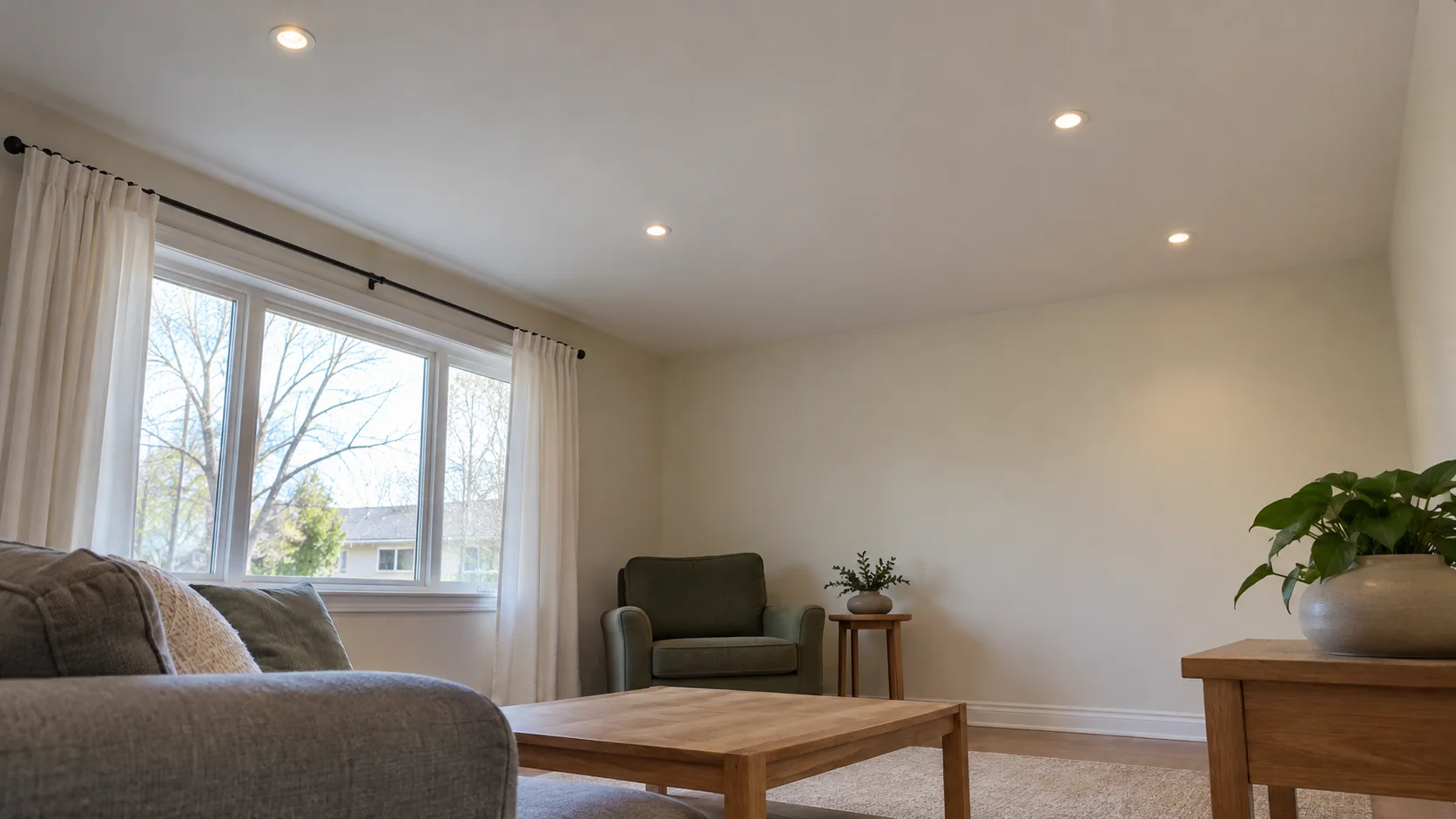
For a visible source, describe the ceiling position and your usual posture. A fitting noticed while leaning back on a sofa may not be prominent when standing at the entrance. Say whether the source is directly above, toward the screen wall or visible at the edge of your view. The assessor can then consider the relationship between that viewpoint and the retained ceiling layout.
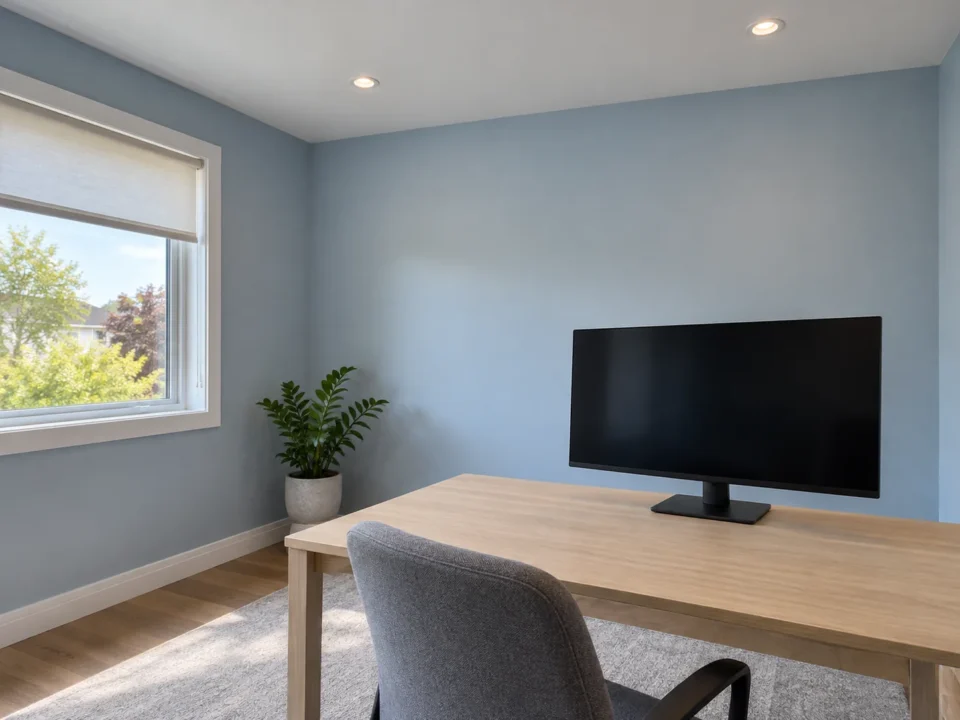
For a reflection, identify the surface and the activity it interrupts. A monitor during work, a glass tabletop during reading and a television during evening viewing present different questions. Explain whether the reflection covers content, draws attention or simply creates an unwanted bright patch. Keep that description distinct from the light level needed for the activity.
The ordinary seated view should guide the review
Room photographs are often taken standing up, but glare complaints frequently occur while seated or reclining. Describe the eye position that matters. A family member working at a lower desk height may have a different view from someone at the doorway. The assessment needs the relevant positions rather than one attractive overall photograph.
Furniture changes can introduce a new sightline without any change to the fittings. A sofa moved to face the opposite wall or a desk shifted beneath an existing row may make light more prominent. Include that history. It helps the assessor distinguish a new room arrangement from a newly changed lighting system while keeping both possible concerns available.
If more than one occupant notices the issue, record the differences. One person might be bothered by a visible aperture, while another finds screen reflections distracting. Avoid selecting a remedy around the loudest general description. A useful proposal should identify the affected positions and explain how each recommended change relates to them.
Fixture appearance does not reveal comfort performance
A small or neat trim can still be prominent from an everyday viewing angle. Products differ in how their light-emitting surface sits within the fitting and how they distribute light. The assessor should compare the actual product information with the sightline concern. A round aperture alone cannot establish shielding, output or the suitability of an alternative.
CCOHS notes that shielding and distribution influence glare. Applying that principle to recessed lighting means assessing suitable fixture options within the existing installation. It does not mean any decorative trim can be attached to any fitting. The selected product needs to work as an appropriate complete system in its intended location.
Do not cover a bright aperture, add improvised material or modify a fixture to hide its source. A professional review can discuss an appropriate alternative where one is feasible. Ask how a proposed product addresses the problematic viewpoint and whether the change affects useful illumination elsewhere. Comfortable source visibility and adequate light for the room belong in the same decision.
Screen reflections need their own room context
For a home-office complaint, explain the desk orientation, monitor position and typical working hours. A screen is only one part of the workspace; documents, circulation and the surrounding room also need consideration. The home office lighting route addresses that full residential setting. A proposed change should not resolve one reflection while leaving the desk’s other activities poorly served.
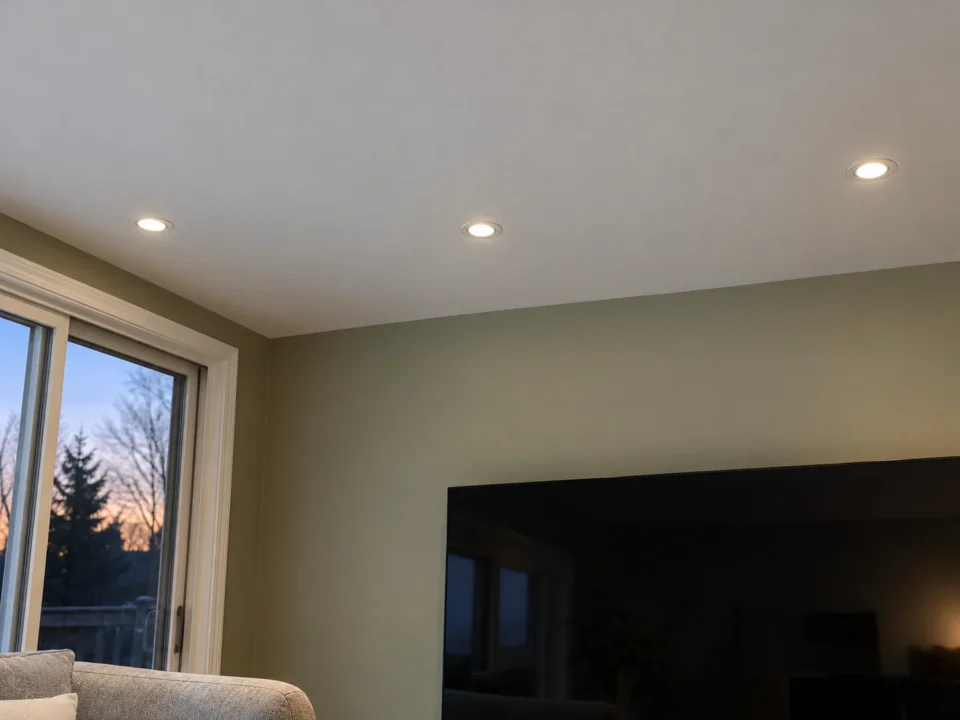
For television viewing, describe the usual seat and whether the reflection appears mainly in darker content or on an inactive screen. A blank screen photograph may show room relationships, but it cannot recreate every viewing condition. State what you notice during ordinary use. Do not deliberately maintain an uncomfortable setting to produce a more dramatic image.
Windows, glazed pictures and polished furniture may contribute other bright areas. Include the ones already noticeable from the activity position. That information prevents a review from focusing only on ceiling fittings when the overall view contains several sources of distraction. The desired improvement can then be defined around the room as used.
Overall room brightness and useful layers matter
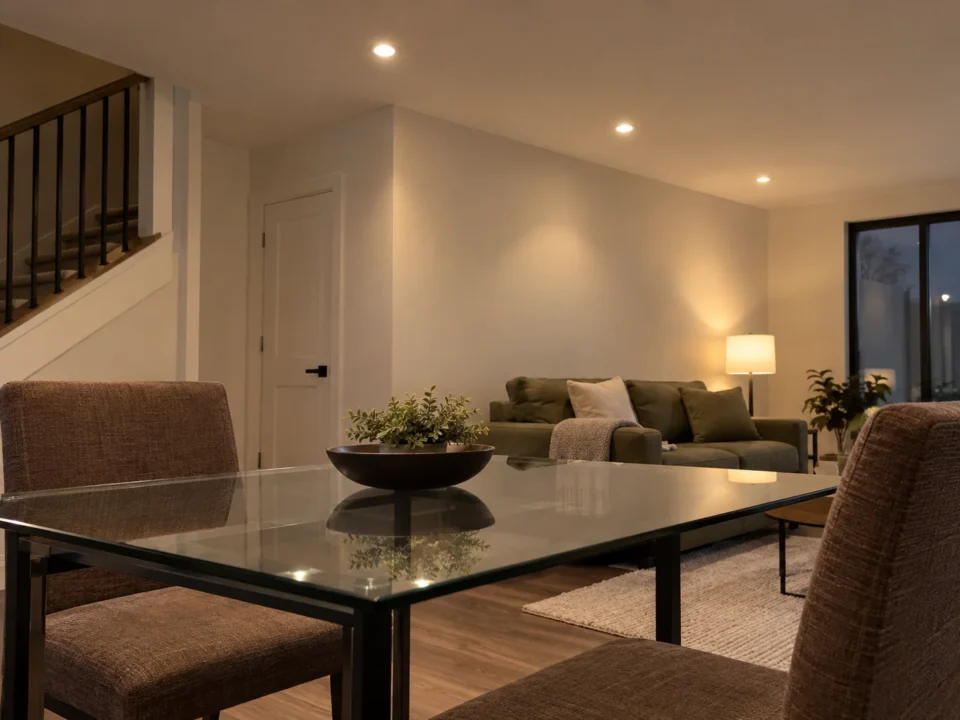
Describe whether the glare complaint occurs with all lighting on, one ceiling group on or a particular evening arrangement already in use. The context matters to a comfort review. Do not assume that dimming every source as far as possible is the final solution; the room still needs useful light for the activities taking place.
A layout conversation can consider which retained sources serve the activity and which merely appear in the troublesome view. A reading position may need local light alongside a quieter general setting. A sitting room might need an appropriate background layer as well as ceiling coverage. These are room-specific options for assessment, not guaranteed fixes for any glaring aperture.
The living and family room pot light route is useful when the complaint spans reading, conversation and television use. Explain the balance you want: visible room detail, comfortable seating and practical circulation. Defining those goals helps compare a control change, a product change and a layout change by their actual purpose.
Placement corrections need feasibility assessment
Moving a fitting or changing the beam direction may be worth discussing, but a preferred location is not automatically an available location. The ceiling construction, access and other services can constrain work. Ask the proposal to distinguish options being considered from positions confirmed through assessment, and to identify likely finishing responsibilities.
The pot light spacing guide explains placement questions more fully. Here, the useful evidence is the existing troublesome sightline. Show how the seating or work position relates to the fixture, wall and screen. A generic wall offset or a standard row pattern cannot resolve every room’s viewing angles.
Where furnishings can move, tell the assessor which arrangements are realistic and which are fixed. An adjustable desk location offers different options from a built-in workstation or a television set into cabinetry. The assessment can then compare achievable improvements without assuming that every occupant will rearrange the room around an unchanged ceiling plan.
Distinguish glare from a changing-light symptom
A stable light that looks too prominent presents a different complaint from a light that shimmers, flashes or becomes unexpectedly brighter. Report any changing behaviour separately. If burning smells, smoke, sparking or visible damage occur, stop using affected lighting and seek prompt help. For fire, smoke or immediate danger, leave the area and contact emergency services.
An appearance complaint also does not authorize altering the electrical equipment yourself. Keep fittings seated, control plates closed and concealed components untouched. The review should consider a suitable complete product and the assessed installation. A photograph of a clean trim cannot establish hidden condition or approve an improvised glare modification.
Send viewpoints that make the request clear
Provide a wide room view and a safely taken image from the normal chair or desk position. Identify the particular aperture or reflection in words rather than relying on camera exposure to communicate severity. Include recent furniture or product changes and explain which activities need improvement. Keep private screen content out of view.
Because this page concerns visual comfort, its photographs illustrate room relationships rather than prove a symptom. The same applies to visitor-submitted images. Browse Lighting Problems for other observed behaviour. Send the affected viewpoints and activities so a focused request can support a proposal that explains the intended comfort improvement, any practical constraints and the light needed for daily use.
Frequently asked questions
Is glare proof that a pot light is faulty?
No. Glare concerns the source or reflection in the normal view. Report changing light output, sound or damage separately because those add different assessment questions.
Will changing to a smaller trim eliminate glare?
Aperture size alone does not establish comfort. The product, source visibility, distribution and everyday viewing angle need to be considered together.
What should I photograph for monitor reflections?
Take a safe wide view of the desk and a view from the ordinary work position with private content hidden. Explain the reflection in words; photographs cannot measure the experience.
Can a fitting be moved away from my sightline?
A different position may be considered, but ceiling access and construction need assessment. See the spacing guide for the underlying placement questions.