
On this page
Pot lights, chandeliers and pendants are often compared as if a room must choose only one. A more useful comparison starts with the situation: a dining table used for meals and homework, an entrance that opens into the living area, or a sitting room that changes from conversation to television. Each fixture type can contribute a different kind of light and a different visual presence.
The question is what each source will do in the room. A decorative fitting may provide a focal point, a shaded pendant may concentrate attention on a table, and recessed lights may support surrounding areas or circulation. None of those roles is guaranteed by the fixture’s name. Shape, product characteristics, room geometry and controls all need to be considered with the intended use.
This article compares everyday scenarios rather than giving installation directions or a universal mounting formula. The Kitchen Lighting Layers guide explains related layer principles in the kitchen. Here the focus is how a homeowner can decide what to retain, what to add and which questions to bring into an assessment.
Begin with the role that is currently missing
Describe the inconvenience before browsing products. Perhaps the dining table looks attractive but the surrounding room is difficult to use when the chandelier is dimmed. Perhaps a low pendant interrupts the view from the kitchen to the sofa. Perhaps the living room feels bright overhead while the reading chair still depends on a lamp. These are different starting points and should lead to different conversations.
List the sources you already use. Include portable lamps and cabinet light as well as permanently installed fittings. Record which ones you would like to keep and why. A familiar lamp may provide the most useful light for one activity, while a ceiling fixture provides another. A new project does not need to replace a successful source simply to make all the light come from the ceiling.
Then distinguish appearance from performance. You may want a chandelier because it brings scale to a dining space, but also need light for detailed work at the table. State both goals. The assessment can consider whether the selected decorative fitting contributes enough to the task and what other layer is appropriate, rather than promising one product will achieve every result.
At the dining table: consider meals and the second use
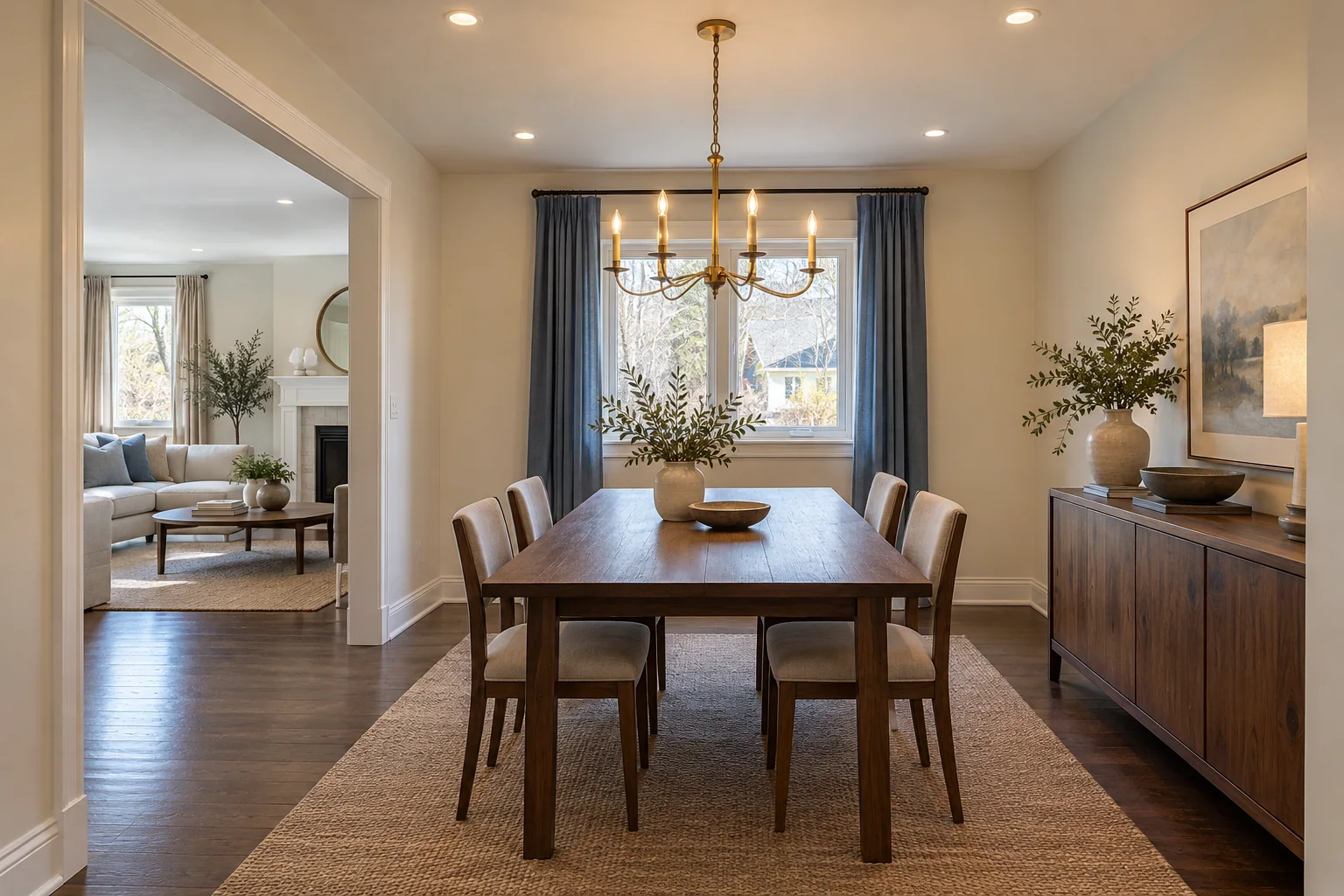
The dining table is often the easiest place to identify a focal fixture. Its normal position gives the chandelier or pendant a relationship to the furniture instead of to the empty room alone. Record the table dimensions and any extended arrangement, together with chairs and the surrounding circulation. Keep approximate measurements identified as approximate.
Consider the second use of the table. Homework, paperwork, sewing or a board game can call for a different setting from dinner. Describe which uses are frequent and which are occasional. A decorative layer and a surrounding recessed group may provide useful combinations, but the selected products and actual room should guide the design. Adding ceiling lights by habit does not answer whether the table itself is comfortable to use.
Look from the neighbouring seats and doorways. A fitting over the table can be visible across an open floor, and exposed light sources may be prominent from a sofa. A shaded pendant and an open chandelier may feel very different from those viewpoints. Product photographs do not always reveal that relationship, so show the actual room when discussing the selection.
A dining fixture also introduces support and servicing questions. Product weight, assembly, mounting and working access need review against the selected fitting and its instructions. These are professional assessment items. The Chandelier Installation service addresses that specialist scope without reducing it to a decorative swap in a ceiling plan.
At an island or small table: define what the pendant should do
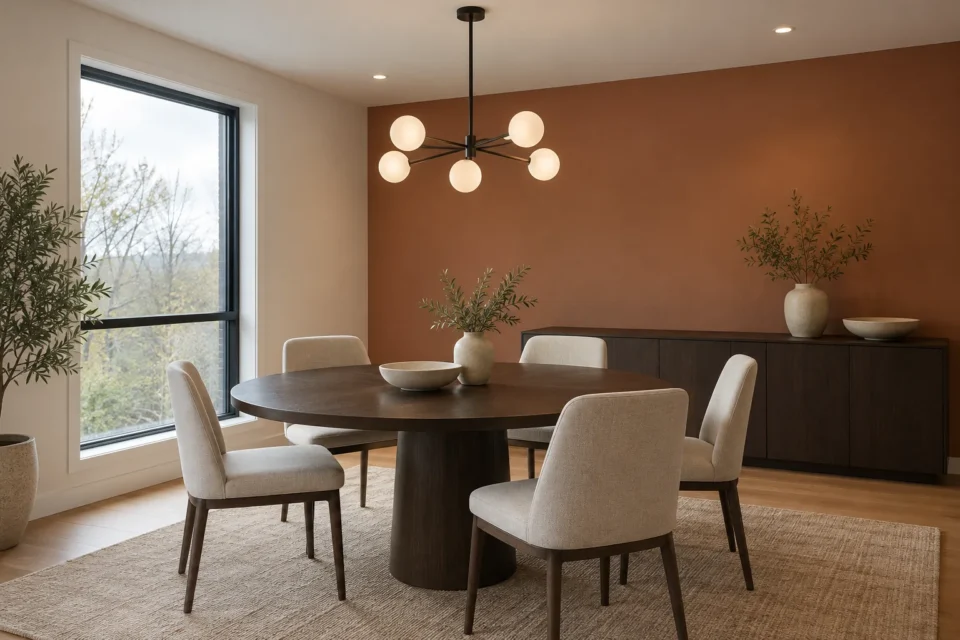
A pendant is a hanging fixture category with many possible effects. An opaque shade, translucent shade and clear-glass fitting do not direct or reveal light in the same way. Decide whether the intended role is a work surface, an eating area, a decorative accent or a combination. That description makes the product comparison more useful than choosing on finish alone.
Show the actual island or table and explain the seating. An island may be used from the cooking side by one person and from the seated side by another. Views across it matter as well as the surface beneath it. Consider whether a proposed group will visually block a doorway, interrupt a window view or appear crowded beside a dining fitting in the same open space.
Recessed and cabinet sources can be coordinated with the pendants rather than treated as competitors. The work area may need a combination during preparation and a different setting when the island becomes a social space. Keep those uses in the discussion before approving the grouping. Pendant & Island Lighting provides the service path for product, position and installation assessment.
In an entrance: balance a visual welcome with the route
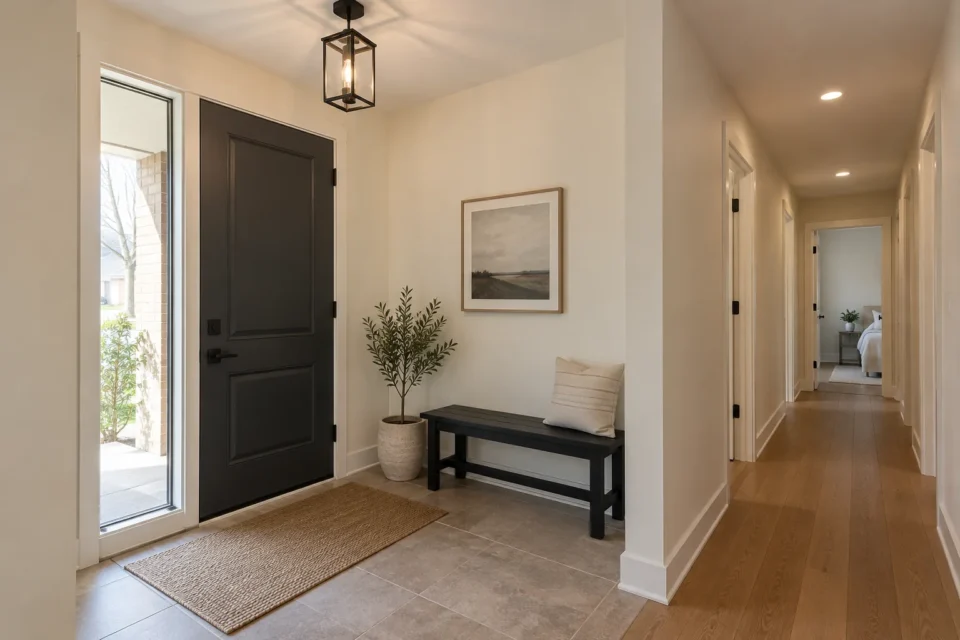
An entrance fixture can give a room a visual centre, but the entrance also has practical movement. People may carry bags, put on shoes, use a closet and move toward stairs. Sketch those tasks and routes alongside any decorative fitting. A source that looks impressive from the front door may not explain how the closet or adjacent hall will be lit.
Ceiling height and changes in level affect the discussion. A small flat-ceiling vestibule and a tall stair opening are different spaces, even when the same style of fixture appeals to the homeowner. Share safe photographs from the floor and any ordinary upper landing. Do not climb for product measurements or open a canopy to gather more information.
The decorative source and the route can have separate useful settings. Ask what should remain on when the rest of the main floor is quiet and how the usual wall controls will be approached. A guest’s arrival is a good test: can someone entering the house understand how to get basic light? This practical review belongs beside the aesthetic selection.
In the living room: work outward from the seated view
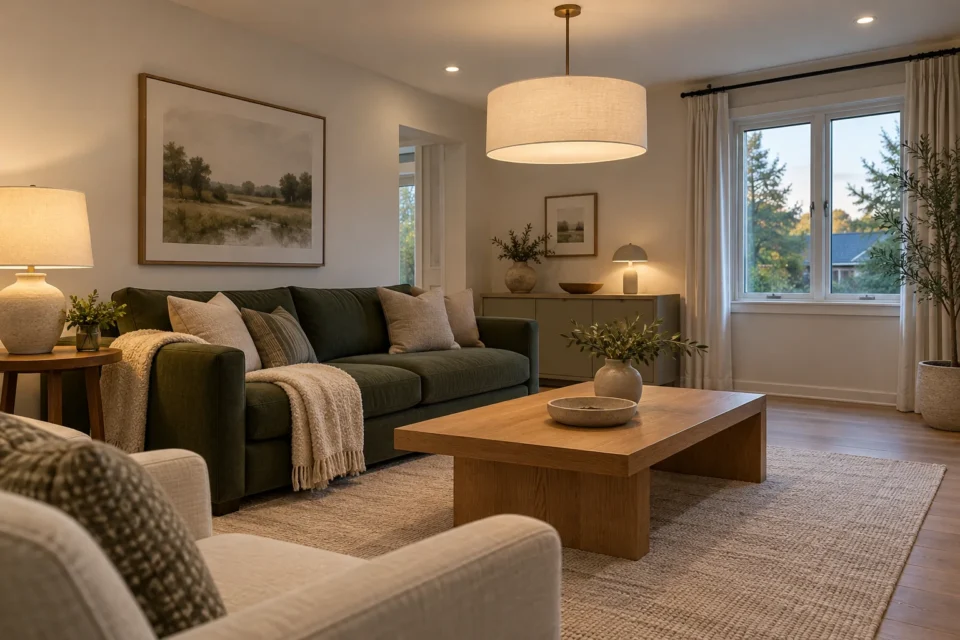
Living rooms have several important viewpoints. A person reading, someone reclining toward the television and a group talking around a coffee table may face different parts of the ceiling. Mark those positions before choosing a centre fixture or recessed pattern. The room’s geometric centre may not be the centre of its actual use.
A chandelier can give a living area character, but ask how its light sources appear when seated. A pendant may suit a specific corner or table, yet be less useful as the only source for the whole room. Recessed lights can contribute background light and separate zones, but their apertures and reflections also deserve review. No fixture family is automatically free from glare.
Retained lamps often make this comparison clearer. If a lamp is successful for reading, explain that it will remain. If the main problem is a dark walking route or an unlit wall, describe that separately. The proposed ceiling sources then have a defined role rather than being expected to replace every local source with one bright setting.
Try describing the room in two ordinary states: a conversation setting and a television setting. Identify which sources you expect to use in each. That gives the control discussion a practical purpose. The product combination and electrical conditions still need review, but the homeowner has supplied a meaningful reason for independent operation or adjustable levels.
Compare combinations on the same room plan
When weighing options, use the same furniture plan and the same list of uses. A chandelier shown in a styled showroom is not a fair comparison with recessed lights shown on a bare sketch. Bring both ideas into the actual room and state which existing sources each option keeps. This makes omissions easier to notice before a product is ordered.
| Fixture family | Questions to ask |
|---|---|
| Pot lights | Which surfaces and routes will they serve, and how do the apertures appear from seats? |
| Chandelier | What is its visual role, where will its light reach and how will it be supported and serviced? |
| Pendant | What area is it tied to, and how do its shade and suspension affect nearby views? |
| Combined layers | Which sources will operate together during meals, tasks and quieter evenings? |
Compare the visual ceiling too. A dense recessed pattern beside a prominent hanging fixture may feel busier than intended. Conversely, a very restrained ceiling plan may rely heavily on a decorative fitting that contributes little to surrounding areas. Review the whole composition, including the connected room, before settling the final positions.
Keep controls and installation scope in the decision
Fixture choices create practical dependencies. Confirm the intended control combinations and ask how the selected sources will be assessed for compatibility. Do not assume every decorative fitting or recessed system can share one dimmer or deliver the same low setting. The desired room scenario comes first; the professional review establishes suitable products and arrangements.
A proposal should also distinguish new positions, retained fixtures and replacement work. Ask about support, access, product supply and restoration where relevant. For a Burlington home, hired electrical work should be carried out by a verified Licensed Electrical Contractor. Any notification requirements depend on the actual scope, including changes to wiring and the proposed installation.
Keep the chosen product information and final room plan together. If a chandelier or pendant is changed before installation, communicate the replacement details for review. The visible finish may be similar while the dimensions, weight or light source differ. A coordinated selection record helps the agreed scope follow the final choice.
Choose the combination that answers the room’s brief
A useful brief names the activities, furniture, retained sources, normal viewpoints and desired settings. Include safe wide photographs and actual product information where available. State what you like visually and what currently makes the room difficult to use. Those two kinds of information can be considered together rather than forcing a choice based on a fixture category alone.
Light Fixture Installation is the broad service route when a fixed fitting is being added or replaced. Use a lighting estimate inquiry to describe the combination you are considering, and browse the lighting blog for other room situations. The most useful outcome is a clear role for every retained and proposed source, with the installation scope reviewed against the actual home.
Frequently asked questions
Can a room use a chandelier and pot lights together?
Yes, when their roles and controls are coordinated for the actual room. Consider the table or seating, surrounding routes and how each source appears from normal viewpoints.
Will pendants always provide enough task light?
No fixture category guarantees that result. Shade, product characteristics, placement and the task all matter. The kitchen layer guide explains the separate lighting roles.
Is a chandelier a straightforward replacement for any ceiling light?
The selected product needs assessment for support, dimensions, access and electrical scope. Chandelier Installation addresses those specialist questions.
What helps compare two fixture combinations?
Use the same room and furniture plan for both. Name the retained sources, daily settings and normal viewpoints, then share that comparison with your inquiry.