
On this page
Start with three outdoor routines
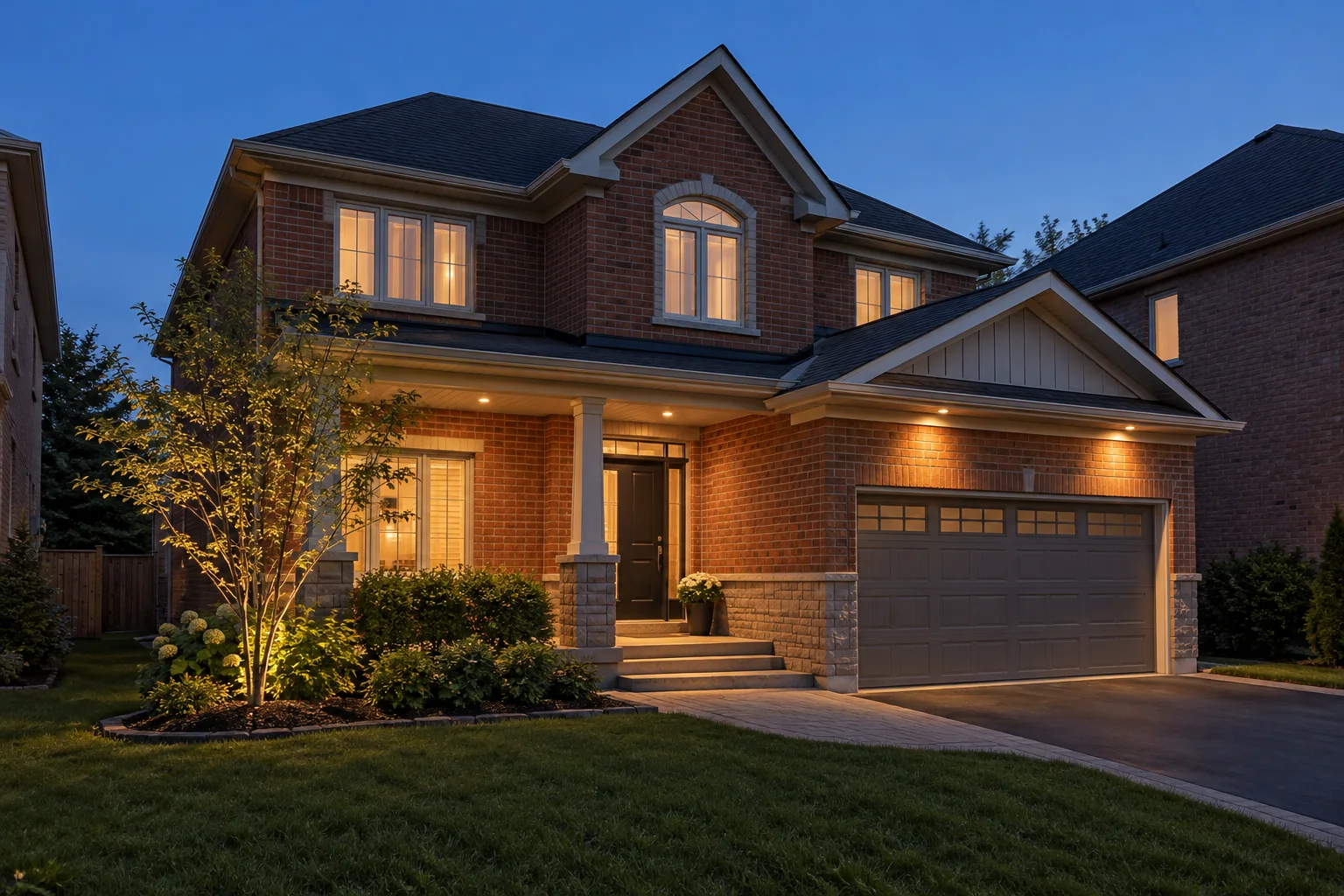
An entrance, a garage approach and a side yard can sit close together while serving quite different routines. One helps a visitor find the door and use the threshold. Another supports arriving with a car or carrying bags. The third may be used only to reach a gate, bins or a rear entrance. Treating all three as one bright perimeter can make the house easy to see while leaving the actual activities poorly considered.
Begin with a walk-through of how people use each zone, then discuss lighting around those activities. A household that regularly arrives after dark has different priorities from one whose side route is used briefly before dinner. Think about the neighbouring windows and the places where someone looks toward the house, as well as the surfaces you want to see. The goal is useful illumination during the times it is needed.
The examples here concern function and schedules. For the separate question of Burlington’s municipal guidance, glare and property boundaries, use Outdoor Lighting, Glare & Light Trespass in Burlington. Project conditions and applicable approvals need their own assessment; a practical routine is not a compliance decision.
The entrance: arriving, pausing and finding the door
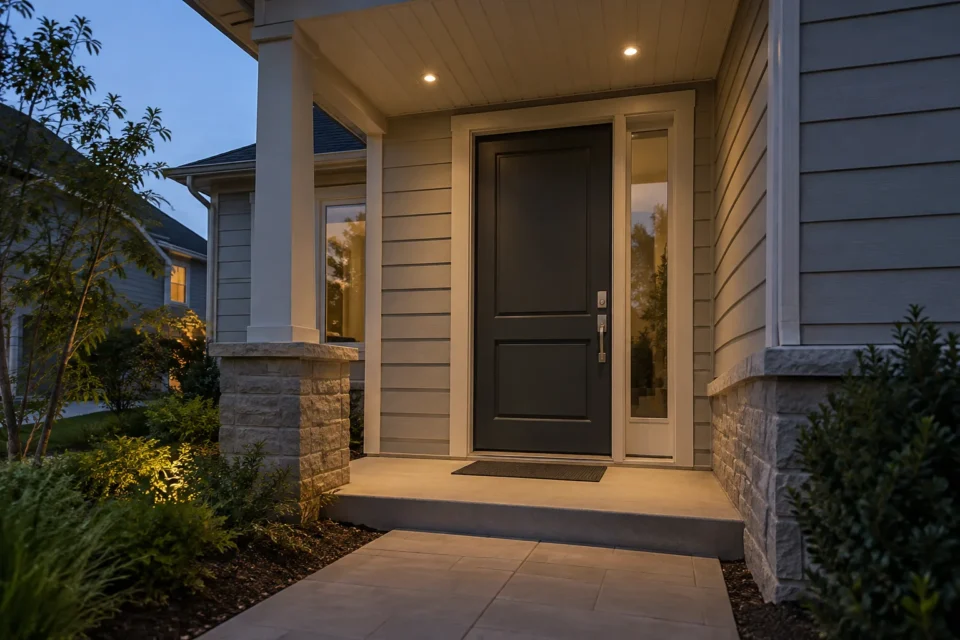
At the entrance, the important moment often happens after someone has reached the porch. They need to see the threshold, locate the handle and deal with keys, bags or a delivery. Look at those surfaces rather than asking only whether the facade seems bright from the street. A porch ceiling, an inset door and a step can create a different lighting situation from a door flush with the front wall.
Explain where visitors normally approach. If they come from a driveway on one side, consider that route in the plan. A fixture that looks balanced in a straight-on photograph may present a bright source directly to an approaching person. Review the entrance from ordinary standing positions and from inside the house, where a door or window may reveal a different sightline.
Existing wall lights may still have a useful role. Recessed porch lighting can be considered alongside them without assuming both need the same operating schedule. Show the door, porch, steps and retained fixtures in the inquiry. Describe any shadow you notice using everyday language, but leave decisions about fixture suitability and installation to the assessment.
Give the entrance a schedule that fits the household
Consider the entrance during a normal evening, a late arrival and a visit from guests. The preferred setting may differ for each. Some households want a modest arrival setting for part of the evening and a simple way to increase it when visitors are expected. Others prefer manually switching the entrance for occasional use. Describe the desired behaviour before deciding which control functions are needed.
A schedule should also have a clear end. Ask whether the entrance should remain lit until a particular household activity finishes or whether a different overnight setting is appropriate. Seasonal darkness can change when the setting is useful, so discuss whether the selected control can accommodate that change in a way the household understands. Do not assume every timer or smart system offers the same features.
Keep manual operation in the conversation. If a guest stays late or a household member returns outside the usual routine, someone should know how to alter the planned state. Ask for an explanation of what happens after that change: does it persist, end after a timer, or change at the next scheduled event? Those details depend on the actual control.
The garage: separate the approach from the facade
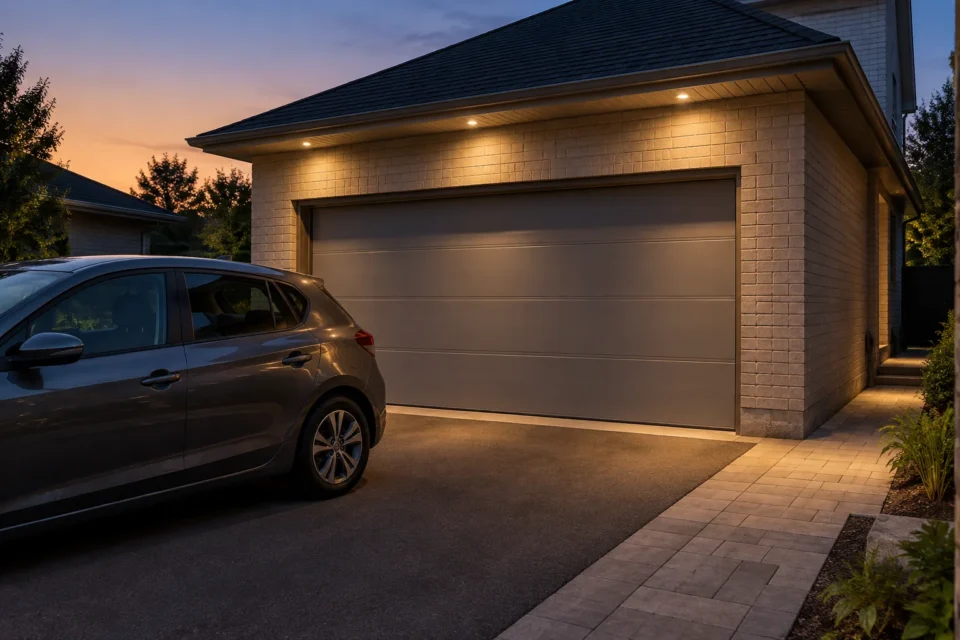
A garage door occupies a large part of many house fronts, which can make it tempting to light it primarily as a feature. First describe what happens in front of it. A person may cross the driveway, unload groceries, retrieve a bicycle or walk around a parked vehicle. The garage face is only one part of that setting. Vehicles and the garage opening can change which surfaces are visible.
For a recessed soffit proposal, show the roofline and the normal parking arrangement. Explain whether the garage is attached to the entrance route and whether the door frequently opens after dark. Consider what is seen from across the street and from neighbouring rooms. A row of lights should have a practical purpose, not just continue a pattern because there is space in the soffit.
Exterior and interior garage lighting are distinct zones. Describe the outdoor approach separately from tasks done inside the garage. They may need different fixture types, environmental suitability and controls. If an exterior light would be expected to serve a workbench deep inside, discuss that expectation explicitly; an outdoor ceiling plan should not quietly be asked to do every garage task.
Plan arrivals without lighting the driveway indefinitely
The arrival routine is a useful way to discuss timing. What light would be helpful while getting out of a car, walking to the house or collecting bags? What should happen once everyone is inside? These questions can lead to a limited operating period or a separate arrival setting, depending on the products and assessed scope. They do not require the entire front of the house to stay at the arrival level all night.
If movement-based operation is proposed, describe the movements that matter and those that should not trigger an unnecessary change. A neighbour walking past, trees moving or activity outside the intended area may be relevant to the discussion. Ask how the selected product’s coverage and timing will be evaluated on this property. Avoid buying a sensor solely because its packaging describes a broad range.
Also plan for exceptions. A gathering may keep people coming and going, or someone may need the garage approach while unloading for longer than usual. The wall operation and any temporary setting should be clear to the people who use them. A control that is convenient on an ordinary evening still needs a practical way to handle an unusual one.
The side yard: light a route and its stopping points
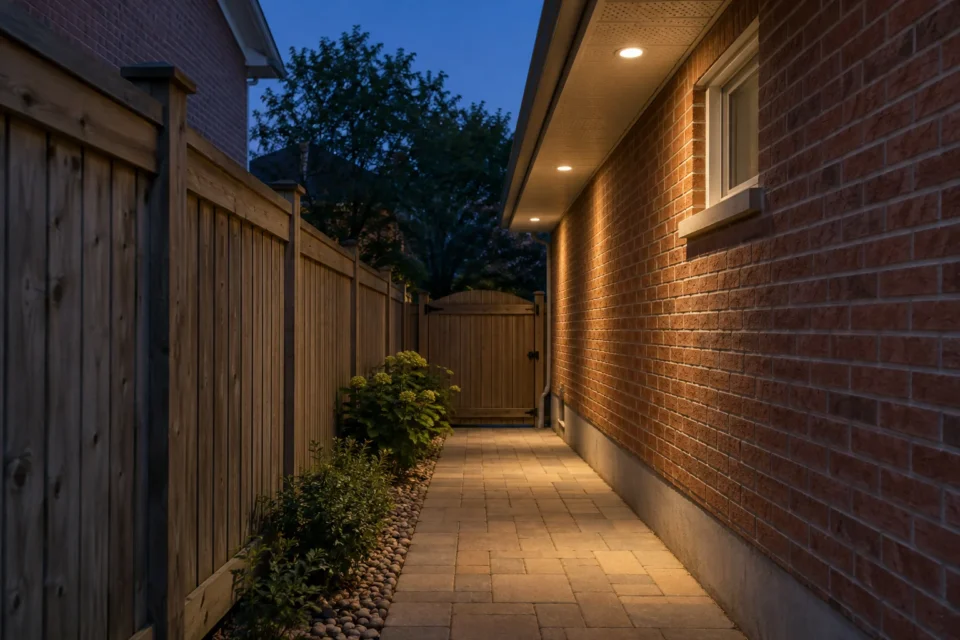
A narrow side passage may connect the driveway to a rear gate, a side door or storage. Identify the actual destination before deciding how much of the passage needs illumination. A route used to move bins has different stopping points from a sheltered path used by visitors. Show changes in level, corners and gates in safe daylight photographs.
Take particular care with the relationship to nearby windows and fences. The fact that a light is attached to your own house does not mean its visible source or spill is contained within your preferred route. Explain where neighbours’ windows face the passage, without photographing private interiors. Discuss downward light, shielding and appropriate output with the person assessing the installation.
Not every side yard has a useful soffit in the right place. A wall-mounted approach may be worth considering where it better serves the route. Motion and security lighting covers that related assessment, while exterior and soffit pot lights concerns recessed eave and porch work. Start with function rather than forcing a fixture type onto every outdoor space.
Match side-route operation to short visits
A side path used for a brief trip to the bins often does not need the same timing as the front entrance. Describe how someone starts the trip and how they return. If a control is at one end only, explain the inconvenience that creates. The assessment can then consider an appropriate operating arrangement without the homeowner trying to alter outdoor electrical equipment.
Think about a visitor who does not know the house. If the side door is an occasional entrance, make the operating sequence understandable from their arrival point. A household-only route can have a different arrangement, but everyone using it should still know how to obtain light without a phone or another person’s help, where the selected system permits that.
Review temporary overrides after the routine has been established. A late garden gathering or a longer storage task may need a different duration. Ask how the selected control returns to its usual behaviour and what a person should do if the schedule no longer suits the season. A clear explanation is more useful than a collection of features no one remembers.
Coordinate the zones instead of flattening them
When the entrance, garage and side yard can operate independently, the household can discuss each routine on its own merits. This is an operating goal to assess, not a guarantee that existing wiring already provides those zones. Show current controls and describe which lights change together using normal operation only. Leave covers and enclosures closed.
Look at the combined effect from inside and outside the house. The entrance may need to feel welcoming while the side route is quiet, or a garage arrival setting may be brief while the porch remains modestly lit. If the house currently has one exterior group, make the desired differences explicit in the scope. This avoids discovering after installation that every zone still shares one behaviour.
Outdoor lighting installation is the broader service route when the proposal involves several exterior fixture types. A coordinated discussion can include recessed lights, retained wall fixtures and the controls needed for the routines. It need not turn into a plan to illuminate every edge of the property.
Prepare a useful outdoor inquiry
Send wide daylight photographs of each zone, including the porch ceiling, garage soffit or side-wall area that may be involved. Describe the ordinary route, the activities done after dark and which existing fixtures will remain. Evening photographs can show the current pattern, but a camera’s exposure is not a measurement of lighting performance and cannot approve a product or installation.
List your preferred routine in a few sentences: entrance use, vehicle arrivals, side-yard trips and the exceptions you want to handle. Add nearby windows and any concerns about light entering rooms. Avoid requesting a fixed number of fixtures before the property and purpose have been assessed. The most useful first decision is what each zone should do.
Use the project inquiry to share that brief, and explore the lighting articles for other planning situations. The resulting proposal should connect each exterior zone to a useful activity, a suitable fixture approach and an operating arrangement the household can understand.
Frequently asked questions
Should the entrance, garage and side yard run on one schedule?
Describe the actual routines before deciding. The three zones may be needed at different times, and the proposed control arrangement should explain how each is operated.
Can garage soffit lights serve the inside of the garage too?
Treat the outdoor approach and interior garage tasks as separate needs. An exterior plan should not be assumed to illuminate a work area deeper inside.
What if the side yard has no useful soffit?
The fixture approach should follow the route and location. A wall fixture may be considered as part of the motion and security lighting assessment.
Where can I read about Burlington exterior-lighting guidance?
Use Outdoor Lighting, Glare & Light Trespass in Burlington for that distinct topic, including the difference between general guidance and project-specific approvals.
What should a temporary manual change do?
Ask how the selected control behaves after a manual action and at the next scheduled event. That behaviour depends on the actual system and configuration.