
Roofline lighting symptoms
Soffit Lights Not Working: Safe Observations and Weather Context
A dark eave run or a soffit fitting that fails after changing weather needs assessment in its installed setting.
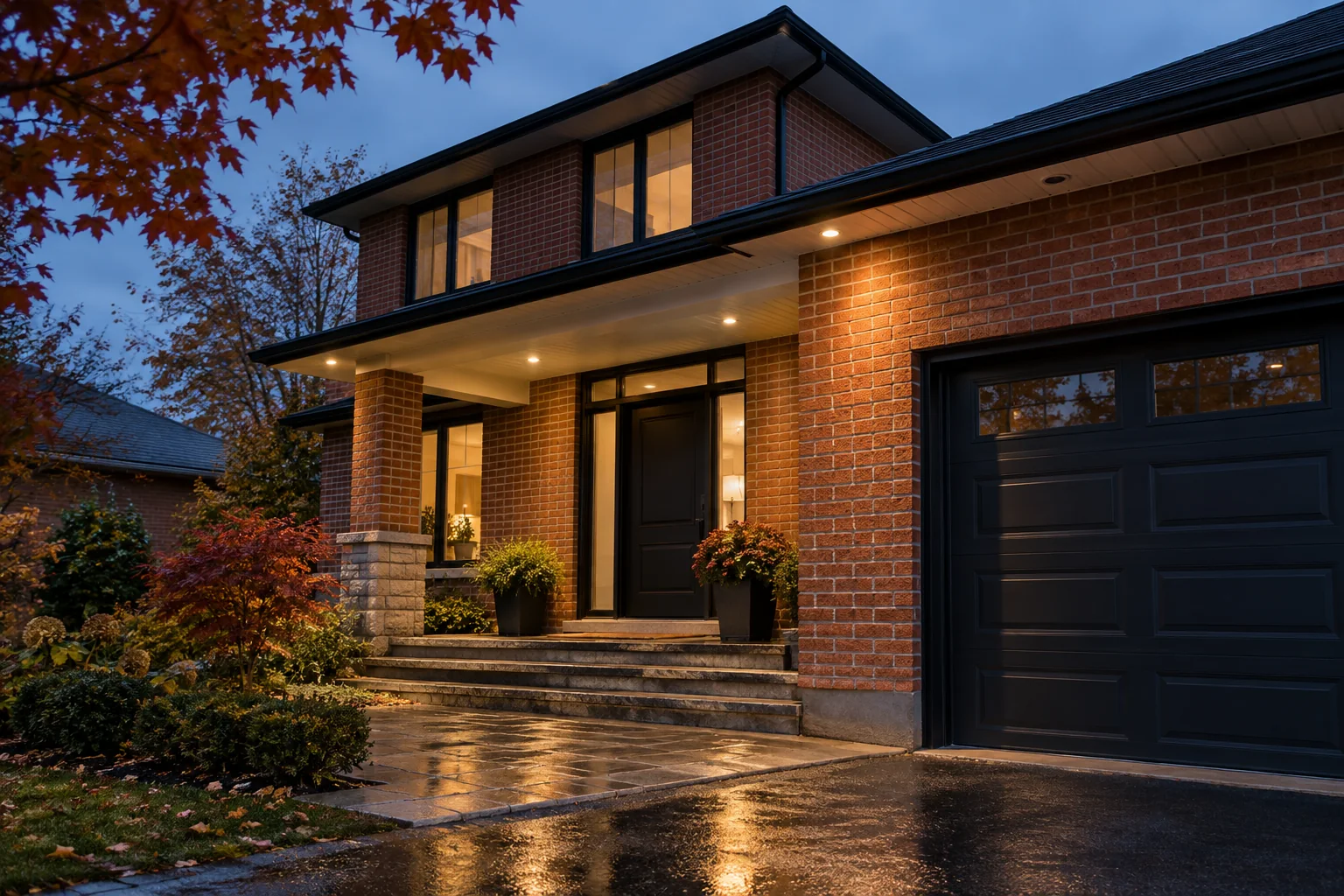
On this page
When soffit lights stop working, describe the affected part of the roofline before selecting a replacement. One dark fitting, a whole eave run and lights that fail only after particular weather are different observations. The cause could involve the fitting, its associated equipment, control or installation; a ground-level photograph cannot establish which part is responsible.
This page concerns recessed lights installed in soffits and eaves. It helps a Burlington homeowner organize visible symptoms safely, especially where rain, condensation, cold conditions or a recent roof change are part of the account. Lighting Repairs is the route for assessment of the existing failure. Planning a new exterior recessed scheme belongs to a separate scope.
Map the visible failure along the eave
From a safe ground position, note whether one fitting is dark, several adjoining fittings are dark or the whole group does not illuminate. Describe the side of the property and a recognizable feature, such as the porch corner or garage elevation. Counting visible fittings is useful where they can be seen safely; reaching the fixtures to identify them is unnecessary.
Include whether the failure appeared suddenly or whether individual fittings stopped at different times. A single replacement followed by another dark location is a different history from an entire roofline group failing on one evening. Neither establishes a fault on its own. The assessor needs the pattern and the known history, including any earlier work.
Some soffit lighting is divided into separately controlled zones. Say which closed wall control, app or existing schedule normally operates the affected run, if you already know. Do not guess that two dark fittings must be connected together because they are near each other. Physical position does not reveal the concealed electrical arrangement.
Weather timing is context, not proof
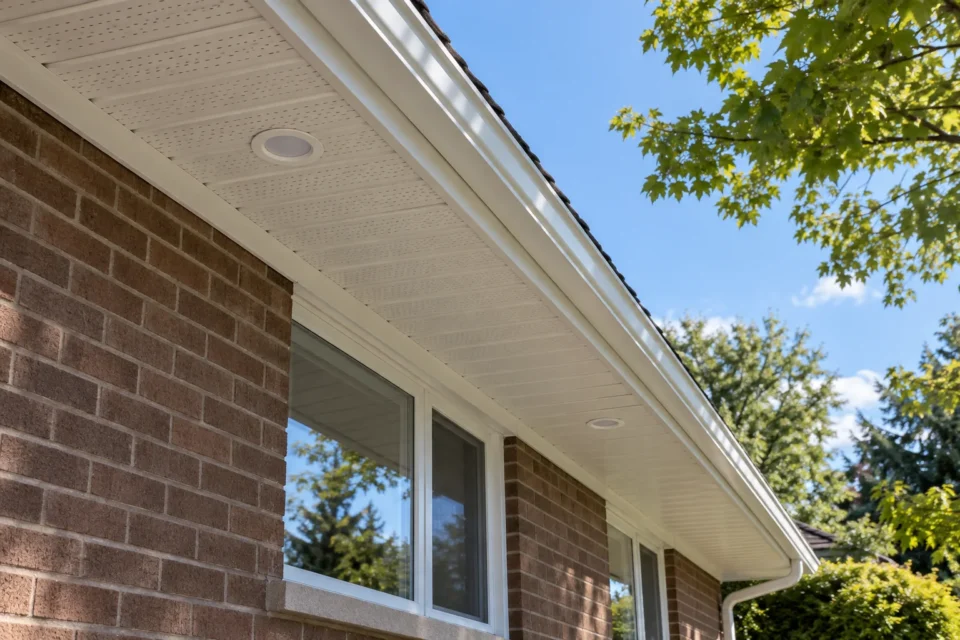
Report a pattern such as “the porch run was dark the morning after heavy rain” or “one garage-eave light has failed during cold evenings.” That wording preserves the observation without deciding that water or temperature caused it. A failure noticed after weather may be related, coincidental or the point at which an earlier issue became visible.
Useful details include the approximate date, whether the condition has happened before and whether operation was already irregular. Mention visible roof or gutter problems, recent roofing, soffit repairs, painting or pressure washing when known. Do not apply water, heat or cleaning equipment to recreate the symptom. Do not wait for another storm before requesting help with a persistent failure.
Exposure is specific to the installed location. A deep porch roof and a narrow eave beside a downspout do not necessarily have the same conditions. Wind-driven moisture and the surrounding building condition may be relevant to assessment. “Under a roof” is an incomplete description of the environment, and it does not establish suitability for every product sold as exterior lighting.
Distinguish darkness from unexpected control operation
Describe what the lights do rather than repeatedly changing the controls. If the group remains dark when it would normally be on, say so. If it comes on at an unexpected time, shuts off early or has changed its routine, note the ordinary operating method and any known schedule changes. A control issue and a failed fitting can produce similar impressions from the street.
If a household member has already changed a schedule or replaced a control, include that history. A daylight condition can also make an operating light difficult to judge, so state the time when the symptom was noticed. You do not need to force a dusk routine into a different mode or cycle power to prepare an inquiry.
A protective-device operation that has already occurred is relevant information. Report it without resetting or testing. If interior lights or another exterior group also changed at the same time, include that observation; do not switch unrelated equipment on and off to search for a relationship. The assessment can decide whether the scope extends beyond the soffit run.
Possible causes must remain open
Assessment may need to consider individual fixture condition, associated drivers, controls, supply and connections, as well as whether the product and installation suit the exposure. These are categories to review, not findings. A dark light cannot be declared a failed LED from appearance alone, and replacing its visible trim may not address equipment concealed elsewhere.
Product suitability includes more than shape or a marketing description. Manufacturer specifications can separately address moisture exposure, operating conditions, insulation contact and control compatibility. Those checks apply to the particular model and installation; a product example is not permission to use every similar fitting outdoors. The Ontario lighting product approval guide explains why recognized approval and location suitability need separate attention.
Existing documents can help identify a product without climbing or dismantling it. Keep prior estimates, packaging records or installation information if available. An “outdoor” description without the model and instructions may be too broad to answer the assessor’s questions. When records are missing, make that clear rather than inferring a rating from a white trim or sealed-looking lens.
Observe exterior condition from a safe position
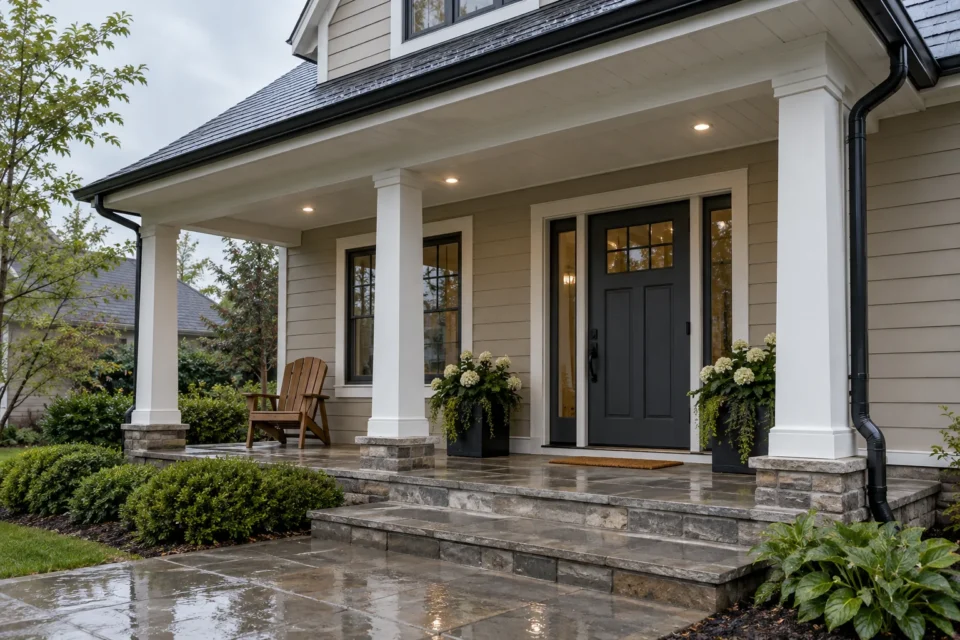
Photograph the complete eave and affected zone from ground level. A second view may show the porch, gutter, roof corner and nearby wall in context. Mention visible staining, a loose soffit panel, a damaged lens or other change without touching it. A photograph records what can be seen; it does not show whether a concealed driver is dry or whether the installation is electrically sound.
Do not climb to a roofline fitting, remove a trim, open an enclosure, reach from an upper window or handle equipment in damp conditions. Access is part of the professional scope. If trees, a narrow side yard, sloping ground, stored items or a porch roof affect safe access, describe them before an appointment. Do not improvise a viewing platform to obtain a close-up.
Keep photographs clear enough to identify the zone rather than aiming only at a bright aperture. A wide view is often more useful than a cropped image of one fitting. If an urgent warning sign is present, stop using the affected equipment and arrange appropriate help instead of spending time building a detailed photographic record.
When to stop use and seek assessment
Persistent failure, repeat failures, a new weather-related pattern or visible deterioration warrant professional review. Water seen at or around a fitting, damage, smoke, sparking or burning odour should not be treated as a routine lamp issue. Stop using affected equipment and seek urgent qualified assistance. For fire or immediate danger, contact emergency services; a standard inquiry form is not an emergency channel.
Do not assume that operation returning after dry weather means the cause is resolved. Conversely, a dry-looking trim does not prove that moisture is absent from concealed equipment. Tell the assessor whether the lights returned during ordinary use, but avoid further operation to check how long they will remain on. Assessment is appropriate even when an intermittent symptom is not present on the appointment day.
If the failure affects a shared exterior element, condominium or rented property, identify who can authorize access and corrective work. A soffit over one dwelling may be managed differently from a privately owned porch. Ownership and permission questions should be settled before an assessor is expected to access parts of the building outside the immediate lighting zone.
Separate the repair from a future lighting redesign
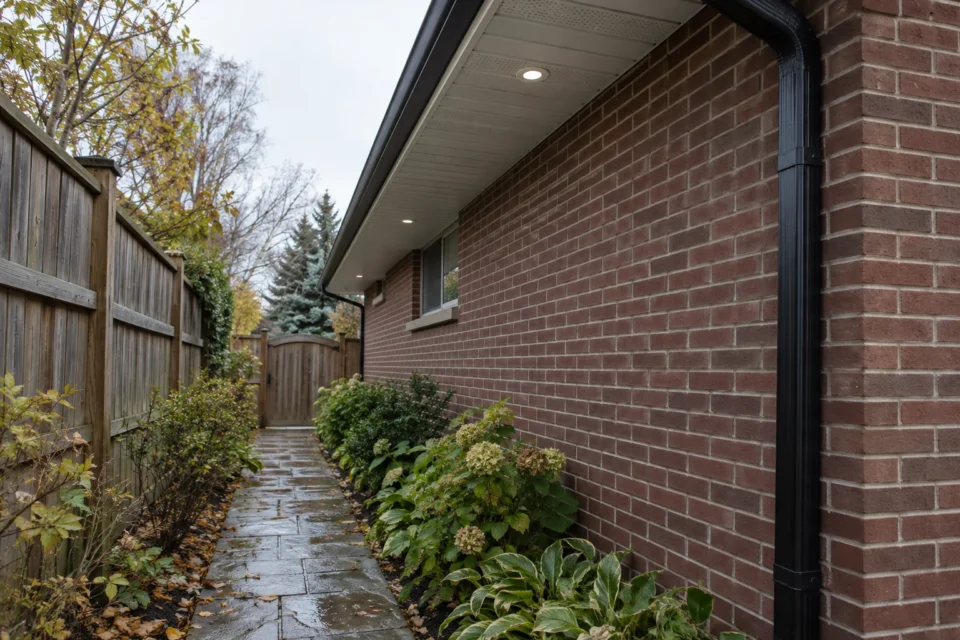
The first decision is what caused the existing failure and what correction is appropriate. Improving spacing, changing the night-time appearance or adding a porch zone may be worthwhile goals, but they should not hide the unresolved symptom. Ask for assessment findings and proposed corrective work to be explained before combining them with an aesthetic upgrade.
Exterior & Soffit Pot Lights covers a new or revised recessed exterior plan when that is the eventual direction. Mention whether the current lighting is otherwise useful and what should improve. Access, product information, number of affected locations and surrounding building repairs can all influence the scope. A replacement proposal should explain what it includes and which concealed conditions still require review.
Use the Lighting Problems library for other existing symptoms. For this roofline failure, share the zone, timing, weather context, known changes and safe photographs through the lighting assessment inquiry. You can request a useful assessment without selecting a fixture or determining the cause yourself.
Frequently asked questions
Does failure after rain mean water has entered the light?
It is relevant context, but it does not prove the cause. Describe the weather timing and any safely visible condition for repair assessment. Do not open or handle the fitting.
What if just one soffit light is dark?
Identify its position from the ground and say whether other fittings on the same normally controlled group still operate. A single dark fitting does not establish which component has failed.
Can I assume a covered soffit needs any outdoor light?
No. Suitability depends on the exact product, exposure and installation instructions. The product approval guide explains the separate checks.
Should the whole eave run be replaced?
That depends on assessment, product availability and the condition of the existing arrangement. For a revised scheme, Exterior & Soffit Pot Lights is the relevant planning route.
What photographs are useful?
Use safe ground-level views of the affected eave and surrounding roof, gutter or porch. Do not climb, remove trims or open exterior equipment to obtain a closer photograph.