
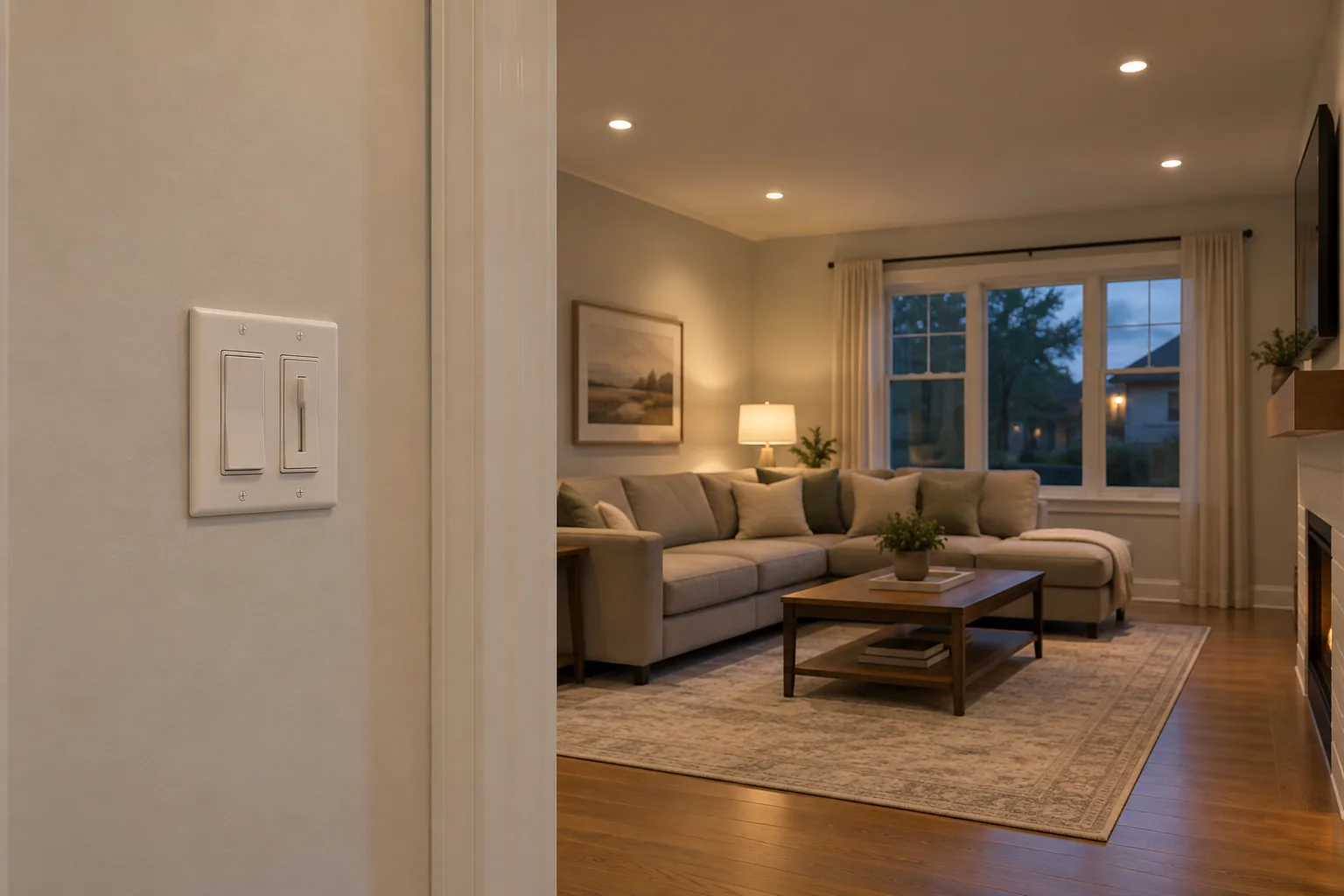
Start with the routine you want to improve
Smart lighting and dimmer installation in Burlington focuses on suitable controls for the lights and the people using them. The request might be a lower evening setting in a living room, separate kitchen layers or a schedule for an entrance light. A useful upgrade begins with that routine and then considers which controls, fixtures and existing conditions can support it.
The word smart covers different product arrangements. Some systems rely on an app, some use a hub or bridge, and some add useful wireless interfaces alongside wall controls. A standard compatible dimmer may be enough for a room that simply needs flexible brightness. The right scope should follow the intended use rather than assume every household needs an extensive connected system.
The lighting services hub introduces controls alongside other lighting work. This page covers installation and upgrades. If a light already behaves abnormally, lighting repairs provides a separate assessment route; a new control should not be treated as an automatic diagnosis or cure.
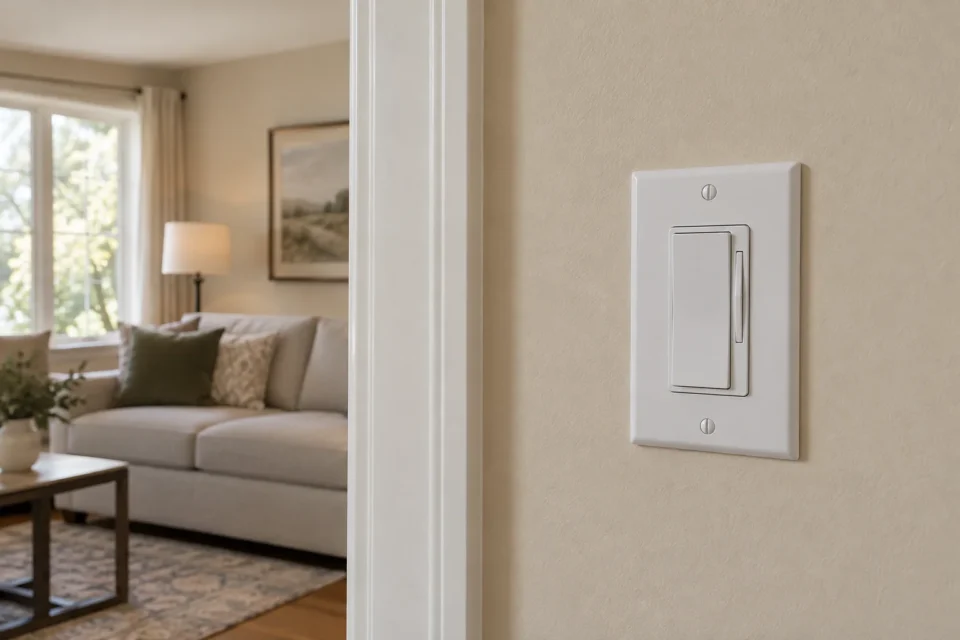
Check LED and control compatibility
A dimmable LED label does not establish compatibility with every dimmer. The exact lamp or fixture, its driver where relevant and the control need to be considered together. Manufacturer compatibility information and instructions are important parts of that review. A replacement chosen only by the appearance of its faceplate can miss the requirements of the connected lighting.
Provide available model information for the lights and existing controls. Packaging, product listings and installation records are useful without opening fittings or pulling switches from the wall. If the lighting includes several different products, say so. A mixed group may need a more careful review than a set of identical fittings.
Discuss the desired range as well as whether the light turns on. An evening setting should be comfortable and useful, and the products should operate appropriately within their intended arrangement. LED dimmer compatibility is the related guide when you want to understand why the choice is product-specific.
Keep everyday wall operation simple
A control upgrade changes something people use repeatedly, often without looking closely. The wall interface should be understandable for household members, guests and anyone who does not use the app. Consider the location, visible buttons or paddle, and what happens when someone wants ordinary on/off operation rather than a scene or schedule.
Think about the entry route to the room and which control people reach first. A kitchen may have several layers operated from one group of wall positions, while a bedroom may need a different arrangement around its entrance and seating or bedside use. Explain what is confusing about the existing layout so the new control plan addresses a concrete problem.
If multiple controls operate the same lights, include all those locations in the request. The selected system may require a particular compatible arrangement at the other positions. Do not assume a new device can be added at one end while every existing control stays unchanged. The assessment should establish a complete workable setup.
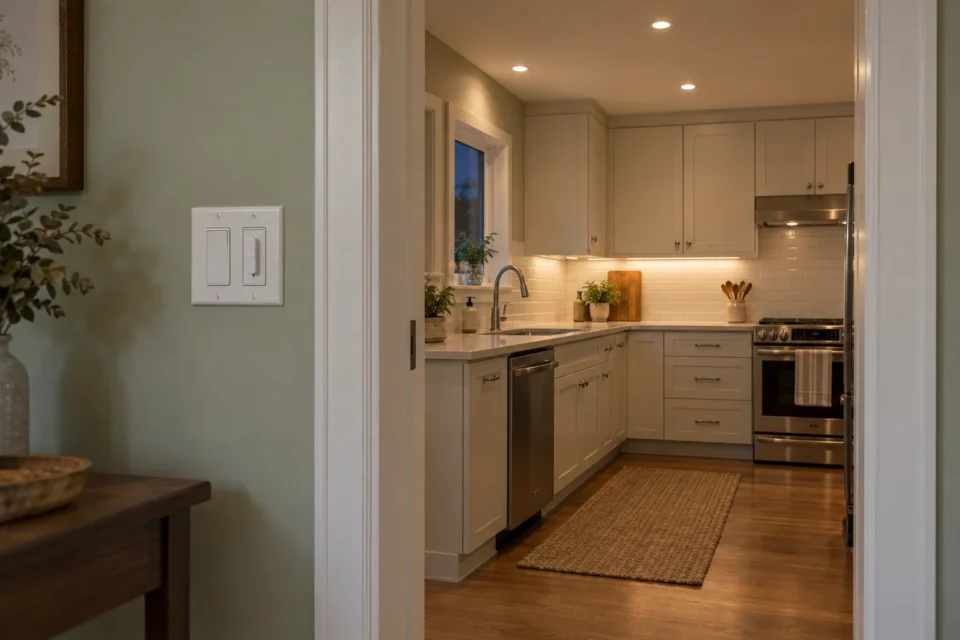
Scenes should reflect real lighting layers
A scene can be useful when a room has several lighting groups with different jobs. For example, a kitchen may use its counter layer while lowering general light after cooking, or a living room may keep a local reading light brighter than the television zone. The control plan depends on how those layers are actually connected and selected.
Smart operation cannot create independent groups where the underlying arrangement does not support them without additional work. Describe which lights currently operate together and which you want to separate. That helps distinguish a control change from a wider wiring or lighting project. The proposal should identify any extra work needed rather than imply that an app solves every grouping issue.
For coordinated recessed work, see interior pot lights. For a kitchen counter layer, see under-cabinet lighting. Those installations can be discussed alongside controls, with each scope clear. A useful scene is built around light that already serves the room well.
Use schedules where they fit the household
A schedule can reduce the need to remember a routine such as operating an entrance or selected indoor lights at particular times. Explain the behaviour you want and whether it varies by day or season. A useful schedule should be easy to understand and adjust, rather than leave people uncertain about why the lighting changed.
Review the selected system before choosing it:
- Scheduling and connections: The way a product maintains schedules, uses a bridge or connects to other services is product-specific.
- Existing platform and access: Internet availability, account access and any existing platform matter to the choice.
- Local and connected functions: Ask which functions work locally and which depend on connectivity before selecting the arrangement.
Avoid assuming every smart switch behaves the same when a network or service is unavailable.
If you want voice control or integration with another system, identify that platform and the functions that matter. Compatibility should be checked for the selected products. This is an installation request for a defined lighting-control arrangement, not a promise that any purchased device will connect with every home technology platform.
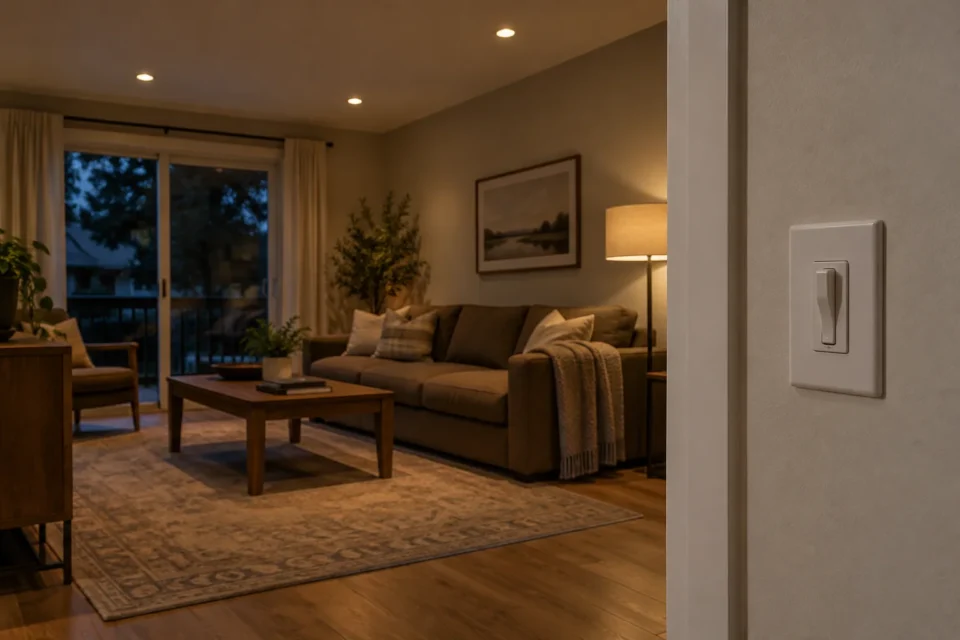
Assess existing control locations
The suitable device depends on the actual electrical arrangement as well as the desired features. Product requirements can differ, including the connections they need and the types of lighting they control. Neutral requirements are not universal across dimmers or smart devices. The existing location should be assessed rather than a homeowner assuming suitability from the age or appearance of the switch.
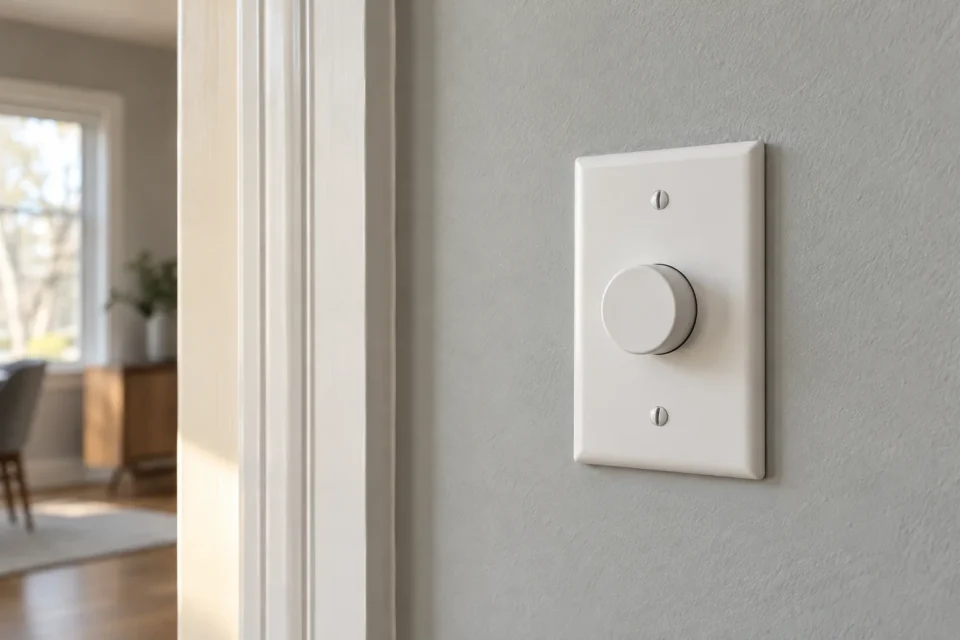
A crowded wall group, different switching locations or a mixture of lighting types can affect the scope. Send a normal photograph of the faceplates and describe which lights each position operates. There is no need to open the wall or expose connections to prepare that information. Available model records can help, but unknown details can be reviewed during the assessment.
If controls have already been purchased, send the precise models and say which lights they are intended to operate. The installer needs to consider the manufacturer information for that combination. Product approval and location suitability also matter; electrical product approval questions provides related reading before purchase.
Keep faults separate from a planned upgrade
Flickering, buzzing, unexpected drop-out or a light that will not turn off fully can have more than one cause. A homeowner observation is helpful, but it does not establish that the wall control is the only problem. Explain the symptom, when it happens and any recent changes to lamps, fixtures or controls so it can be assessed appropriately.
The flickering lights, buzzing lights or dimmers and dimmer problems pages address those observations at a consumer level. For diagnosis and repair, use the lighting-repairs service. A control upgrade can follow an assessment where suitable, but the scope should not skip the reason for an existing symptom.
If there is a burning smell, visible damage, sparking or another apparent hazard, stop using the affected equipment and seek appropriate professional help. Do not open controls or experiment with wiring to test a theory. When the situation is a routine upgrade without an urgent concern, ordinary product details and room-use information are enough to start planning.
Prepare your control-upgrade request
Include four parts in your control-upgrade request:
- Rooms, groups and control locations: List the rooms and lighting groups included, the existing control locations and the behaviour you want to improve.
- Product details and photographs: Send available fixture, lamp and control models, plus faceplate photos and wide room views where layers are relevant.
- Retained platforms: Mention existing apps, hubs or platforms you want to retain.
- The intended routine: State whether the goal is simple dimming, a schedule, scenes or a combination.
The estimate should reflect compatibility review, the number of locations, any required changes and the agreed setup or handover. Ask what will be demonstrated when the work is complete and who will manage accounts or future changes. Applicable electrical notification or inspection responsibilities should also be clarified for the actual installation.
Share these details through the project inquiry. A well-defined request helps select controls that make the intended routine easier, with clear wall operation and realistic expectations about the selected system. The finished arrangement should be understandable to the people who use the room every day.
Review controls at handover
A control upgrade is easier to use when the agreed functions are demonstrated in the actual room. Ask to review normal wall operation, the intended brightness settings and any scenes or schedules included in the scope. For a multi-location arrangement, review operation from each position. This gives the household a chance to understand the controls and identify a routine that needs adjustment.
For connected products, clarify who manages the relevant account, app or bridge and how authorised household members will use it. Ask where the manufacturer instructions and product details will be kept for future reference. These are practical handover questions, not a reason to assume every system has identical account features. The arrangement should remain understandable after the installation visit.
No universal match should be assumed. The exact lamp or fixture, driver where relevant and control need compatibility review. See LED dimmer compatibility for the primary planning question. Requirements differ by product and the existing control arrangement. The location needs assessment against the selected manufacturer information. Homeowners should not open a switch box to prepare an inquiry. A suitable multi-location arrangement may be possible, but all control positions must be considered. The selected system may need compatible components at other locations rather than retaining every existing device. A compatible conventional dimmer may meet that goal. Smart controls can be considered when their scenes, schedules or other functions fit a useful routine. The choice should follow the room and household needs. A symptom needs assessment before assuming the control is responsible. Lighting repairs is the separate diagnosis route, with dimmer problems as related reading. Identify the rooms, lighting groups, all control locations and desired routine. Include available product models and any platform you want to retain through the project inquiry.Smart Lighting & Dimmers Gallery
Smart Lighting & Dimmers questions
Will any dimmer work with dimmable LED lights?
Do all smart switches need the same wiring?
Can existing lights be controlled from more than one location?
Do I need a smart system just to dim a room?
Will a new dimmer fix flicker or buzzing?
What should I provide for a control estimate?