
Understanding older recessed systems
Old Recessed Lighting: Recognize the Existing System and Its Limits
Older pot lights may contain replaceable lamps, retained housings or later LED retrofit modules.

On this page
Older recessed lighting is not one uniform system. A ceiling may contain a housing with a replaceable lamp, an LED retrofit installed within an earlier housing, an adjustable accent fitting or an integrated light installed during a later renovation. The visible trim gives clues about appearance, but it does not reveal every concealed part, rating or installation condition.
This page helps recognize what is already present in a Burlington home and identify the limits that need assessment before repair or replacement. Slim LED versus traditional recessed lighting explains the choice between systems for a planned installation. Here, the question is narrower: what information is needed about the older arrangement before choosing what to do next?
Begin with the room and the visible fitting
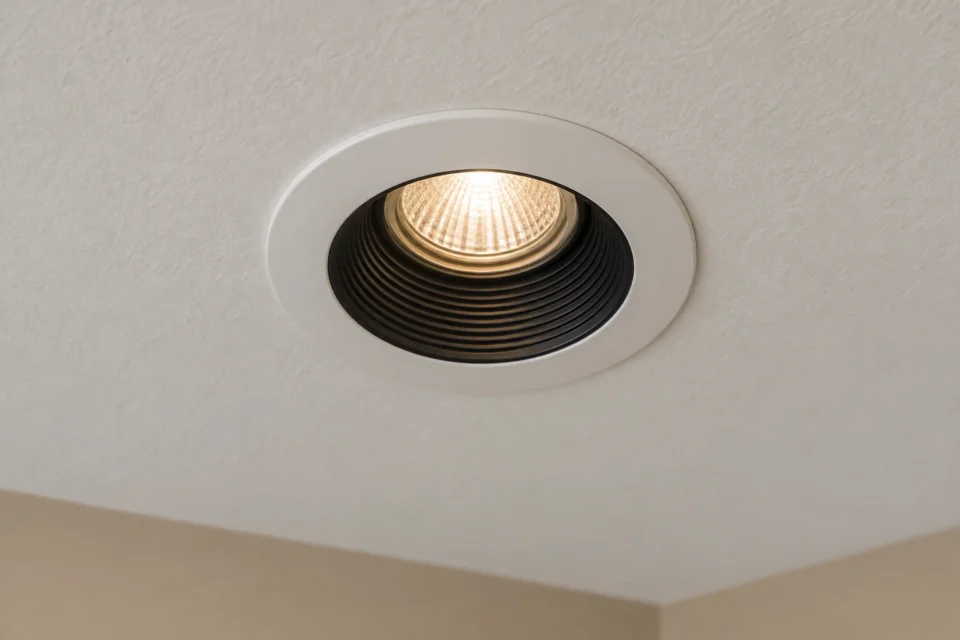
From floor level, describe the trim shape, visible lamp or lens, whether the light is recessed deeply and whether it can visibly aim toward a wall. Note if the room contains several different styles. These observations help identify the scope, but a deep-looking trim does not prove one housing type and a flat lens does not prove a canless installation.
Some older housings have received LED retrofit modules, so the ceiling appearance may be newer than the concealed enclosure. Conversely, a replaceable lamp may be an LED in an earlier fitting. Do not assume the whole system was renewed because the light source is LED. Product documents and professional identification can establish what was retained and what changed.
Provide the known history: when you moved in, whether any lamp or trim was replaced, which room was renovated and what records remain. If the actual installation date is unknown, say that. A property’s age or neighbourhood does not establish the age, wiring or condition of every recessed fitting within it.
Separate dated appearance from an operating symptom
A wide trim or a dark baffle may look dated while the owner is mainly seeking a cleaner ceiling appearance. Another owner may be concerned about repeated failure, unreliable dimming or output that no longer supports the room. Explain the reason for the inquiry before asking for a replacement. An aesthetic refresh and an unresolved fault should be described separately even when they concern the same fitting.
Age alone does not determine whether a particular installation is safe, and normal operation does not certify its condition. Assessment can be appropriate where the equipment history is unknown, parts have been mixed or a new symptom has appeared. A photograph cannot establish compliance or tell you whether every concealed component should be retained.
If there is burning odour, smoke, sparking, visible damage or another immediate warning sign, stop using affected equipment and seek urgent qualified help. Contact emergency services for fire or immediate danger. Do not continue operating an older fitting to see whether the symptom clears, and do not remove its trim to investigate.
Possible system types and their limits
A housing-and-lamp arrangement may allow an appropriate replacement lamp, but lamp shape alone does not establish compatibility with the fitting. An LED retrofit may have specific requirements for the existing housing and attachment. An integrated unit can have different serviceable parts from a replaceable-lamp fixture. The product instructions define the intended combination; visual similarity does not.
For assessment, keep questions open: Is the existing housing being retained? Is a proposed module specifically suitable for it? Does the documented installation support the intended control and location? Is a missing part available, or is complete replacement more practical? These questions prevent a quotation from treating every ceiling opening as an interchangeable socket.
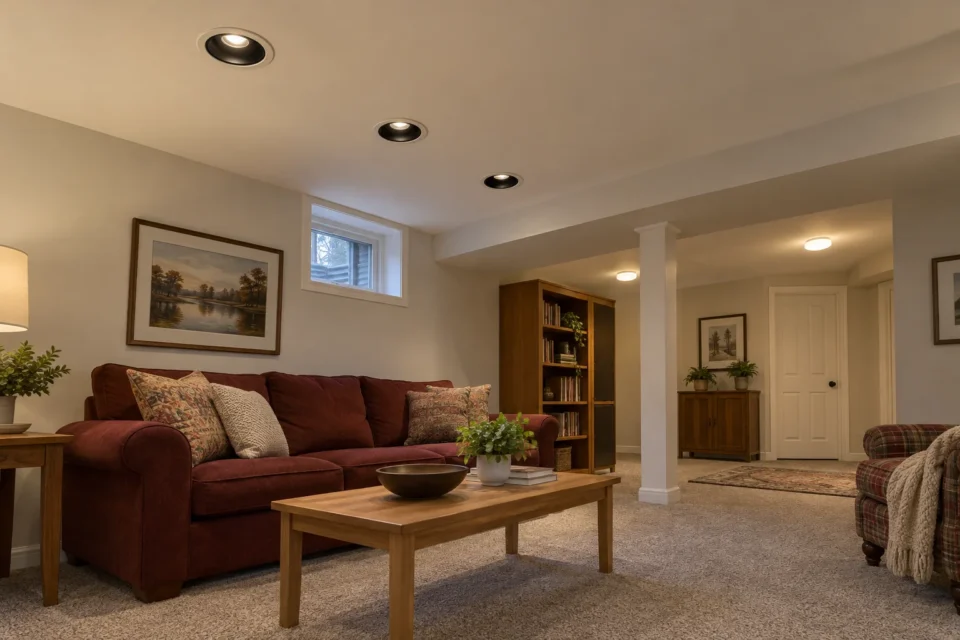
There may also be different systems in different rooms. A basement renovation, an original hallway and a later kitchen refresh need not share equipment. A review should identify the affected group rather than assuming the whole home is uniform. Replacing one group can be a sensible scope if its boundaries and retained elements are clearly explained.
Product information is more useful than an estimated diameter
Receipts, original packaging, installation records and earlier quotations can identify models without disturbing the ceiling. Share those records when available. A stated lamp size or a rough trim measurement may help describe appearance, but it does not reveal the housing opening, concealed depth or permitted retrofit arrangement. Those details need confirmation before selecting a replacement.
Do not climb to remove a lamp, lower a module, pull down a trim or open an enclosure to photograph a label. The assessor can plan appropriate access and identification. A safe photograph of the whole room and a floor-level view of the visible fitting are sufficient for an initial account. Missing model information is a scope question, not a reason to dismantle equipment.
If earlier changes were made, mention what you know without assuming the parts form an approved combination. A trim, lamp, driver and housing may each have separate model information. The proposed replacement should be assessed as an appropriate complete arrangement. Keep removed-part records if you already have them; do not create new access work to obtain them.
The ceiling can limit a simple replacement
The visible opening is only one condition. Available depth, joists, services, access, insulation, air barriers and relevant fire separation may affect the scope. A new slim fitting does not automatically remove those questions. A professional should establish the actual ceiling conditions and installation instructions before promising an easy change or a finish-free result.
Natural Resources Canada notes that recessed lighting can affect insulation and air sealing in roof spaces. Compatible approved products and installation instructions matter, and attic-less or cathedral roofs can restrict access. This is a reason to assess the ceiling context; it is not a diagnosis that every old pot light leaks air or a recommendation to add insulation around unknown equipment.
Describe whether the room is below an attic, another finished room or an unfamiliar roof arrangement, only as far as you know. Mention any earlier ceiling work and visible finish concerns. Do not move insulation, add covers or make access holes to investigate. The assessment should identify which conditions can be reviewed directly and which remain uncertain until appropriate access is arranged.
Repair, limited retrofit or a new arrangement
Lighting Repairs is appropriate when the primary issue is a failed or unreliable existing fitting. A repair assessment can determine whether the concern belongs to the lamp, equipment or wider installation and whether suitable parts are available. Replacing every fitting should not be the starting assumption when the scope is one unresolved fault.
A limited retrofit may retain an appropriate existing housing while changing a documented compatible light source or module. A more substantial change may replace the installed system and require a different opening or ceiling work. Which option is practical depends on the actual equipment and conditions. Ask for retained components and replacement components to be named clearly.
LED Pot Light Upgrades covers an agreed modernization direction, including the desired appearance and everyday operation. This problem page does not prescribe one universal upgrade. A suitable scope might retain useful locations, correct one group or reconsider the room layout if the existing pattern no longer serves the space.

Questions to ask before approving replacement scope
Ask what existing equipment has been identified, what can remain and what evidence supports the proposed compatibility. Clarify whether controls are included and how replacement light quality will be coordinated with retained fittings. A product with lower stated power consumption can still differ in appearance, output distribution or operating behaviour, so the desired result needs to be described.
Confirm responsibility for making good ceiling changes, handling removed equipment and reviewing any hidden conditions found during the work. If a product cannot fit an existing opening, the physical change should be part of the discussion. Do not assume a white trim will conceal every previous opening or that a new light can occupy every old position without further review.
For electrical work, verify the actual Licensed Electrical Contractor through ESA. Notification requirements depend on the scope and applicable replacement conditions; recessed-light work should not be assumed exempt simply because an old fitting is being replaced. The contractor or ESA can confirm the process for the specific work before it proceeds.
Prepare an account of the existing system
Share the rooms, fitting styles, known renovation or replacement history, operating concerns and records already available. Include safe wide photos and explain whether the priority is repair, visual consistency, useful light or an overall refresh. Identify access restrictions and who can authorize work in a rented or managed property.
The Lighting Problems library helps separate other symptoms. Use the lighting assessment inquiry to describe what is known and what needs identification. A useful first step establishes the existing system’s limits before a new product or a whole-room replacement is selected.
Frequently asked questions
Does an LED lamp mean the old recessed system was replaced?
No. A lamp or retrofit module may have been added while an earlier housing remained. Product records and assessment can identify the actual arrangement.
Can any slim LED fit the old opening?
No universal fit should be assumed. Opening, mounting, concealed conditions and product instructions need review. The system comparison guide explains the planned-selection differences.
Should older fittings always be replaced together?
A coherent group scope can be useful, but the appropriate extent depends on condition, parts, matching goals and the existing system. LED Pot Light Upgrades covers an agreed modernization scope.
Is an old-looking trim proof of unsafe wiring?
No. Visible style does not establish concealed wiring condition or compliance. Describe any operating symptoms and arrange appropriate assessment without opening the fitting.
What if an old fitting has stopped working?
Use Lighting Repairs for assessment of the existing fault before assuming a new product will resolve it. Stop use and seek urgent help for warning signs such as smoke, sparking or burning odour.