
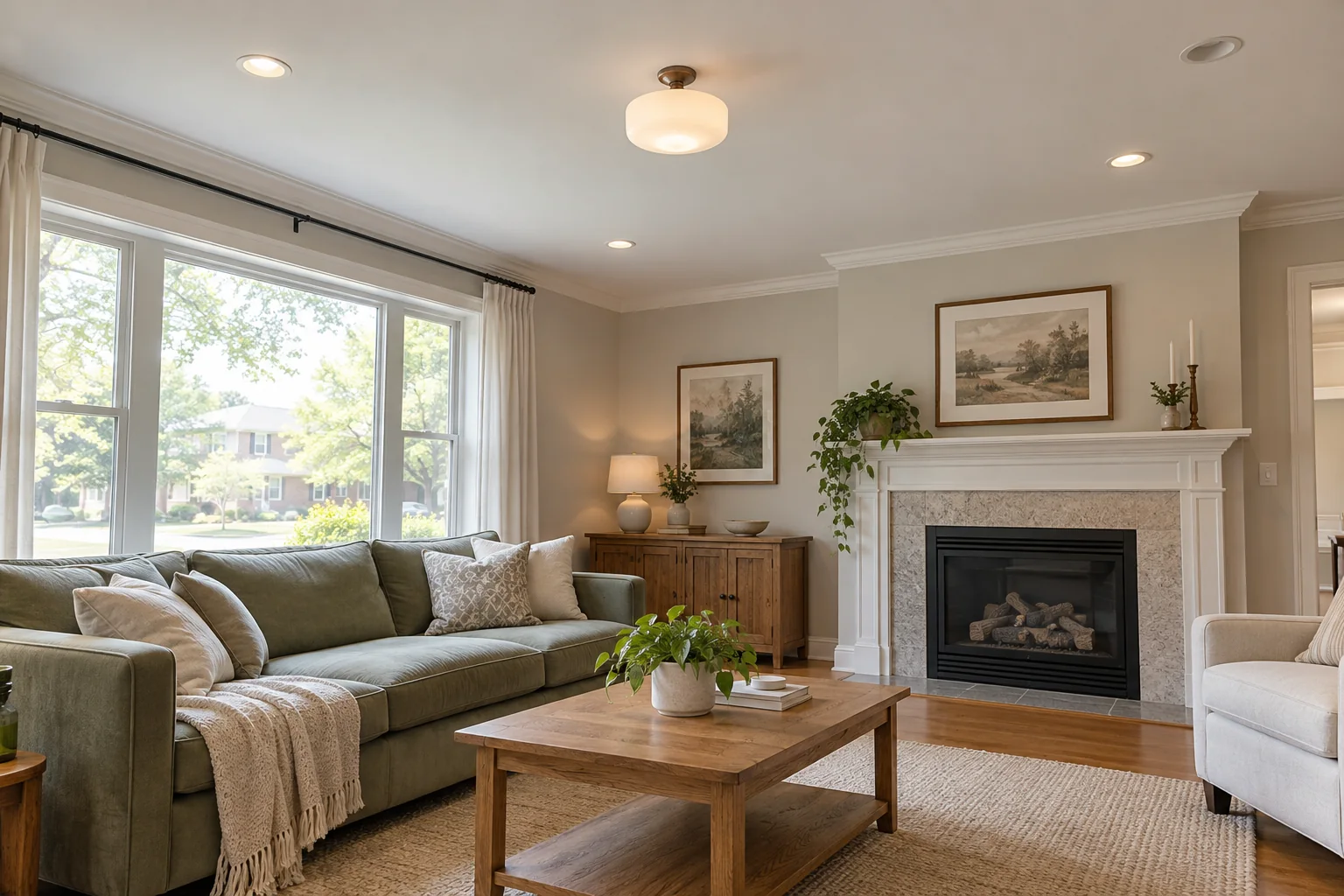
Describe the lighting symptom
Lighting repairs begin with professional assessment of an existing symptom: a light that stops working, flickers, behaves unpredictably on a dimmer or fails repeatedly. The aim is to establish what is happening and what corrective work is appropriate. A replacement fixture may be part of that scope, but it should not be assumed to resolve every control, wiring or equipment problem.
For a Burlington home, the affected lighting may include recessed fittings, ordinary ceiling fixtures, task lights or exterior equipment. Describe the symptom and where it occurs before selecting an upgrade. This service concerns diagnosis and repair of existing lighting; adding new fixtures or redesigning a room is a separate scope that can be discussed once the problem is understood.
If there is burning, sparking, smoke, exposed wiring or an immediate electrical hazard, stop using the affected equipment and seek urgent qualified assistance. For a fire or immediate danger, contact emergency services. Do not dismantle a fitting or continue testing a hazardous circuit to prepare an inquiry. This page offers safe observations to share, not electrical troubleshooting instructions.
Describe exactly which lights are affected
A clear description distinguishes one fitting from a whole room or a group controlled by the same switch. Note whether the symptom is constant or intermittent and when you first noticed it. If something changed beforehand, such as a lamp, dimmer or fixture replacement, include that information without assuming it proves the cause.
Flickering can have several explanations. ESA identifies dim, surging or flickering lights as a possible sign of loose connections in lighting equipment, a circuit or the electrical service. Compatibility can also be relevant to selected dimmable systems. The pattern needs assessment; it should not be dismissed automatically as a normal LED characteristic.
Do not create a repeated test by turning other equipment on and off, resetting protection again and again or opening the ceiling fitting. Record only behaviour you have safely observed during ordinary use. The contractor can decide what checks and access are needed as part of the professional assessment.
The flickering-light guidance and dimmer problem guidance help organize an inquiry. A short factual description of affected locations and timing is more useful than a diagnosis inferred from an online video.
Include the controls and operating pattern
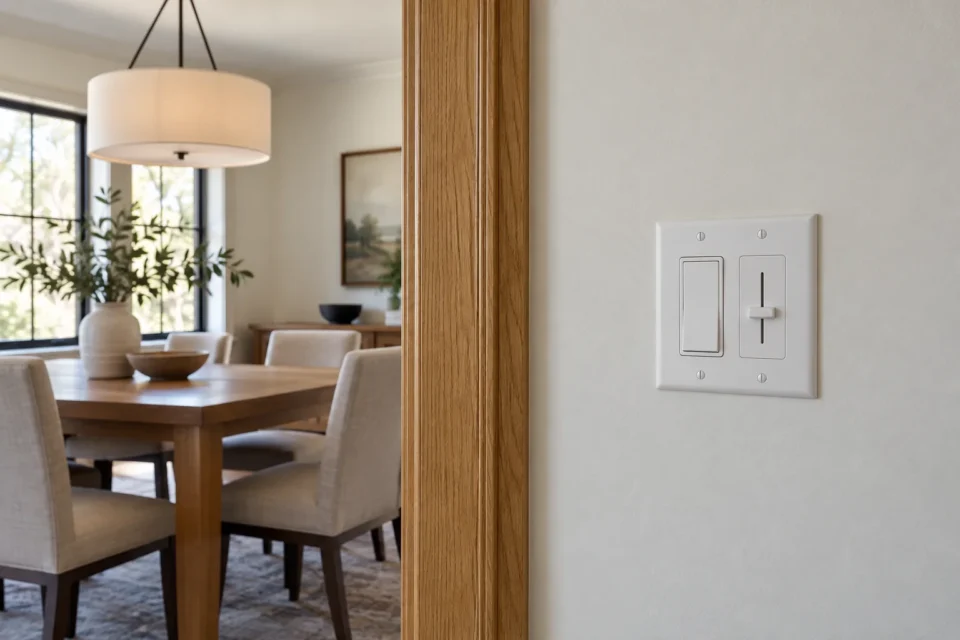
Controls form part of the lighting system. A fitting that works at one dimmer position and behaves poorly at another can present a different assessment question from one that never turns on. Explain the normal switch or dimmer arrangement and whether several locations operate the same lights.
If you know the product models from paperwork or packaging, share them. Lamp type, driver, dimmer and the arrangement of connected fixtures can influence compatibility, but the exact equipment and installation need to be checked. Do not remove a cover plate or fitting to locate information for the inquiry.
Buzzing, restricted dimming range, unexpected switching and a light that stays faintly illuminated should be described as observed. The buzzing lights or dimmers guidance focuses on that audible symptom. These symptoms do not each have one universal cause. A repair proposal should follow assessment rather than treating a replacement switch as an automatic cure.
Where a suitable control upgrade is recommended, Smart Lighting & Dimmers describes that separate scope. The dimmer and control planning guide provides background for understanding a proposal. An app or new wall interface should not be added to conceal a problem that has not been assessed.
Exterior symptoms need their own context
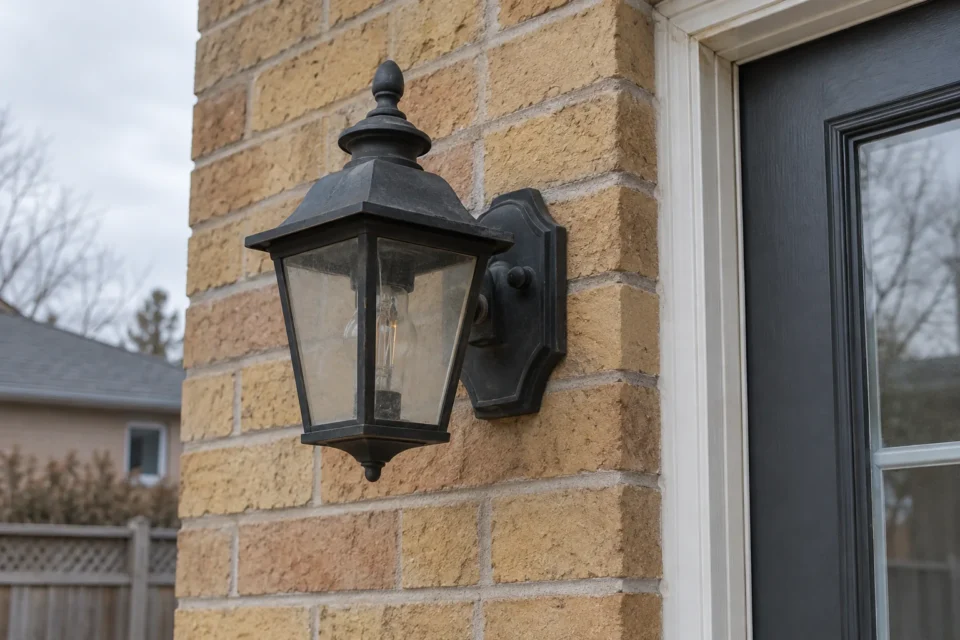
Outdoor fittings have location and exposure conditions that indoor equipment does not. Tell us whether the symptom is associated with rain, temperature changes or ordinary operating times, without assuming that any correlation identifies the fault. Include safe photos of the complete fitting and surrounding surface.
Repeated exterior failure may involve the equipment, controls or installation conditions. A different weather description on a replacement product does not by itself establish the right correction. The actual mounting, exposure, supply and product instructions should be considered together.
Motion fixtures can also behave unexpectedly because of their selected settings or detection arrangement. Describe whether the light fails to activate, comes on unexpectedly or remains on longer than expected. Motion & Security Lighting covers new or revised detection arrangements, while repair assessment addresses the existing unreliable operation.
Do not climb to a roofline fitting or open exterior equipment in damp conditions to investigate. For a failed roofline zone, soffit-light failure guidance offers safe observations, and Exterior & Soffit Pot Lights is the relevant route if a new recessed exterior scheme is ultimately required. Separate the fault from any desired decorative improvement when describing the request.
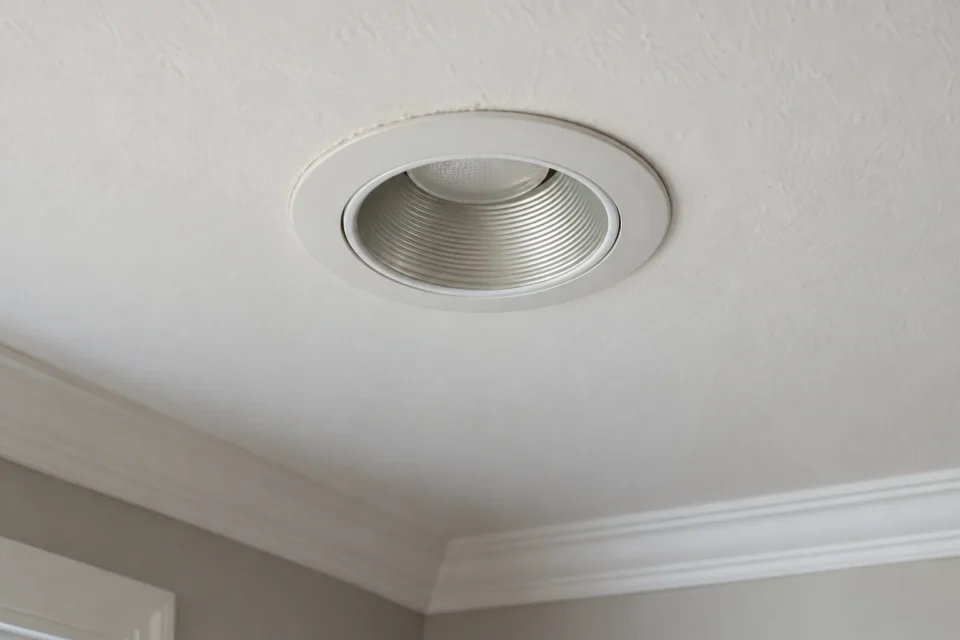
Repairability depends on the actual fitting
Existing lights differ in their serviceable parts and construction. An ordinary fitting with replaceable lamps is not the same as an integrated LED unit with a built-in driver or sealed light source. Product information can help establish the intended maintenance and whether appropriate parts are available.
A professional assessment can identify whether the issue belongs to the fitting itself or elsewhere in the system. It can also establish whether repair is practical and appropriate. Replacing every light in a room should not be the starting assumption when only one location has an unresolved symptom.
If replacement is recommended, clarify what it includes: the fitting or relevant component, any associated control work, changes to existing openings and responsibility for making good. A suitable complete product needs recognized electrical approval and compatibility with its location and installation. Similar shape or wattage does not prove interchangeability.
For planned modernization of existing recessed equipment, compare LED Pot Light Upgrades. For ordinary decorative fitting work, use Light Fixture Installation. These are useful next steps after the assessment, rather than substitutes for diagnosing a fault.
Agree the assessment and corrective scope
Assessment and corrective work should be clearly distinguished in the quotation. The initial symptom may not reveal every hidden condition, so confirm how findings, proposed parts and any additional work will be discussed before changes proceed. Avoid assuming a fixed repair price from the name of the symptom alone.
Ceiling height, fitting access, the number of affected locations, availability of product information and replacement parts can influence the scope. A high fitting or concealed driver may need different access arrangements from an ordinary wall light. Mention finished surfaces or furniture that limits access so those conditions can be considered.
When hiring for electrical work in Ontario, verify the Licensed Electrical Contractor through ESA. Most electrical work requires an ESA Notification of Work, with specific exceptions for some replacement tasks. Confirm the actual repair requirements with the contractor or ESA. A repair label does not determine an exemption by itself.
The Ontario electrical process guide offers background, and the Lighting Problems library separates common symptoms. The assessment should stay focused on the affected installation; it should not be described as certification of every electrical system in the property.
Prepare a safe lighting-repair inquiry
For a routine repair inquiry, include:
- Affected lights and symptom history: Provide the Burlington property location, the affected lights, when the symptom occurs and any recent changes you know about.
- Safe photographs and product records: Include safe photographs of complete fittings and closed controls, plus product details already available in documents.
- Access and permissions: Mention access limits and whether the property is rented or has shared-element permissions.
State any visible damage or urgent warning signs clearly; routine inquiry handling is not an emergency service. The Lighting Services directory helps identify connected improvement work, while the contact form is the route for a lighting-repair assessment request. You can describe the problem without deciding which component should be replaced.
Intermittent symptoms and access arrangements
A symptom that does not occur continuously can still deserve assessment. Note the approximate time, affected locations and what you safely observed during ordinary use. A short account of several occurrences can help communicate the pattern, but do not keep using equipment with warning signs simply to collect more evidence. Lack of visible damage does not establish that the installation is sound.
If the property is rented, shared or managed, identify who can authorize assessment and corrective work. A closed fitting inside a unit may connect to equipment beyond the immediate room, and access may require coordination. Explain those responsibilities before an appointment or quotation is arranged. This keeps the investigation focused on the available scope without assuming ownership of every part of the system.
Keep existing product documents and any known record of recent work available. After the assessment, ask for the findings and proposed correction to be described in plain terms, including what remains outside the scope. A change that makes a lamp turn on is not, by itself, evidence that all possible underlying questions have been resolved.
Lighting Repairs Gallery
Lighting Repairs Questions
Does a flickering LED always need a new dimmer?
No. Flicker can have several explanations, including equipment, compatibility or connection issues. Describe the pattern safely; flickering-light guidance and dimmer problem guidance help organize the inquiry.
Will every faulty fixture have to be replaced?
Repairability depends on the fitting, available parts and actual fault. Assessment should establish whether correction, a component or a complete suitable fitting is appropriate before a replacement scope is chosen.
Can exterior lights be assessed too?
Describe the equipment, symptom, exposure and timing without opening or climbing to it. For a separate soffit-light failure, soffit-light failure guidance gives safe observations, while Motion & Security Lighting covers revised detection arrangements.
What should I do if there is burning or sparking?
Stop using the affected equipment and seek urgent qualified assistance. For a fire or immediate danger, contact emergency services. Do not continue testing or dismantle equipment; a routine contact inquiry is not an emergency response service.
Does a repair require an ESA notification?
Most electrical work requires a notification, with specific exceptions for some replacement tasks. Confirm the actual scope with the Licensed Electrical Contractor or ESA. The Ontario electrical process guide provides background.
What can I safely provide before an assessment?
Share observed symptoms, timing, affected locations, safe photos of complete fittings and closed controls, and product information already in documents. Use the contact form without opening wiring or selecting a replacement yourself.